


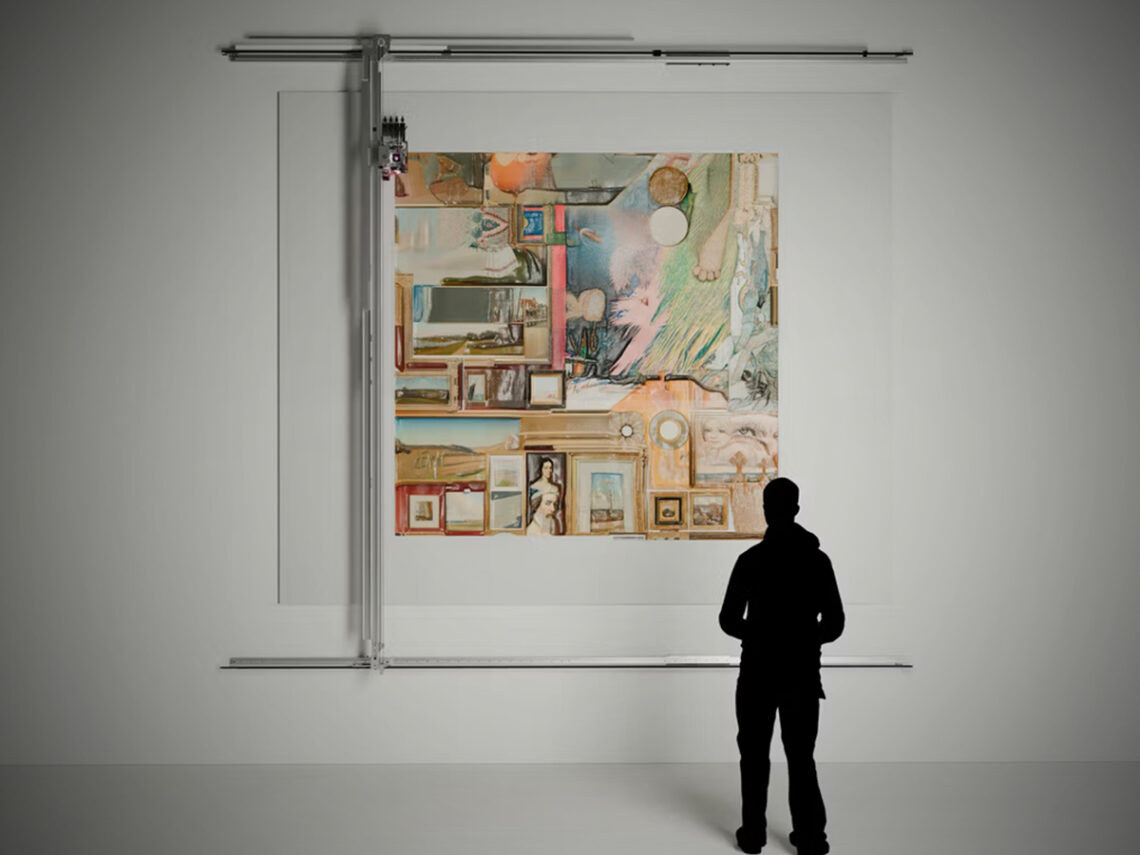
Christie’s controversial AI art auction exceeds predicted sales

The controversial ‘Augmented Intelligence Sale’ at Christie’s in New York has exceeded its projected sales by over $100,000, selling 82 per cent of the works on March 5th, 2025.
28 of the 34 lots were sold and $728,784 were amassed from the sale, against a pre-sale estimate of $600,000, demonstrating an unexpected and enormous success. The top-selling artwork was by Turkish-American artist Refik Anadol, who sold ISS Dreams for $277,200, almost doubling its estimated price.
The work is a satellite image of Earth, taken from the International Space Station, which was then turned into a moving AI-driven painting which plays on a video loop.
Anadol has dramatically risen to fame, evident in his next planned venture, which includes the opening of the first Artificial Intelligence museum at Dataland in Los Angeles this year.
Other victories included Holly Herndon and Mat Dryhurst’s work, commissioned for last year’s Whitney Biennial. Their piece Embedded Study 1 & 2, sold for $94,500 against an estimated $80,000.
Only six lots in the auction weren’t sold. These include the works of Robbie Barrat, Ronan Barrot, Pindar Van Arman and Jake Elwes.
What’s more, a report published by Hiscox, which included research conducted by ArtTactic, found that 48 per cent of the buyers were either millennials or Gen Z, which are proving to support the use of AI in art much more than older and more established collectors.
Despite the recent outcry by the artist community and general public, which saw over 6,000 people sign an open letter to Christie’s to stop the auction, the sale went ahead from February 20th to March 5th, 2025.
Christie’s fought back against the backlash, claiming that the auction house proudly defended the legitimacy and talent of the featured artists and that AI was a tool for creative expansion. “The works in this auction are using artificial intelligence to enhance their bodies of work,” they stated.
