


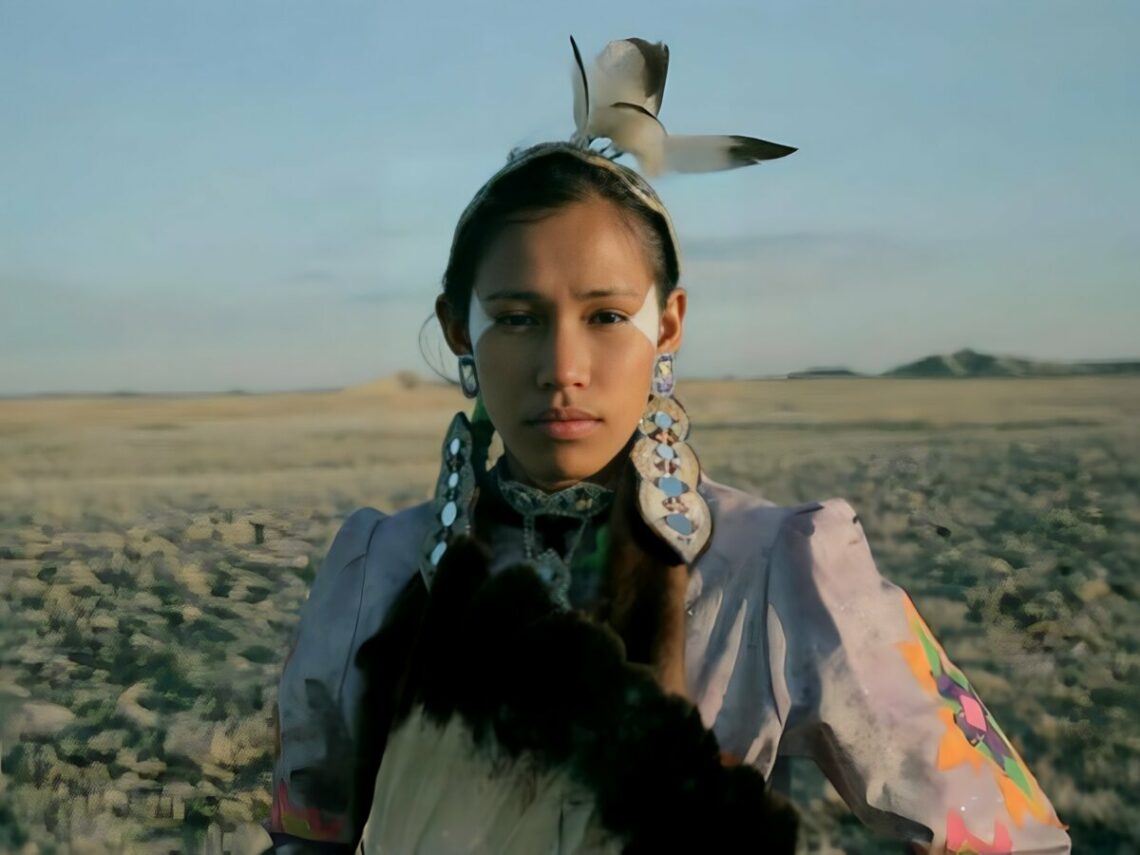
Revisiting Chloe Zhao’s underrated Native American drama: ‘Songs My Brothers Taught Me’

Among the potent yet criminally overlooked catalogue of cinema focused on indigenous Americans, Songs My Brothers Taught Me by director Chloe Zhao stands out as a beacon of raw emotion and poignant storytelling. Through her passionate yet measured directorial lens, Zhao offers an intricate examination of the intricate nuances faced by Native American youth on the brink of adulthood – especially those nestled within the bounds of reservations.
For these young adults, their homeland symbolises a duality of existence. To remain means confronting the hard realities of rampant alcoholism and the haunting spectre of suicide. On the other hand, venturing beyond might pave the way for broader horizons and fresh beginnings. Yet, the deep-rooted connections to their cultural heritage, the sacred land, and familial bonds make the choice anything but straightforward. Zhao artfully uses expansive shots to showcase the land’s undeniable beauty and emphasise the characters’ feelings of isolation.
At the narrative’s heart is the charismatic Johnny, encapsulated brilliantly by John Reddy. Unlike the conventional rebel, Johnny has always found his place in the community. Yet, a life mired in bootlegging and skirmishes feels less promising than perhaps pursuing opportunities in Los Angeles, especially alongside his ambitious girlfriend, Aurelia. However, Johnny’s ties to the Pine Ridge Reserve, and notably to his cherished younger sister, Jashaun, make the prospect of departure emotionally daunting – and their elder sibling’s words from behind bars further complicate things.
Their bond, one moulded in the crucible of a challenging upbringing marked by parental neglect and hardship, becomes the tale’s emotive epicentre. Through Zhao’s intricate filmmaking, we see the depth of their connection manifested in Johnny’s ever-watchful gaze upon Jashaun. A journey through the Badlands, with its vast expanse and breathtaking views, amplifies their deeply intertwined destinies. The prospect of their temporary or permanent separation seems completely and utterly unbearable – impossible, even.
The sudden loss of their father, a figure shadowed by absence and silence, leads to the discovery of an extended web of half-siblings. These nighttime congregations, set against the flickering flames of campfires, become arenas of shared grief, fragmented memories, and redefined familial roles. For Johnny, these revelations only reinforce his ambition to escape the pitfalls of the reserve’s life. At the same time, Jashaun finds her world expanding with new relationships and stronger connections to her community and sense of heritage.
As the story unfolds, we see Jashaun forging her own path, developing bonds with her newfound siblings, particularly with Mo, a former inmate who now immerses himself in traditional craftsmanship. Johnny, meanwhile, wrestles with life’s impending decisions and emerges as a complex beacon of realism. Despite his debut foray into acting, Reddy delivers a rich and three-dimensional character marked by a juxtaposition of resilience and tenderness – an embodiment of the reserve’s youth.
At their essence, films mirror our world, and Zhao possesses a remarkable knack for capturing this reflection in its unadulterated glory. Her decision to employ non-professional actors for Songs My Brothers Taught Me wasn’t merely economical but a profoundly artistic choice. In this manner, Zhao masterfully bridges the gap between narrative and authenticity, delivering a movie-going experience that resonates as sincere, unscripted, and immersive. Beyond this, it enriches the movie in terms of its message – by casting real, non-acting Native American young adults, she’s amplifying the voice of an ignored section of society.
Zhao’s filmmaking style is equally marked by her profound respect for nature, which she’d revisit with Nomadland. The expansive vistas of the Pine Ridge Indian Reservation aren’t mere backdrops; they become as integral to Songs My Brothers Taught Me as its characters. Through her vision, the landscape becomes a canvas, narrating tales of heritage and legacy. Every scene underscores her conviction that the very ground beneath our feet holds narratives waiting to be unveiled and worth being told. While recent accolades shower Zhao with well-deserved acclaim, it’s evident that her brilliance began with work on Songs My Brothers Taught Me, which may not have captured universal applause but undeniably heralded a distinctive narrative voice.
Martin Scorsese’s upcoming Killers of the Flower Moon has been universally praised for its presentation and involvement of the Osage people. The chief of the nation decried that the filmmaker “has restored trust. And we know that trust will not be betrayed.” However, that film will be about spectacle – or at least rely heavily on it. This isn’t criticism; it’s the movie they wanted to make. But, in an era where filmmaking so often vies for spectacle, Zhao’s film could be seen as a gentle yet powerful counterpoint and a testament to the idea that cinematic tales don’t necessarily require audacity to resonate.
