


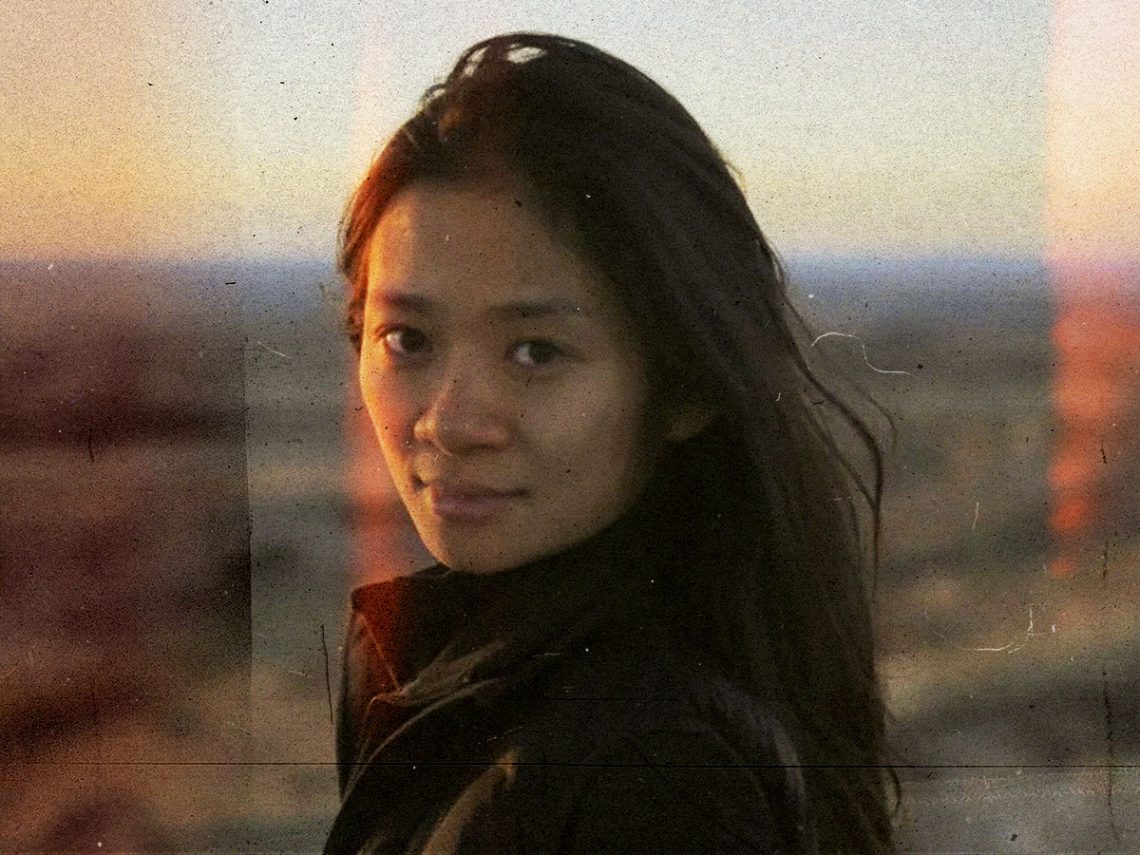
Understanding why Chloé Zhao blends fact and fiction for ‘Nomadland’

A rising and pivotal figure in independent filmmaking, director and writer Chloé Zhao‘s directorial debut, Songs My Brothers Taught Me, introduced the filmmaker to the realm of critical acclaim in the realm of independent cinema as her work was met with nominations for Independent Spirit Awards. Carrying that momentum, Zhao then made cinema history with her 2021 Oscar win for ‘Best Director’ for Nomadland, becoming the second woman and first woman of colour to win.
A distinct line between sentiment and sentimentality characterises Zhao’s work, with an approach that signals auteur theory in treating a body of visual work how an author does their literature or a painter their canvas. The director pinpoints one initial concept, such as a setting or a theme and builds an entire story around it. Her camerawork functions to locate and execute emotion, gelling it with her protagonists to the point where the character embodies the camera’s role for her audience.
Dialogue and interaction are also essential factors in Zhao’s cinematic vision. The director pays attention to how her actors interact and bounce off one another on set and vessels these dynamics into added sequences that showcase specific pairs or groups. As a result, scenes written and directed by Zhao showcase authenticity and detailed expressi on of humanity, having been designed around real-life experiences.
The director works under the code that people rely on connections and that a filmmaker creates visual stories to extend an arm and build these attachments. Zhaho’s cinema is founded on legitimacy and realism, even when she ventures into comic book adaptations such as Eternals.
Speaking to TheTalks about her filmmaking manifesto, Zhao shared: “Wherever I go, I am drawn to outsiders because I am one myself. And I feel like an outsider almost wherever I go,” she said. “Loneliness is a big word for me. There is a difference between loneliness and solitude for me personally. I’ve also done a lot of travelling alone in my car when I was making my first two films.”
The director included her outlook on directing her academy award-winning feature Nomadland, a drama charting a widow’s journey as she ventures around the United States in her van as a nomad. The film stars Frances McDormand, who also worked as a producer. To create the feature, Zhao adapted the nonfiction book Nomadland: Surviving America in the Twenty-First Century by Jessica Bruder, which was released three years prior.
Zhao employs the work’s nonfiction aspects alongside her creative vision and filmic artistry, highlighting a grey area between fact and fiction. “Well, when I read Jessica Bruder’s book that the film was based on, I was so amazed by the character development and all these great backstories of these people,” Zhao explained. “So this was just about finding the right method for the kind of story that you are telling.”

“We need both facts and poetry in our lives,” she added. “Sometimes facts can tell truth better than poetry, and sometimes poetry can tell truth better than facts.”
Zhao utilises this objective perspective that values actuality and artistry as two parts that come together as an outline for her filmmaking. The director channels this into an appreciation for documentary filmmaking, identifying how this genre demonstrates the stylistic and artistic merit in educational and insightful presentations, such as ones focusing on a figure’s journey, which holds emotional tones.
“The documentaries that I love combine them both; you know, the documentary filmmaker will use poetry to capture an emotional truth that can be hard to convey with numbers and facts,” Zhao explains as her outlook. This outline argues for cinema as a medium that depicts cultural, political or historical concepts, as documentary filmmaking strives to do.
Furthermore, it alludes to film’s medium specificity in employing artistic visuals to educate and share information, as it manages to accentuate facts without sacrificing any of its creative properties. “The emotional truth for me is where the power of fiction lies,” Zhao shares. “Through poetry, we can understand a shared human experience that allows us to connect with each other.”
Zhao’s intentions behind her independent and blockbuster cinematic contributions showcase the personal expression and emphasis on film’s specific power that many auteur filmmakers have proposed as the meaning of filmmaking and continue to do today. She links this to an even more personal vein, stating: “It’s not so much about rediscovering myself, it’s just getting to know myself as a kid,” as she traces her artistry back to the outlets she engaged in during childhood, such as drawing.
Zhao’s passion for “telling stories both on an intimate level through realism and through allegories on a fantastical level” has led her to cemented status and success in her field. The fact she experienced a transition from directing lower-budget indie films driven by character studies to studio high-budget franchise instalments that attract the box office through spectacular visuals spotlights her versatility for every cinema area.
Zhao articulates a grounded and compromising landscape to working with these cinematic realms: “There are great movies made that way that I love. As long as you work with people that you can trust, that’s very important,” she said. “Because then you can be vulnerable enough to allow yourself to make mistakes and take advice and be open. Otherwise, you can’t learn when you hold too tight.”
