


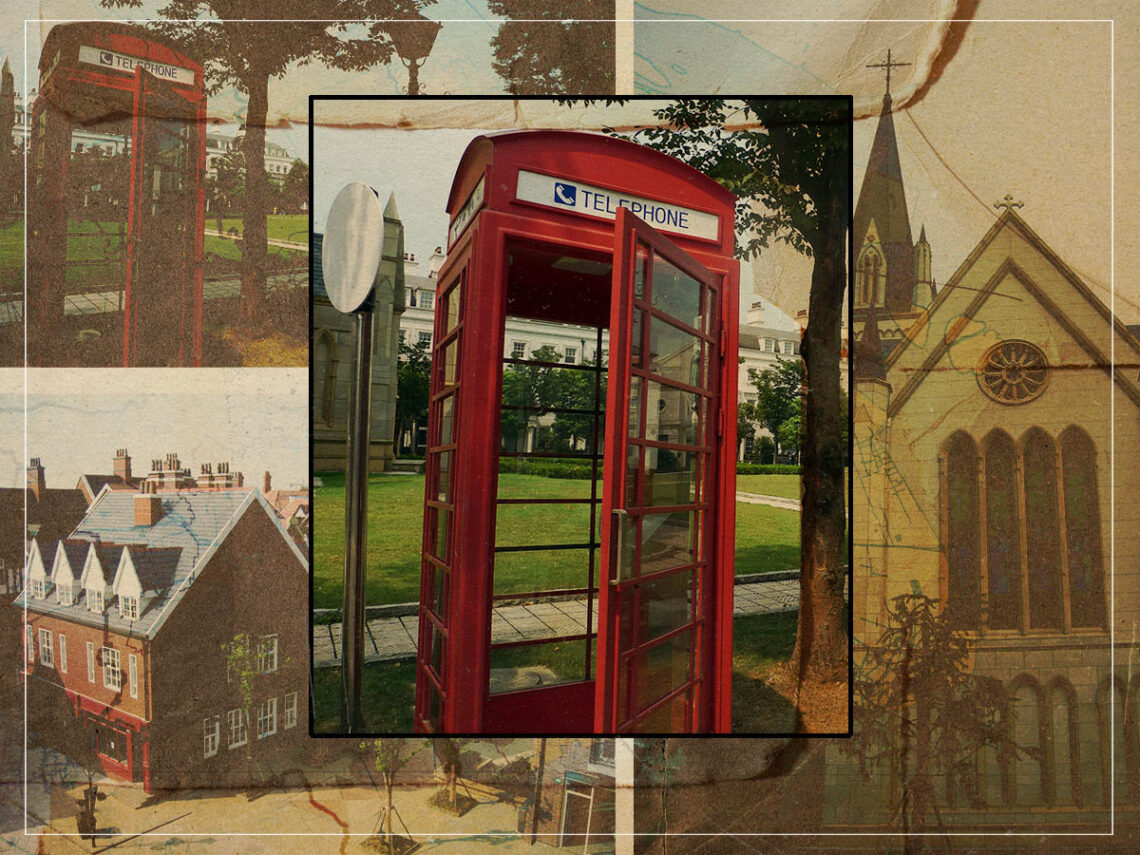
Thames Town: the English recreation in the heart of Shanghai

It’s always amusing to see your own culture depicted in media produced outside your homeland. Just look at the countless TikToks poking fun at Hollywood’s portrayal of Middle Eastern countries or the exaggerated depictions of Americans—and the US in general—in Bollywood films. But while a dodgy accent and an “I <3 NY” T-shirt are one thing, Thames Town is quite another. This quaint market village, which looks as though it belongs in a quiet corner of Bath or Oxford, is instead nestled in the heart of Shanghai. And that’s just the beginning of the baffling surrealism.
It all started with the One City, Nine Towns initiative—a development plan proposed by the Shanghai Planning Commission to ease overcrowding in the city centre. The concept was simple: create one expansive city composed of nine distinct towns. The twist? Each town was designed to mimic the aesthetic of a different European country—one Scandinavian, one Italian, one Dutch, you get the picture. Remarkably, the project went ahead in full, and, as you might expect, each of these meticulously crafted implanted utopias now stands as a total ghost town.
Thames Town, in particular, finds itself in this haunting, Silent Hill-esque limbo state. One where every property was bought and owned, but the only people in the town are tourists in for the novelty or newlyweds using the British facade for wedding photoshoots. Yet, to the British eye, it is decidedly sanitised beyond all recognition. So, what gives? What’s missing that could give the town the much-needed authenticity to drive Chinese Anglophiles out of the heaving population centres and into the living embodiment of that Brexit Festival the Tories were threatening a few years back?
Well, as anyone who’s seen a single image of the place will tell you, it’s far too clean for one. Maybe a reverse street sweeping squad can swarm in before dawn every morning, chucking empty kebab wrappers, broken sofas and Dr Pepper bottles filled with piss at every corner of the joint until it’s filled with that intoxicating musk of home.
There’s also an Oxford Street in Thames Town, so obviously, it’s got to be stuffed full of intensely dodgy “American Candy” stores staffed by the most frightening men you’ll ever see framed by a slushy machine in your life. After all, what self-respecting communist country doesn’t have a very suspiciously thriving scheme tucked away somewhere in plain sight?
Adding to the legion of absences that would truly make this place a viable Middle England implant is a floundering football team. Thames Town FC, thriving in its fifth straight season in the third league of Chinese football, bringing in 400 home fans each week. Playing in brown and red in tribute to the United Kingdom’s greatest cultural export, Bovril. Their hooligan following, the “Churchill casuals”, are the terror of the division, following their beloved TTFC through land and sea and Wuxi.
Alas, these truly British tropes are sorely missing from the cultural oddity. Over in the province of Xingqiao, locals have, indeed, begun to build lives in its mini Paris, filling it with its own strange sense of authenticity, but the positive signs that the Seine in China is beginning to blossom have seemingly blighted this UK incarnation. The Parisian implant has worked because the people have made it their own, and Thames Town remains a snapshot of Britain that is fresh out of the box.
This is because it is largely vacant, with wealthy property prospectors spotting the success of Little Paris and snapping up real estate in Thames Town. Many of the properties seemingly operate as holiday homes or are simply completely vacant—the antithesis of their initial intention to alleviate social housing and congestion issues. The current estimate is that only 2,500 people live there, despite the town being completed in 2006.
Meanwhile, Shanghai’s population is due to hit 25 million any day now. Ironically, many of the wealthy investors who snapped up the properties in Thames Town are residents of Shanghai but haven’t moved there, adding to its sore irony. In the end, what could be more British than that?
