


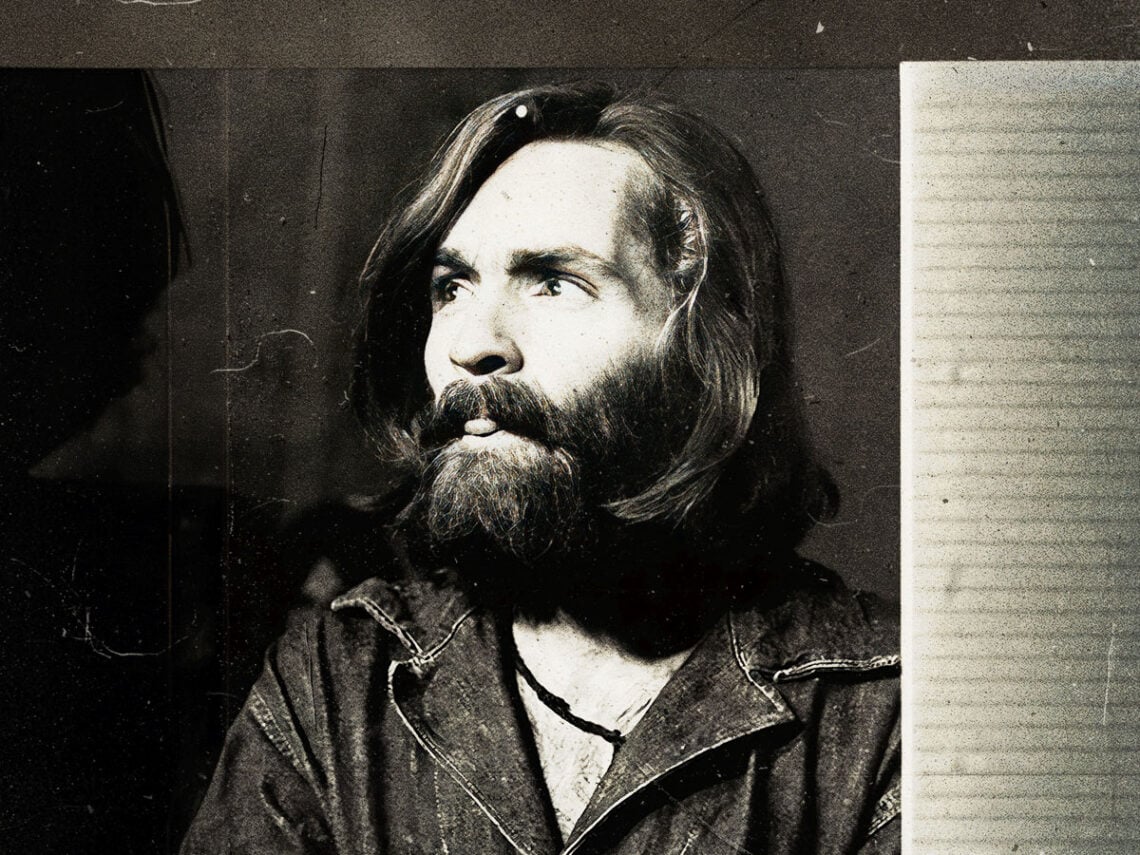
Portentous Poetry: Charles Manson’s musical tribute to The Beatles

The fascination that surrounds Charles Manson and his murderous Family cult is a queasy one. Like any given serial killer, a lurid and crass true crime industry has ensured there’s no lack of salacious features on the paranoid criminal’s legacy, offering every voyeuristic detail on the at least nine people who lost their lives at his conspiratorial command.
There’s no denying, however, that Manson and his bewildered followers formed a significant cultural presence in the tumultuous history of 1960s America, serving as the decade’s closing storm clouds along with the Vietnam War, the Altamont disaster, fierce civil unrest, and the painful death of the hippy generation’s utopian ideals.
In and out of ‘boys’ homes’ and prison for the majority of his life, Manson’s 1967 release saw him enter a world undergoing major cultural shifts filled with young people seeking meaning beyond the traditionally upheld institutes and mainstream narratives that dominated the previous decade. Strolling into his element, a flash of pseudo-intellectual pretences of profundity and incessant LSD use won Manson an army of dedicated wayward followers convinced of his messianic proclamation of an imminent, world-ending race war.
Alongside the Family’s communal descent into doomsday murder in Los Angeles’ Spahn Ranch former Hollywood lot, Manson fancied himself as an outsider folk artist, inspired by the era’s rock and pop as much as the new religious movements smattered across the counterculture and ingratiated himself with some of music’s biggest names, eventually manoeuvring his way to the doorstep of Beach Boys drummer Dennis Wilson.
Having left his Sunset Boulevard home for a recording session after taking in two hitchhikers and Family members Patricia Krenwinkel and Ella Jo Bailey, Manson’s entourage grew to take advantage of Wilson’s naive generosity, ransacking his log-cabin-style home and leaving $100,000 worth of damage and stolen possessions.
During the Family’s chaotic stay at Wilson’s Pacific Palisades house, he and Manson played music together, even assisting in the recording of his ‘Cease to Exist’ later reworked as the Beach Boys B-side ‘Never Learn Not to Love’. While The Beach Boys formed an unfortunate direct feature of the Manson story, it was The Beatles who unwittingly informed his Family’s apocalyptic rhetoric, several of their tracks twisted to Manson’s own violent ends. Spinning their ’68 double album repeatedly, ‘Helter Skelter’ and ‘Piggies’ were singled out as key underpinnings to his apocalyptic vision, the latter interpreted as a direct call to attack the city’s rich elite. One of the grisly details of the 10050 Cielo Drive murder location was “death to pigs” scrawled on the wall in blood.
The Beatles’ earlier work found its way into Manson’s warped folk lyricism too. Likely recorded in Gold Star Studios and later issued on the ’70 Lie: The Love and Terror Cult compilation, ‘Arkansas’ features allusions to the previous year’s Magical Mystery Tour, issued as an LP Stateside. Singing of his rough upbringing and lack of nurturing care, Manson sings the curious line: “My nose is droopy red an’ my whiskers grey / ‘Cause the magical mystery tour has taken me away.”
It’s unclear what Manson intended with the reference, likely drawn to its simple psychedelic imagery over any understanding of its uniquely Northern English background, a nod to the coach trips that would take partygoers from Liverpool to Blackpool. Like everything Manson touched during the death of the ’60s, his understanding of The Beatles’ work was as savagely off the mark as his ostensible hippy values and wider grasp on reality.

Never Miss A Beat
The Far Out Beatles Newsletter
All the latest stories about The Beatles from the independent voice of culture.
Straight to your inbox.