


Finding fact in fiction: Charles Burnett’s LA gamechanger ‘Killer of Sheep’

There’s a beauty in the cinematic medium in how, even in fictional narratives, profound factual truths can be revealed. While this has predominantly been shown by the great directors of Italian neorealism, in terms of American cinema, few works have captured an authenticity quite like Charles Burnett’s 1978 drama film Killer of Sheep.
Shot between 1972 and 1973, Burnett submitted the completed film, starring Henry G. Sanders and Kaycee Moore, to the UCLA School of Film as his Master of Fine Arts thesis in 1977. However, because Burnett didn’t acquire the rights to the music used in the film, Killer of Sheep did not get a general release until 2007, when the American filmmaker purchased the rights.
Subsequently, the film was transferred to a 35mm print from 16mm with help from independent cinema pioneer Steven Soderbergh and was released three decades after it was completed with a limited theatrical run and a DVD release later in the year.
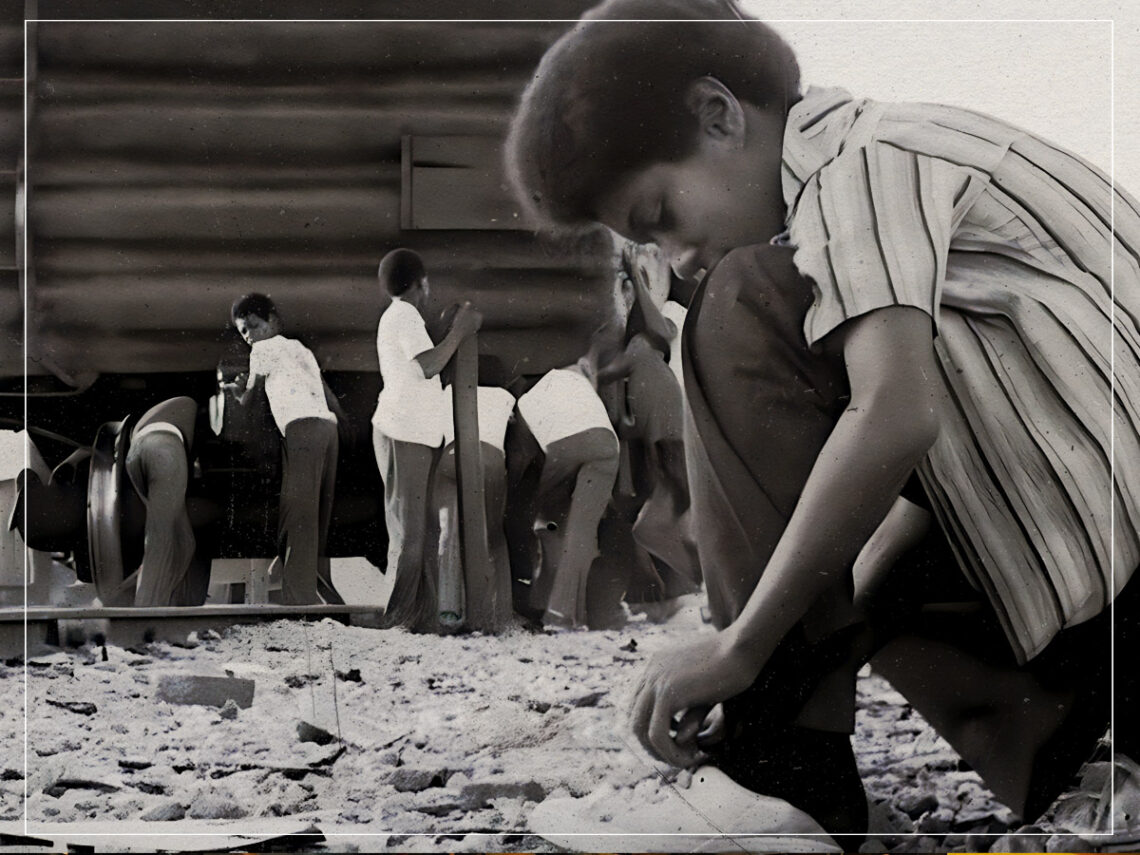
Killer of Sheep is a masterpiece of American independent filmmaking and details life in the Watts neighbourhood of Los Angeles in the 1970s. There’s a deep intimacy to Burnett’s film that sees a fictional narrative combined with a striking, almost documentarian honesty and factual observation that creates a moving exploration of African American life.
At the core of the film’s narrative is Stan, a father and husband who works at his local slaughterhouse. The ugly realities and tedious nature of his job cause pressure to build amongst Stan’s family and home life, and Burnett does a brilliant job of documenting the economic struggle and racial tension that contributes to his alienation.
Rather than provide a chronological narrative, though, Burnett tells Stan’s story through a series of vignettes that portray the hardships faced by African American workers in 1970s Los Angeles. In line with the great works of Italian neorealism, such as Vittorio De Sica’s Bicycle Thieves and Luchino Visconti’s La terra trema, Burnett also used non-profession actors and shot on location in order to amplify the air of authenticity that surrounds Killer of Sheep, while mostly improvised dialogue makes the film feel like a documentary with audiences bearing witness to what 1970s LA life had actually been like.
Throw into the fact that Killer of Sheep is doused in the actual noise of the Watts neighbourhood, whether the sound of children playing in the street or the grind of the machinery of Stan’s workplace, creates a further layer of believability in the narrative, while the soundtrack, comprised, of jazz and blues music allows for the mood and tone of the African American community to shine through.
Canadian filmmaker Charles Officer had once spoken of the deep impression that Killer of Sheep left on him. He told CBC, “”It was probably one of the most beautiful things I’d ever seen. It was lyrical, moving… It had a sense of very calm urgency in terms of the desperation that the people were facing and continue to face as black people.”
However, while there is indeed an air of documentarian authenticity to Killer of Sheep, the truth is that it is indeed a piece of fiction. Still, this allows Burnett to construct the kind of truths that he had indeed found within the Watts neighbourhood of LA. Killer of Sheep is a classic American independent cinema that challenged the Hollywood studio-led productions of the time, and it serves as a striking reminder of the profound power of the cinematic medium in detailing the realities of life, even through fictional narratives.
