


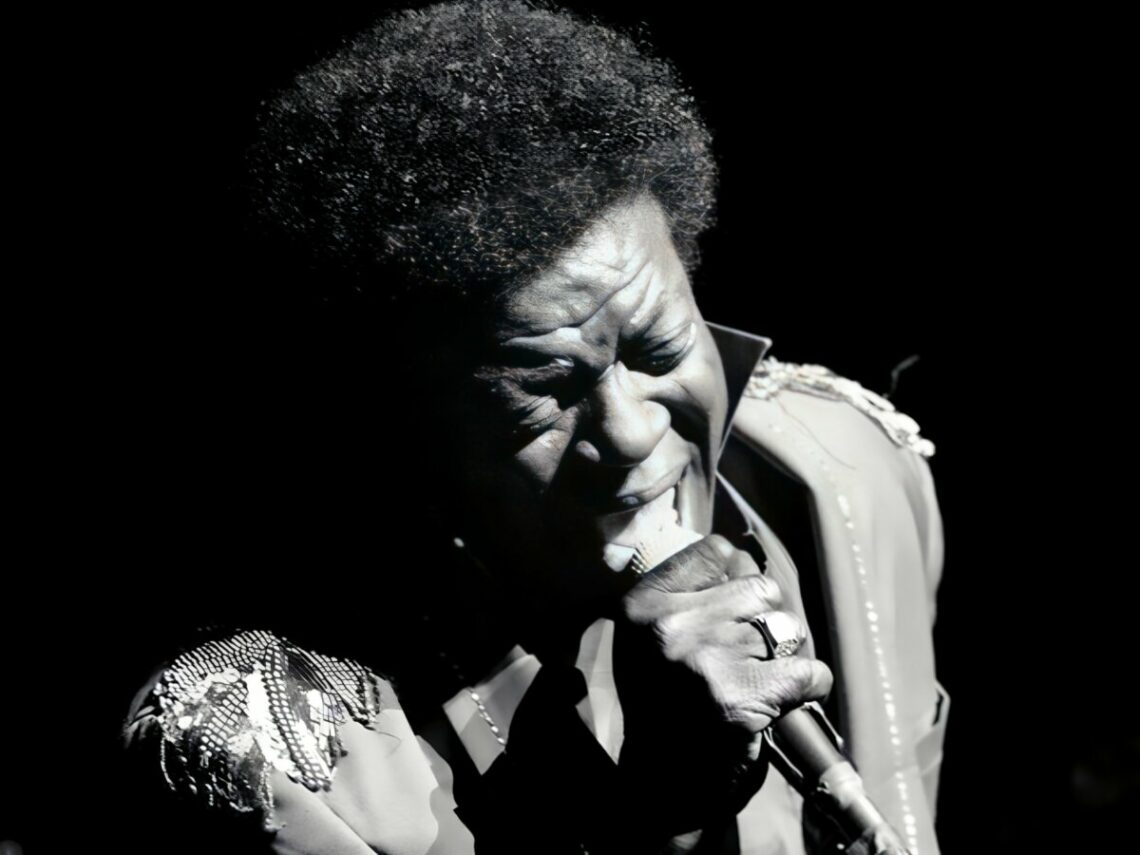
Charles Bradley: The soul singer who was forgotten for 50 years

Music is a fickle industry, making overnight stars of some and forgotten heroes of others. In a select few cases, though, all an artist needs to finally find the appreciation they so richly deserve is time. For Charles Bradley, it took over 50 years for audiences to truly fall in love with his rich, soulful voice.
2016’s Changes, released by Charles Bradley through the infallible Daptone Records, goes down as perhaps the greatest soul album of the past decade.
The Florida-born vocalist brought an entirely new layer of captivating emotional weight to the landscape of soul music, and his incredible cover of Black Sabbath’s ‘Changes’ is an absolute masterclass. To listen to Changes, you would think that Bradley was an already established star who had spent decades at the core of America’s soul scene. In actuality, he released his debut studio album in 2011, at the age of 62.
How, then, did this Otis Redding-esque talent go unnoticed by the musical mainstream for so many decades? Bradley’s journey starts in Brooklyn, New York, where he relocated to with his previous estranged mother back in the 1950s. It was there that he received his musical education, soaking up the emerging sounds of funk, soul, and R&B, including one particularly transformative experience, going to see James Brown perform at the Apollo Theatre in 1962.
Outside of those experiences, however, Bradley’s life in Brooklyn was incredibly difficult. His home life was difficult, living with his mother and sleeping in a sand-covered basement. Eventually, the young vocalist had had enough and decided to take his chances living on the streets of New York City. “
I got tired of getting a whooping,” he recalled in a 2013 interview with FaceCulture. “When I got to 14 years old, I said, ‘If I’m not wanted, I’ll go.’”
Surrounded by the darkness, terror, and poverty of 1960s-era New York, Bradley spent his days on the streets and his nights sleeping in the subway, trying to avoid the onslaught of drug addicts and pushers common to the city’s seedy underbelly. Nevertheless, he persisted, eventually travelling north to Maine, where he began training as a chef. It was also during this time that Bradley began to sing and perform, exercising his natural vocal talents, despite a crippling sense of shyness.
While training as a chef, Bradley formed a small band and performed on a handful of occasions during the mid-1960s, when the sounds of funk and soul were dominating the US pop charts. Had things gone his way, his talents might have elevated him to the level of somebody like Otis Redding, Marvin Gaye, or even his hero, James Brown. In the end, though, global affairs got in the way when his bandmates were sent halfway across the world to fight in the jungles of Vietnam.
Thus, the dream was over. Bradley earned some extra money playing odd shows as a kind of James Brown tribute act during the latter part of the 20th century, but mainly got by working dead-end jobs in California, where he eventually settled during the late 1970s.
That might have been the end of his story, but during the late 1990s, he returned once again to Brooklyn. It was there that he began performing as a James Brown tribute act – operating as ‘Black Velvet’ – more regularly, eventually landing on the radar of Daptone Records co-founder Bosco Mann.
Recognising the obvious vocal talent of Bradley, Mann quickly invited the James Brown impersonator to record some of his own, original, often improvised material at Daptone, and started publishing these records during the early 2000s. Eventually, this culminated in Bradley’s first album, No Time For Dreaming, hitting shelves in 2011, 50 years after he had first tried to enter the music industry.
In total, Bradley released four studio albums between 2011 and his untimely death in 2017, at the age of 68. Although there is no shortage of great ‘comeback’ albums out there, Bradley’s work feels like a different story altogether. Each of those records is awash with the deep, emotional quality and palpable passion that could only have come with the many traumatic experiences Bradley had gone through during his life, from his early days sleeping in the subways of New York to his brother’s murder in the mid-1990s.
Charles Bradley was one of the greatest soul talents of the 21st century, and without the motivation of Daptone Records or Bradley’s enduring love of James Brown, the world might never have heard his life-affirming voice.
