


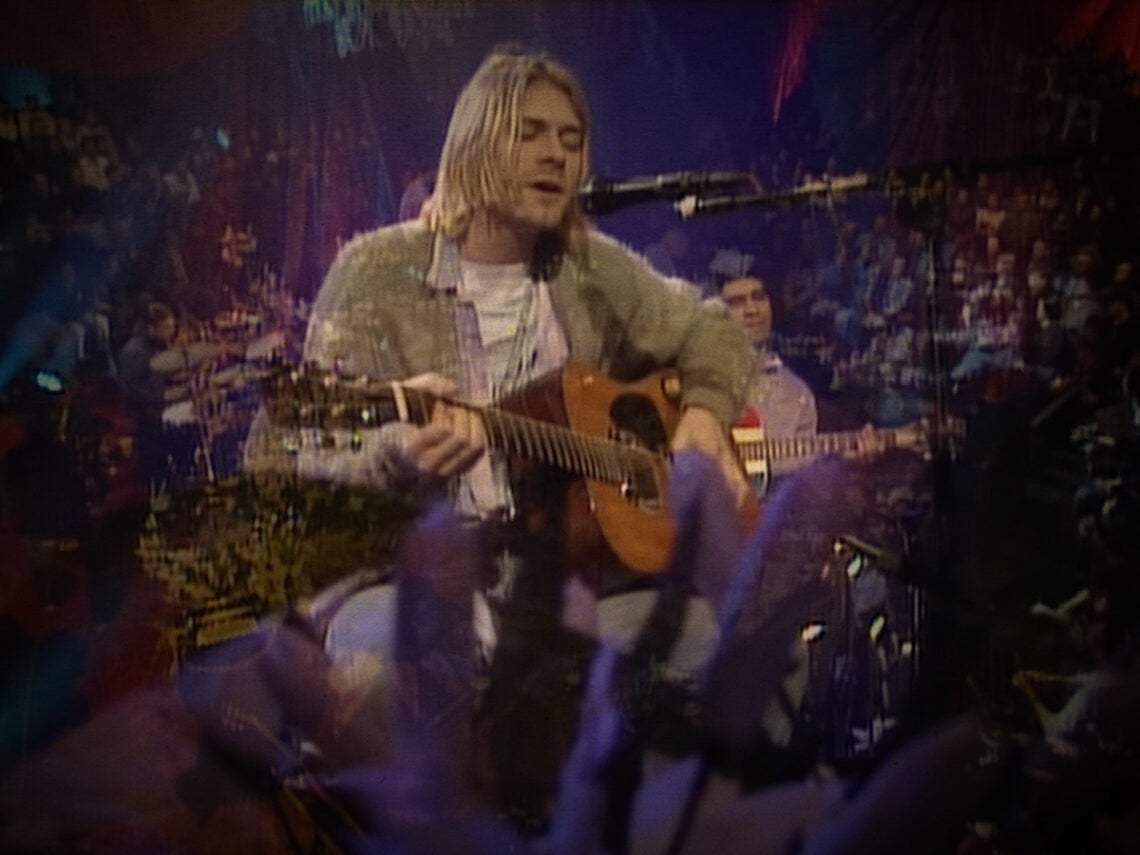
“Kurt was really proud”: the challenge and triumph of Nirvana’s ‘MTV Unplugged in New York’

This is going to sound blasphemous right out of the gate, but the case could be made that the most important episode of MTV Unplugged that ever aired was in the spring of 1990, when two not-particularly-legendary hair metal bands, Damn Yankees and Great White, took the stage at Hollywood Center Studios, propped themselves up on stools, and played some stripped down versions of whatever their hits happened to be.
Up to that point, the inaugural season of Unplugged had already showcased some far more esteemed artists, including Squeeze, 10,000 Maniacs, Sinead O’Connor, Stevie Ray Vaughan, and Don Henley, but it hadn’t really delivered its ultimate proof of concept: that it could attract the heavier rock and metal bands dominating the charts and MTV airwaves at the end of the 1980s and dawn of the ‘90s.
“In hindsight, Unplugged made perfect sense,” producer and show co-creator Robert Small told the Chicago Tribune in 1997, “but at the time, it was a little odd. Heavy metal was emerging. It was the big new form; was actually the big charting, album-selling music, and rap was coming on strong, as well. So, the acoustic thing was weird.”
Small, along with co-creator Jim Burns, had a hunch that edgier bands would come around to the idea of participating in the Unplugged concept, whether for the attention and novelty of it, or, in some cases, as a means of legitimising their craft, proving that their songs stood up without the aid of big audio and visual pyrotechnics.
Sure enough, after the Great White episode, Aerosmith, Poison, and Ratt all headlined the programme by the end of its first season, and by season two, an episode of Yo! MTV Raps was recorded in the Unplugged format, further spreading its popularity.
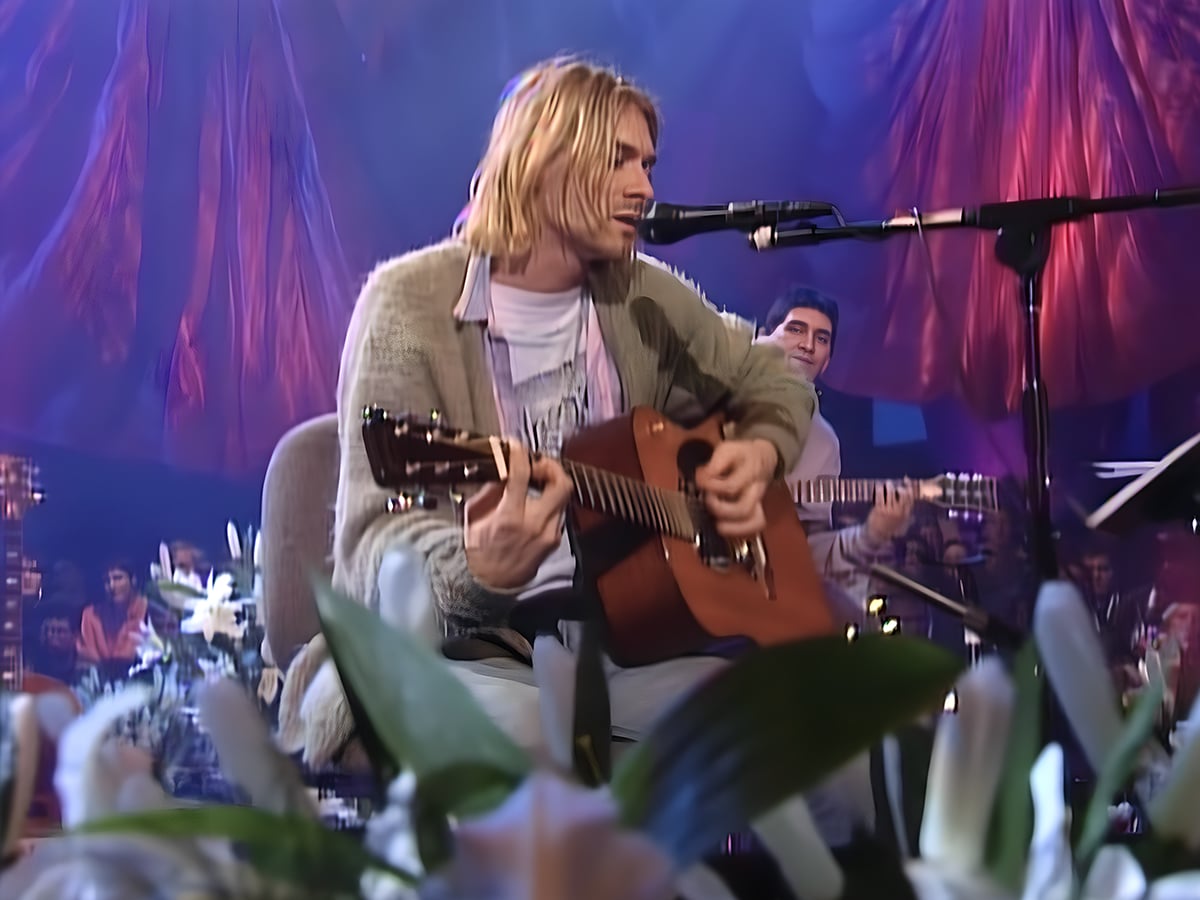
By 1992, which by some measures could be called the absolute peak year of MTV as a cultural entity, Unplugged was now an absolute juggernaut, serving equally as a showcase for young artists and, more noticeably, as an opportunity for older musicians to get their back catalogue back into the zeitgeist. John Mellencamp, Annie Lennox, Joe Cocker, and Queensryche all took part in high-profile episodes that year, and Eric Clapton’s performance became something of a phenomenon, getting released in CD format that August and going straight to number one on the US charts.
1992 was also the year that grunge laid waste to hair metal, and Pearl Jam broke the Unplugged ice for the new Seattle bands by playing a set on the show that spring. A year later, Stone Temple Pilots took their turn, landing several of their established hits back into regular MTV rotation in new videos clipped from their appearance. The big fish, though, was yet to be hooked.
Nirvana, the biggest rock band of the moment, had been hard at work recording and then touring their third album, 1993’s In Utero, and it had thus taken them a while to commit to putting together a set for an Unplugged appearance. In theory, it wasn’t rocket science to simply arrange one’s three-chord punk songs into an acoustic set, but Kurt Cobain didn’t want to go into the project hastily or cynically.
“We were nervous about doing it,” touring guitarist Pat Smear recalled to Clash in 2013. “We knew we couldn’t just show up and play the same songs, the same way, just with acoustic guitars. It wouldn’t have worked. We wanted to do something more special than that, and that pressure definitely made us feel nervous.”
Once Nirvana agreed to do the show in the autumn of 1993, the anxiety around how they would do it was actually, by some accounts, quite helpful in focusing Cobain on a new challenge. In an interview with Rolling Stone a month before the Unplugged performance, Cobain admitted that the whole band was feeling “almost exhausted” in the midst of all the In Utero touring and promotion. “We’ve gone to the point where things are becoming repetitious,” he said. “There’s not something you can move up toward; there’s not something you can look forward to.”
Unplugged, it seems, became something to fill that hole for Kurt over the next few weeks. Increasingly bored with the sort of aggro rock crowd his band was now attracting, Cobain looked at the MTV gig not as a money-making opportunity, as many other acts did, but as a unique creative endeavour, one which he had the unique freedom to curate as he pleased.
“As a music fan, I really liked the idea of Unplugged,” Nirvana manager Danny Goldberg told Grammy.com in 2019. “For the band, creatively, it provided an opportunity to experiment with acoustic music, which Kurt really liked. As much as he loved punk music, he was also a really big fan of acoustic singer-songwriters like Jad Fair. Also, the timing of it was perfect because it allowed the band to continue their presence on MTV without them having to be involved with making another music video.”
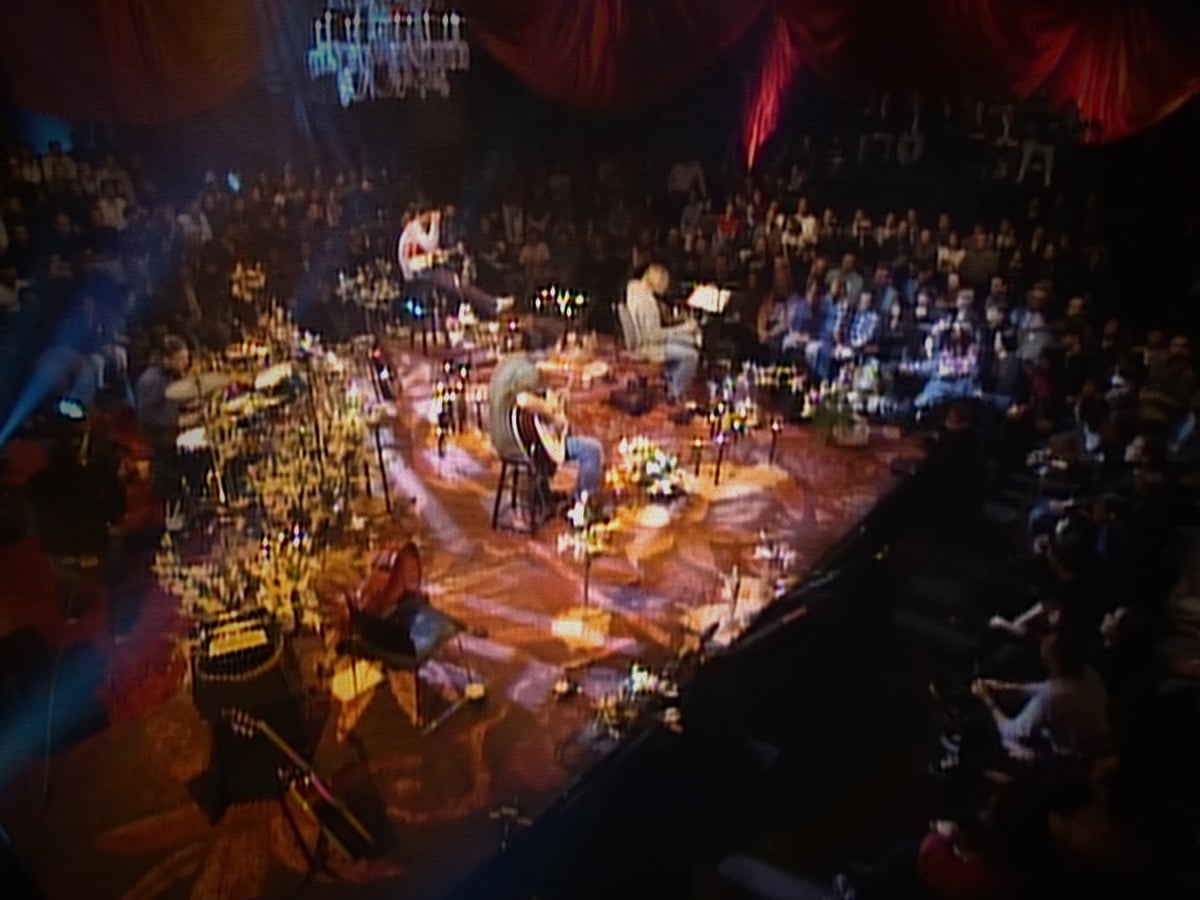
Cobain meticulously strategised the set list, the instrumentation, the guest musicians, and even how the stage at New York’s Sony Music Studios ought to look, envisioning lots of candles and lilies. The show’s producer, Alex Coletti, asked Cobain if he was going for a sort of funeral vibe. “Yeah,” Kurt responded.
“We didn’t want to do Unplugged the conventional way,” drummer Dave Grohl said a year later. “We knew we didn’t want to do an acoustic version of ‘[Smells Like] Teen Spirit’. We felt it would be better if we found other songs.”
Pat Smear, for his part as a big David Bowie fan, asked Kurt if they could do a cover from the album The Man Who Sold the World, and Cobain suggested the title track, which became one of the standout songs from the set. Kurt reached much farther afield for his other covers, famously plucking a Vaselines track [‘Jesus Wants Me For a Sunbeam’], an old Leadbelly murder ballad [‘Where Did You Sleep Last Night’], and of course, a trio of songs by the obscure Arizona cowboy punks known as the Meat Puppets, who would also be Nirvana’s hand-picked “all-star guests” for the taping.
“I said to MTV, ‘they’re gonna be bringing some guests on,” Coletti later recalled to Guitar World. “And at first everybody’s eyes lit up, like, ‘Who’s it gonna be?!’ They wanted to hear the right names: Eddie Vedder, or Tori Amos, or God knows who. But when I said, ‘The Meat Puppets’, it was kind of like, ‘Oh great, they’re not doing any hits, and they’re inviting guests who don’t have any hits to come play. Great.”
But of course, it WAS great, despite the considerable concerns of MTV and, to some degree, the musicians themselves.
Adding to those nerves was Cobain’s desire to perform the entire set straight through, as if it were a normal concert, rather than a television taping. The band had heard some horror stories about Stone Temple Pilots’ recent Unplugged taping, when the band ran through certain songs two, three, or four times to get it right, dragging the recording time beyond six hours, and testing the patience of the studio audience. That was not an option this time around, as Kurt rightly felt the songs wouldn’t retain their rawness if they tried to overly refine them with the cameras in mind.
The band had already been playing stripped-down versions of several songs during the In Utero tour, so they weren’t flying completely blind, but rehearsal time had been minimal, and when they convened on November 18th, 1993, there was nowhere to hide.
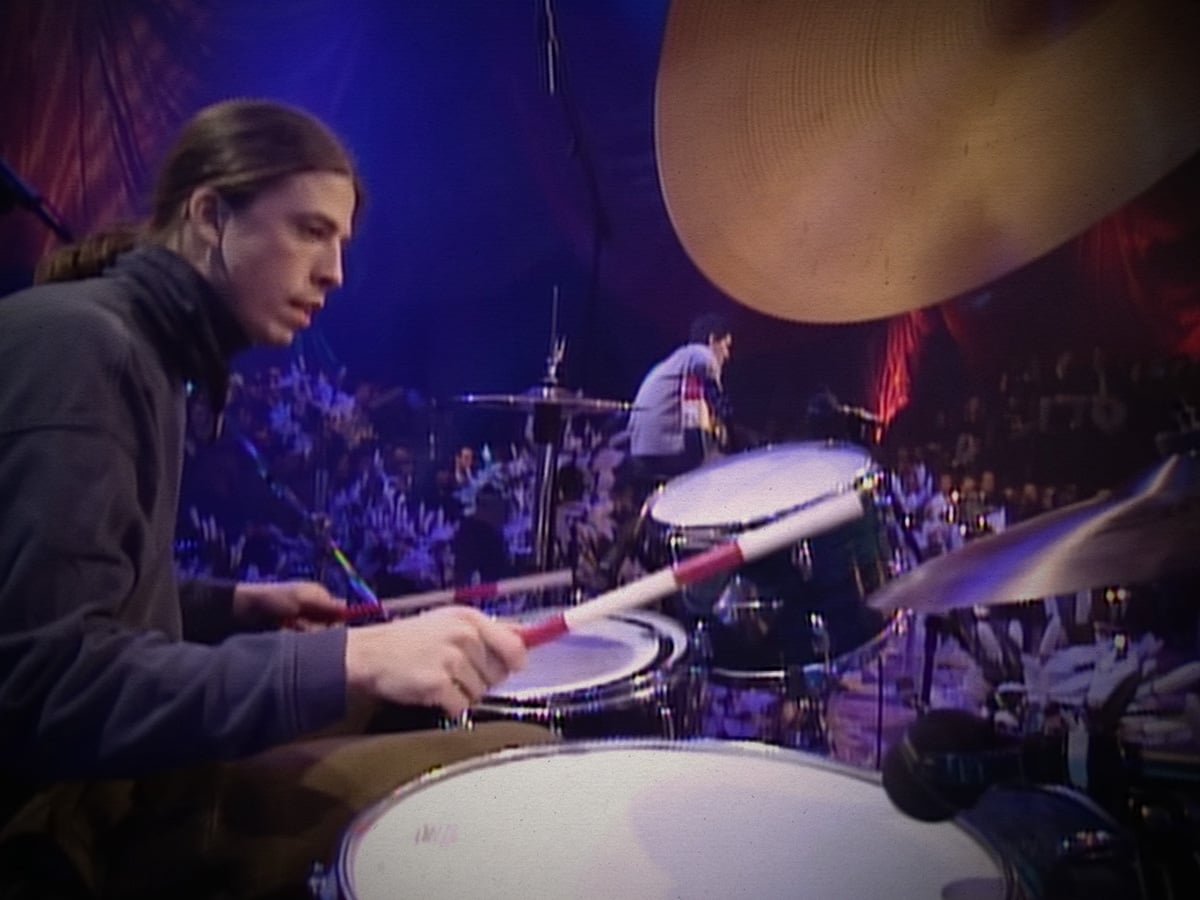
“I think everybody was nervous,” recalled Lori Goldston, who played cello on seven songs that night. “It’s always hard to tell how things are turning out when you’re playing them; it’s really hard to have any kind of perspective. But when I hear it now, I think it sounds really good, and it does sound relaxed… like we’re just playing in somebody’s living room, which I think is ideal.”
Because the performance that was captured that night features single takes of each song, the whole flow of both the concert film and accompanying album is steady and cohesive, as well, complete with the banter among the players as they sort out the right key for the next song or take the piss out of each other (Cobain was supposedly annoyed with Dave Grohl at this point in time, and does tell the drummer to “shut up” after Dave dares to say “that sounded good” at the conclusion of ‘Pennyroyal Tea’).
While it’s impossible to watch Nirvana Unplugged in New York today without seeing all the morbid foreshadowing in every lyric, glance, or mumble, knowing that Cobain would be dead just six months later, the takeaways were very different when the show originally aired in December of 1993. I can vividly recall watching it myself as a kid, and besides digging the Meat Puppets jams and being blown away by Kurt’s vocal on the Leadbelly cover, I was mostly taken with how funny and laid back everyone seemed, including Cobain. For a guy who already had the reputation of being something of a dark, serious soul, he seemed gentle, jokey, even happy.
“The reason we didn’t want to play these two songs in a row,” Cobain sheepishly tells the audience between ‘Dumb’ and ‘Polly’, “is because they’re exactly the same song!”
“Am I going to do this by myself?” he asks the band before starting ‘Pennyroyal Tea’. “Do it yourself,” bassist Krist Novoselic replies, revealing just how on-the-fly this gig really was. “I think I’ll try it in a different key,” Cobain says, cracking a grin. “I’ll try it in a normal key, and if it sounds bad, these people will just have to wait.” The crowd chuckled along.
When the album version of the 14-song performance was released a year later, Cobain wasn’t there to see it, but his fans flocked to it as a coping mechanism, taking it to number one in the US, UK, and half a dozen other countries. Rarely has an unintended “farewell concert” ever served as a better tribute to both the talents and sensibilities of the artist behind it.
“[Kurt] loved doing Unplugged,” his manager Danny Goldberg later said. “He called me afterward, and he was very proud of it and said it was the best thing they’d ever done and it was gonna broaden the band’s appeal.”
The band’s publicist, Jim Merlis, remembered Cobain calling his mother on the phone shortly after the performance. “Kurt was really proud, I mean really proud,” Merlis said. “It was very special.”
