


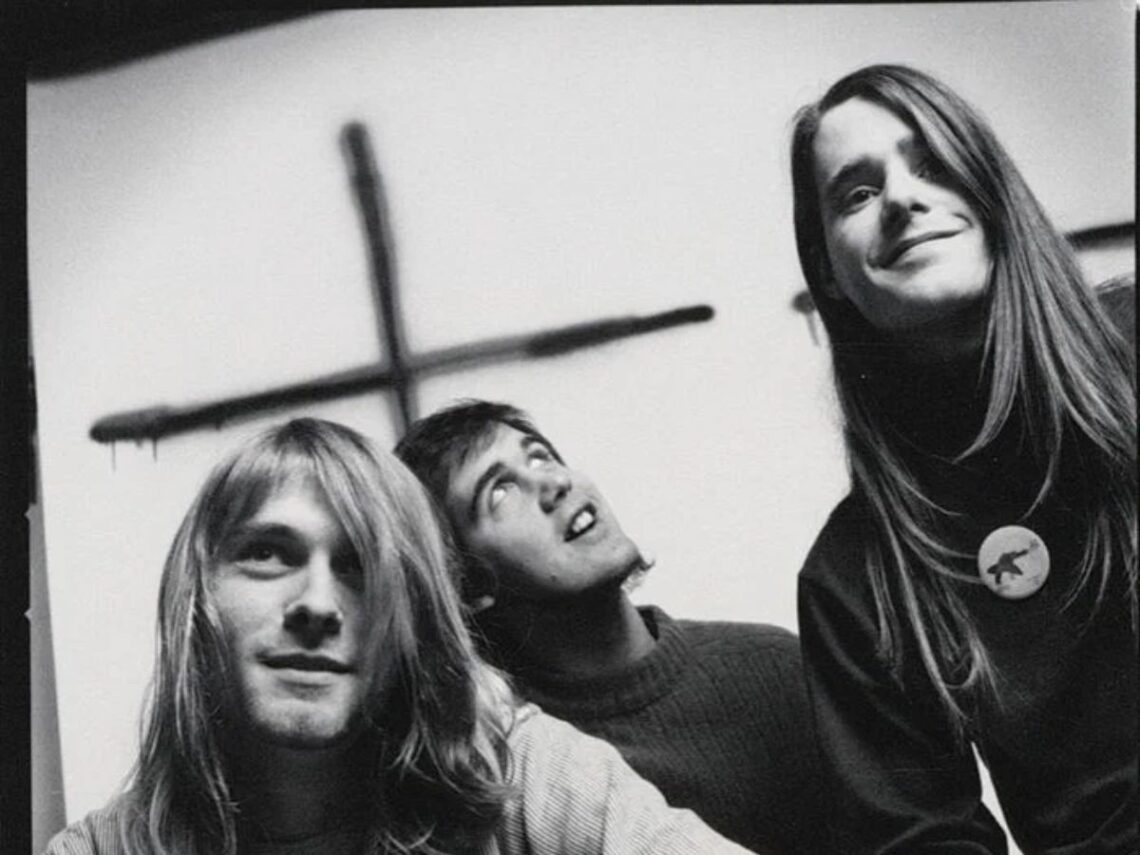
Chad Channing remembers the “unique” Kurt Cobain

Whilst music has welcomed many legends through its doors, only a small group can claim to have had a definitive impact on its trajectory. Whilst The Beatles and Jimi Hendrix are two of the most prominent, another of the most impactful figures was Kurt Cobain and his band Nirvana. Across their short life, the trio changed the course of rock music by re-energising it with clever pop hooks and regular use of the simple but effective quiet-loud-quiet dynamics, now two ubiquitous hallmarks.
Before the seminal moments of Nevermind and In Utero – released via major label Geffen Records and featuring Dave Grohl on drums – Nirvana discharged their debut album Bleach through Sub Pop in 1989. A brilliant way to mark their arrival, it laid the foundations for their blend of sugary pop melodies and sludgy punk. It boasts a host of their classic songs, including ‘About a Girl’, ‘Blew’, ‘School’ and their cover of Shocking Blue’s ‘Love Buzz’.
During the Bleach era, when Nirvana made waves underground, their drummer was Chad Channing. He joined in 1988 but left in 1990, citing creative differences when the band were at the embryonic stages of making its 1991 follow-up, Nevermind. Interestingly, the version of ‘Polly’ used on Nevermind is the original version the band recorded with Channing.
Given Channing’s role in Nirvana’s story, he is better placed than most to comment on Kurt Cobain, who died by suicide in April 1994. Speaking as part of a documentary remembering the late frontman ten years after his death, Channing looked back on his old bandmate and described the “unique” quality he had. Because of this, Channing always knew Cobain would do something extraordinary; it was just a matter of time.
“There was something that I just sort of felt, you know, with being in the band and stuff, and it’s like, I could just tell that there was something going on, that I knew that Kurt had something that was really unique and cool, that was going to come out eventually at some point. I think the big question was ‘when’; we didn’t know that,” he said. “The comparison game… It drives me up the wall, you know, ‘He was like this’, or ‘He was like that’, no actually, he wasn’t like any of that”.
Elsewhere, Channing remembered the effect of Cobain’s tragic death: “I think the thing to me was, and I’ve always felt that I think it was just like being robbed, there were just certain things that I, kind of, wanted to say, things that I would have liked to have talked with him about, not necessarily anything specific, just that we hadn’t talked in a while. When I realised that was gone, that was the hardest part for me. It was just gone. The opportunity wasn’t even going to happen anymore.”
