


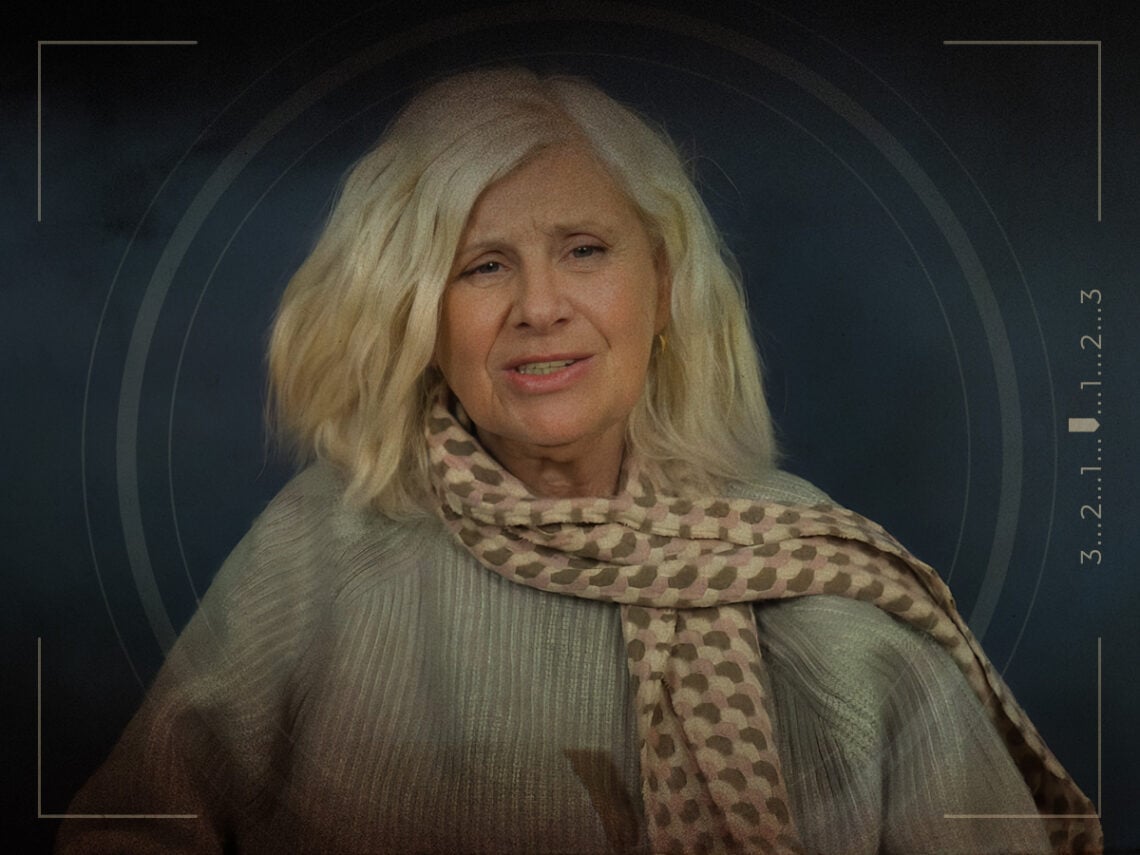
Catherine Breillat’s favourite movies: “Extremely moving and simple”

Filmmaking has the potential to confront us with some of the world’s most shocking truths, forcing us to consider the realities of violence and the complexities of the human experience. Catherine Breillat has routinely pulled back the curtain on some rather uncomfortable themes throughout her career, using her films to explore some of the most taboo aspects of the female experience with a specific focus on the way women navigate their sexuality under the patriarchy.
The filmmaker made her first contribution to French cinema with Catherine & Co, for which she penned the screenplay. However, her directorial debut came a year later with 1976’s A Real Young Girl, a controversial look at a 14-year-old girl’s experience of discovering her sexuality, albeit with the involvement of yeast-infection-inducing activities that will make even the most seasoned cinema-goer squirm. Breillat has always maintained a strong sense of individuality, never compromising her intense and often transgressive visions, resulting in acclaimed yet highly contentious movies like Fat Girl, Anatomy of Hell, and Romance.
Whether you like the filmmaker’s work or not, her place in the French cinema canon is undeniable, and she certainly knows an awful lot about the history of the medium. Appearing in the Criterion Closet in 2024, she picked out some of her favourite movies, revealing a wide array of classics that have informed her approach to filmmaking. “Films are as necessary as books for me, because for me, I always say that to know yourself, you have to recognize yourself,” Breillat explained.
She started by highlighting the first movies she ever saw, starting with Sawdust and Tinsel by Ingmar Bergman, followed by the “absolutely wonderful” Viridiana by Luis Buñuel. Speaking of the latter, she said, “In all my memories of the film, it’s always my face that I see.” Released in 1961, the surrealist film sees Silvia Pinal play a nun whose life takes an unexpected turn after she visits her ageing uncle.
The filmmaker also turned the spotlight towards On the Waterfront, a movie that she claims helped her to “make cinema again” after she was known as a cinematic “pariah” in France. “I went into a movie theater, and at the time they played films on a loop, so I went in at noon, and stayed until midnight watching Baby Doll [also directed by Elia Kazan] on repeat. And the next day I wrote 36 Fillete. That’s the way it is. I find that great geniuses, great works, reach out to you and help you to live, to become an author, to become yourself, really.”
Starring Marlon Brando, the 1954 film is one of his greatest performances, with his character attempting to fight corruption. The sheer power of the film, which is hailed as one of the best ever made, clearly stirred something inside of Breillat, resulting in one of her most controversial movies.
Breillat also selected David Lynch’s debut feature, Eraserhead, as a favourite, praising his “power over images”, which she notes as being inspired by silent cinema “with its phantasmagorical lighting.” She even revealed that a scene from Anatomy of Hell was inspired by Eraserhead, although she didn’t expand on this claim. Still, it’s clear that Breillat and Lynch share a similar interest in depicting the darker sides of life, such as abuse and violence, paired with forays into surrealism and human sexuality.
A childhood favourite should always make an appearance in your favourites list, and for Breillat, it’s Black Orpheus – a rather sophisticated pick that it is admittedly hard to imagine a child enjoying. Yet, who is surprised that someone like Breillat would pick this romantic tragedy as a childhood classic? “I know I loved this movie, and it’s funny because we need to revisit the things we saw in our childhood, it’s like re-reading the books you love,” she explained.
The 1959 film, which brings the myth of Orpheus and Eurydice to a carnival in Rio, has long been heralded as Marcel Camus’ best work, and Breillat believes that it has the power to “transport” you to “another dimension.”
Finally, Andrei Rublev is another essential film for Breillat, who believes that Andrei Tarkovsky’s work is “extremely moving and simple.” Released in 1966, the film explores the life of the painter, although it was highly controversial, with the Soviet Union only showing a censored version for many years due to the way it critically portrayed Russian history, as well as its exploration of religion. It’s no wonder Breillat, who has a long history of censorship and cinematic controversy, would be drawn to such a contentious yet brilliantly thought-provoking masterpiece.
Catherine Breillat’s favourite movies:
- Eraserhead (David Lynch, 1977)
- On the Waterfront (Elia Kazan, 1954)
- Viridiana (Luis Buñuel, 1961)
- Black Orpheus (Marcel Camus, 1959)
- Andrei Rublev (Andrei Tarkovsky, 1966)
