


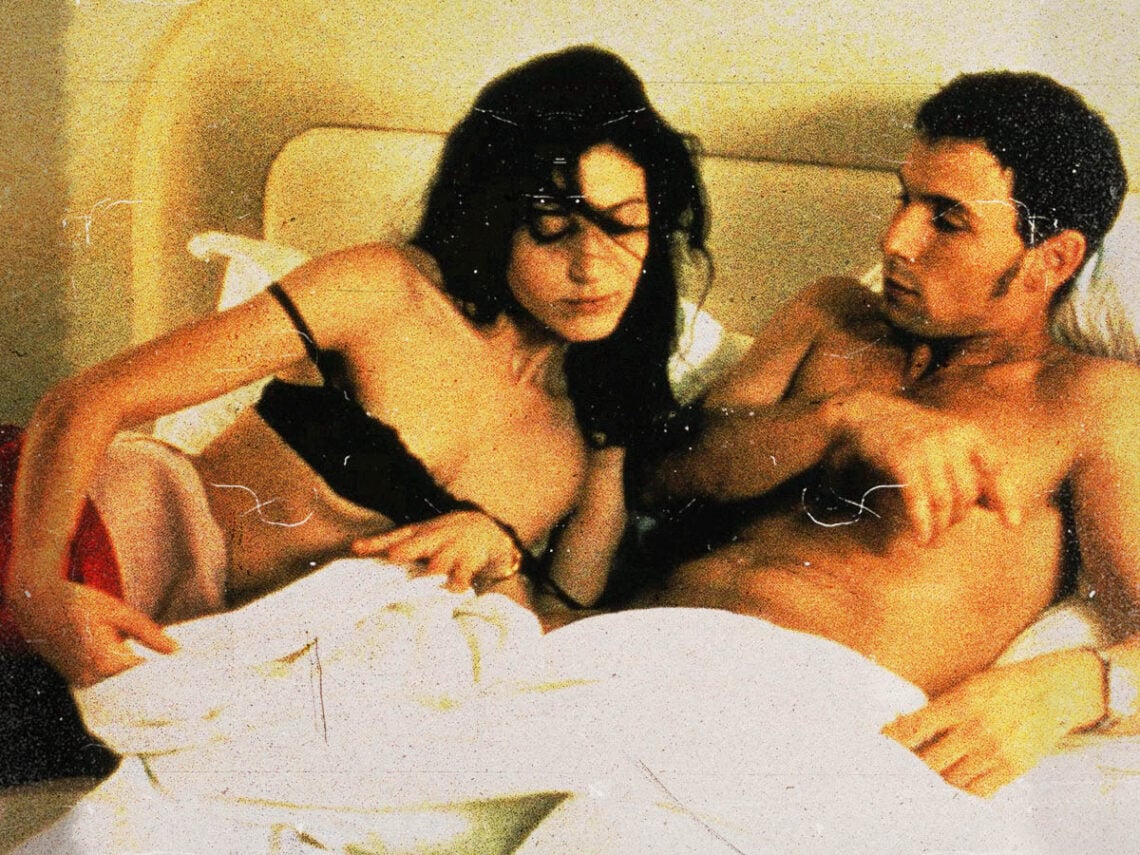
Catherine Breillat: exploring the controversial work of a feminist film icon

Catherine Breillat is one of the most controversial filmmakers of her generation. Born in 1948, she took an interest in cinema after watching Ingmar Bergman’s Sawdust and Tinsel when she was just 12. By 1976, she would direct her first film, A Real Young Girl, based on her novel, Le Soupirail. Breillat’s debut was so shocking that it received an instant ban, subjugating it to obscurity until its re-release at the turn of the 21st century.
Around this time, Breillat released her most vital films, Romance and À ma sœur!, also known as Fat Girl and Anatomy of Hell. The late 1990s and early 2000s saw a wave of transgressive, arresting films emerge from European directors, leading critics to dub these works as ‘New French Extremity’. Alongside films like Gasper Noe’s Irreversible, Claire Denis’ Trouble Every Day and Leos Carax’s Pola X, Breillat’s pictures were defining entries into the subgenre. Focusing on explicit sex and violence, Breillat’s work horrified many audiences – and continue to do so – due to their confronting nature, typically centring taboo images of female sexuality.
Due to the intensity of Breillat’s movies, she has remained one of cinema’s most divisive figures, a testament to her ability to provoke emotion and thought in her audience. Breillat’s films certainly aren’t the kind you can play on a Sunday evening with your family present, let’s just say that. Rather, her work invites viewers into a bleak world full of violence – one where blood is always shed. “I love blood. It’s in all my films,” she told The Guardian. But the often distressing and uneasy images that inform Breillat’s films aren’t there merely to provoke. The director uses such unforgettable scenes, some of which can feel like an assault on the viewer’s morals and comfort, as a vessel to explore themes typically ignored by mainstream cinema – and society as a whole.
Breillat draws us into a messy world where women’s sexuality can be openly explored, from the uneven power dynamics of relationships to the experience of coming of age and the effects of male sexual violence. Romance, one of the filmmaker’s most acclaimed efforts, is a journey into the mind of a sexually and emotionally unsatisfied woman who begins a sadomasochistic affair with the head teacher from the school she teaches at. The film focuses on the dichotomies between men, women, sex, love and violence, yet it never makes any sweeping generalisations. Instead, Breillat takes us into the protagonist’s psyche as she muses over her desire to be treated like an object, even describing herself as a “hole”.
The film features unsimulated sex between the actors, which caused significant attention and subsequent bans across various countries. Romance isn’t a pornographic film – it is not intended to excite or arouse viewers. Yet its explicit nature frequently overshadows Breillat’s clever exploration of one woman’s desperate search for satisfaction, even if that means entering into bizarre and violent situations. From juxtaposing shots of male ejaculation on Marie’s stomach with the image of ultrasound gel being rubbed on her pregnant belly, Breillat explores the ideas of sex and love with slight humour, yet she never strays from approaching her audience in a confronting manner.
Scenes that are rarely explored in cinema, like female masturbation or giving birth (in a way that’s anything but Hollywoodised), are presented frankly, with Breillat’s lens attempting to aid the normalisation of topics usually surrounded by stigma on screen. In Fat Girl, released two years later, Breillat continued to depict images that would end up facing the wrath of censors. The film is arguably her most heartwrenching, with Breillat depicting the senselessness of male violence in a way that feels helplessly real and raw. While the film’s shocking end is the most obvious example of sexual and physical violence, the director highlights less obvious examples through the watchful eye of the 12-year-old Anais, an overweight young girl with a blossoming desire for sex and male attention. While her prettier 15-year-old sister, Elena, wins the attention of a university student, Fernando, Anais watches her sister’s abuse play out from the other side of the bedroom, which coaxes mixed feelings of fear, confusion and jealousy.
With the brutal ending of Fat Girl, Breillat makes an interesting point about the perception of male violence. She knows that audiences will be horrified most by this closing scene. Yet, the earlier instances of Elena being manipulated and coerced into sex, her eyes filling with tears as she reluctantly allows Fernando to sleep with her, are just as awful and uncomfortable. Breillat’s film forces audiences to consider the instances in relation to each other, with the violence of the film’s latter half helping to greater emphasise the pure entitlement, chauvinism and less overt violence executed by Fernando – the type of man that all young women will have encountered, or narrowly avoided, at some point in their life.
Breillat’s unflinching gaze has made her a figure of much discussion. It’s understandable why someone might not enjoy the director’s films, and it’s questionable whether ‘enjoyable’ would be the right term to use when describing her work. In Anatomy of Hell, Breillat’s dissection of female objectification makes sex wholly unsensual, oppressive, and complicated. Sex is not explicitly associated with enjoyment in Breillat’s work; thus, they can hardly be described as such. Rather, the words ‘fascinating’ and ‘interrogating’ might be more appropriate. As we watch a character only known as ‘The Woman’ open herself up to be studied by ‘The Man’, Breillat subverts what it means to be looked at and to see a female body on screen. Intense close-ups of intimate body parts are frequent, with the director forcing us to question the societal contradiction between female anatomy as a source of pleasure, but also disgust and repulsion.
Through her decades-long career, Breillat has earned a cult following of fans while amassing a large number of people who would rather she was never allowed behind a camera again. But this divisiveness and active rebellion against comfort and cinematic norms make Breillat such a unique and enduring figure. Her incredible work is designed to leave a lasting impact, even if the act of watching it can best be described as ‘challenging’.
