


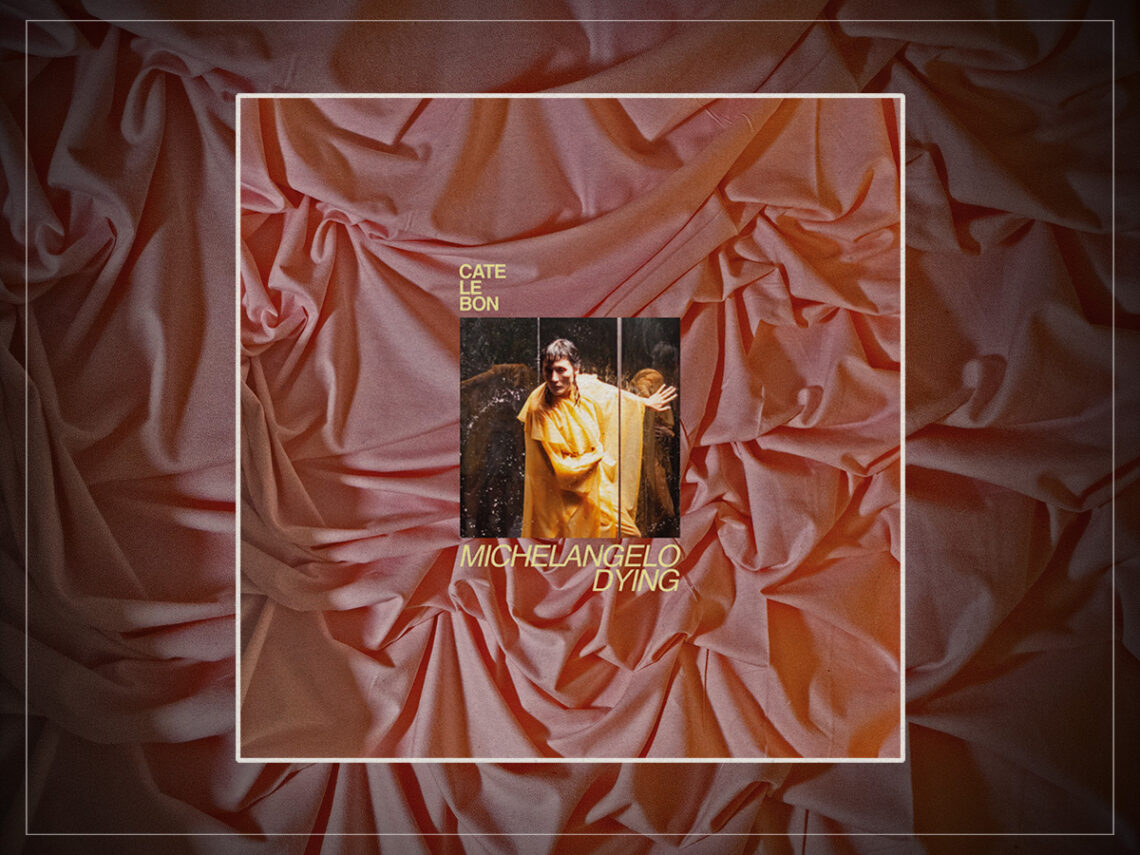
Cate Le Bon – ‘Michelangelo Dying’ album review: Increasingly warped, but still consistent

When you’ve released four exceptional albums on the trot, do you begin to worry that the fifth might see the hot streak come to an end, or do you go out of your way to defy expectations once again by refining your craft? Ask Cate Le Bon, seeing as she was in this position after the release of 2022’s Pompeii.
No shade towards Me Oh My and Cyrk, the first two records that Welsh art pop singer Cate Timothy released under her new wave-inspired pseudonym, but everything from 2013’s Mug Museum onward has been of such exceptional quality that it’s hard to really consider them in the same light. These were records where her experiments hadn’t quite hit the sweet spot, or seemingly found a place where she was entirely comfortable with the direction they were taking.
Mug Museum, the album that most consider to be the turning point in Le Bon’s catalogue, is a collection of off-kilter post-punk songs that have an unusual pop charm to them, with scrappy guitars bouncing off her vocal abstractions in the most intriguing of ways. Crab Day, its successor, delivered more of the same, arguably in more obtuse fashion, but there was only so long that she could let this style continue to navigate her musical trajectory.
It was then with the Mercury Prize-nominated Reward where the elements of psychedelia began creeping in again, with squelching synth sounds and heavily processed sophisti-pop saxophone becoming much more prominent in her work. There was no chance that Le Bon was going to simplify her process, but evolution was necessary for her to continue upping her game.
While her seventh album, Michelangelo Dying, doesn’t feel a million miles away from where things were six years ago on Reward, it does go to show that Le Bon is now operating on a level where consistency appears to be coming instinctively. However, that isn’t to say that things necessarily come easily to her when making records, and for all of her lyrical abstractions, it’s in the words where you really begin to notice where the effort goes into her expression.
Revolving around themes of grieving for lost love and all of the feelings of confusion that come with it, Michelangelo Dying is perhaps her most downcast and desperate record in this sense. As Le Bon tries to make sense of heartache, tracks like ‘Mothers of Riches’ and ‘Is It Worth It (Happy Birthday)’ end up becoming some of the most direct songs in Le Bon’s catalogue from a lyrical perspective, with her delivering lines about how love can “fold into nothing”, or even how she repeats the title of the latter track.
In the past, her philosophy has often been rooted in surrealist imagery, but here, it’s raw. What the music does to support these chaotic feelings is unravel in disorienting ways, with the effects-laden instruments all coagulating as though meeting in liquid form, and only becoming more solidified as the album goes on and Le Bon comes to terms with her feelings.
While the album is geographically scattered all over the world, having been recorded in four separate countries over a three year period, as we come towards the conclusion of the record, we’re taken back to both Le Bon’s roots and adopted home in Los Angeles through a feature from John Cale. While Cale appearing on a compatriot’s record is nothing new, considering he’ll seemingly do anything for his Welsh brethren, ‘Ride’ is the moment where a confusing album finds its place, and establishes something of a familiarity and comfort with the emotions that she’s feeling.
It may soon be time for another change-up in Le Bon’s sound, seeing as her past three albums all possess similar qualities, but that doesn’t make it any less enjoyable. Le Bon has established herself as one of the finest in her field, and wherever she endeavours to go next will undoubtedly be fascinating.
Defining track – ‘Jerome’: As good as the record is, the highlight comes right at the start. The chorus effect on the guitars immediately makes the listener aware that the record is going to be disorienting, and it fuses together some of Le Bon’s dadaist wordplay with some of her most up front and honest lyrics.
For fans of: Welsh charm filtered through a dizzying blend of instrumentation that doesn’t quite sound like it should.
A concluding comment from John Cale: “Hi, is that Adwaith? I’m free whenever you need me.”
Release Date: September 26th, 2025 | Producer: Cate Le Bon & Samur Khouja | Label: Mexican Summer

Never Miss A Beat
The Far Out New Music Newsletter
All the latest New Music from the independent voice of culture.
Straight to your inbox.