


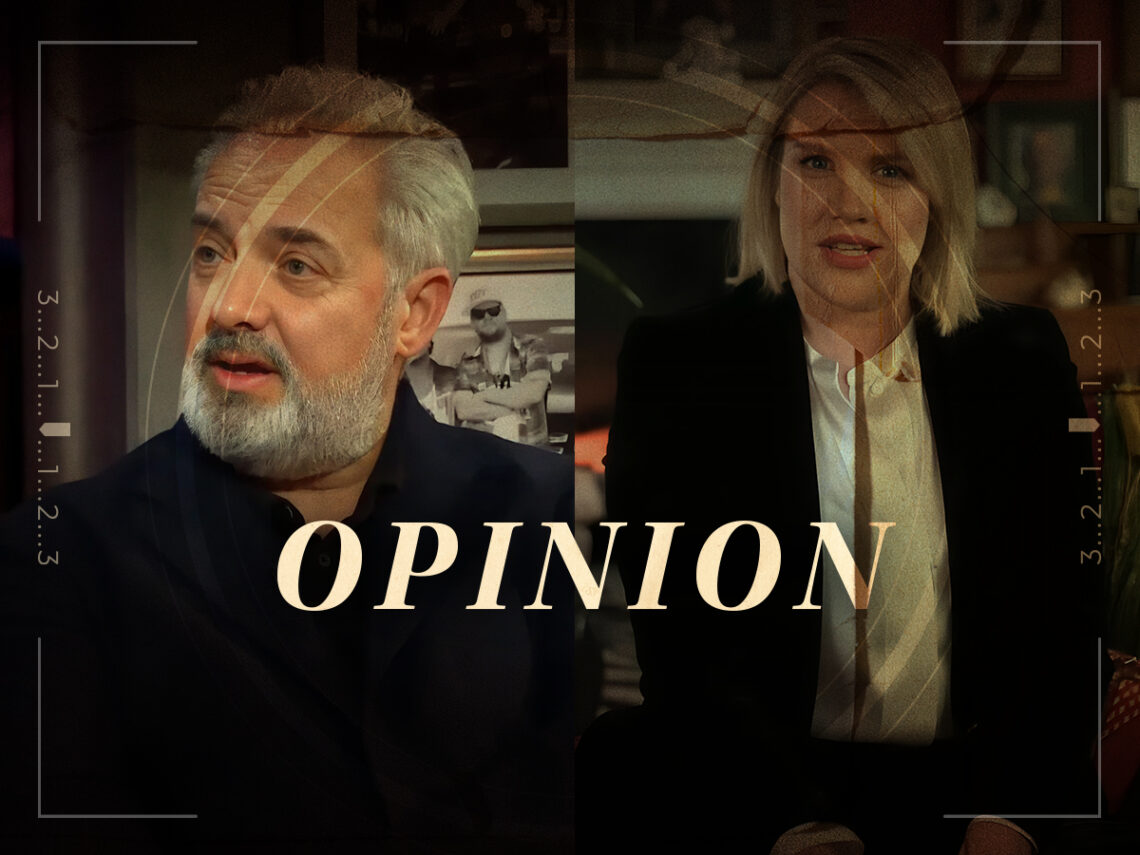
Eulogy to new talent: Sam Mendes, Emerald Fennell and the lazy loss of open castings

Is there any British musical success story as compelling and empowered as that of The Beatles? It’s the English equivalent of the ‘American Dream’—four young, regular boys from working-class Liverpool with zero musical connections and solely their talent to rely on to make it big and become four of the most famous and revered musicians in history. The beginning of that story is the crux: four regular boys and zero leg up. So why is that not being honoured when Sam Mendes is dedicated to telling that story, so dedicated that he’s making four films? Why, instead, have they plucked four actors we already know to tell the story of Britain’s four most famous unknowns?
When the casting of Paul Mescal, Harris Dickinson, Joseph Quinn and Barry Keoghan as Paul McCartney, John Lennon, George Harrison and Ringo Starr, respectively, was announced on April 1st, everyone thought, or hoped, it was an April fool’s prank. Though the choices had been rumoured for a while or even seemingly confirmed by outside voices, fans were still clinging to the ever-slimming hope that, perhaps, they were all false gossip.
But no, it’s true. To tell the career-spanning stories of these young stars, all of whom were only between 27 and 29 when The Beatles broke up, barely adults when they began, Mendes has cast a bunch of famous actors where the youngest is 28. That seems like a minor thing, but it’s one of many things that all beg the same question: Why? Why these people? Why pick four non-northern people to play some of the world’s most famous northerners?
The answer, the only answer, is also another question people are crying out. Why have they picked four famous men to play four stars who famously came from nothing? Then the answer to it lies in the question: it’s because they’re famous.
We’re seeing this a lot lately. Another upcoming movie project causing controversy is Emerald Fennell’s Wuthering Heights adaptation in which to play a canonically wild brunette teenager born and raised in Yorkshire who is only 18 by the end of the novel, Fennell cast 34-year-old blonde Australian Margot Robbie. To play Heathcliff, a character whose entire plotline revolves around being a social outcast largely due to his race, she cast the gorgeous, globally fancied caucasian Jacob Elordi. He’s Australian too. In a book that isn’t just based in Yorkshire but where its landscape is a character, God knows why Fennell thought, ‘Yes, bring in the Aussies’.
But really, again, we know why—it’s because they’re Margot Robbie and Jacob Elordi, just as how Mescal, Dickinson, Keoghan and Quinn all got cast because they’re cinema’s current favourite boys. They’re famous, they’re household names, they will put bums in seats of the cinema screens.
Obviously, that reasoning holds weight. Everyone knows that the creative industries are struggling. Money is hard to come by and even harder to make back as streaming services and pirating continue to shrink box office figures. It’s more complicated but also more vital than ever for studios to make their money back. But come on, for names as big as Fennel and Mendes, surely there is more trust in them? Or in the case of Mendes’ films especially, is it really Paul Mescal who will get people into the cinema, rather than Paul McCartney? Is the legacy of the most famous band in the world not bigger than the reputation of film’s new fancies?
Everyone knows what Mendes should have done. The director should have gone to Liverpool and looked around. As a city, it’s a true hot spot for artistry, which is exactly why McCartney founded the Liverpool Institute for Performing Arts (LIPA) to support and nurture local talent and help them get opportunities. Given that his own school runs acting courses, why has the next McCartney not been picked from his own roster? Why, instead of spending more time and money on things like accent coaches and likely intense hair and makeup, if not some degree of AI or special effects to make the actors look younger and more like their respective Beatle, did Mendes not go to the place they were made, find the closest thing and spend that effort on raising new talent. At least then the accents would be right because, given Keoghan’s attempt at Scouse in Saltburn, it’s not looking very hopeful.
Whatever happened to the open call? Lately, it feels like every role is filled by the same people, as if this generation picked a select class that they would call its ‘new talent’ and then stop looking around for more, with Mescal, Dickinson, Keoghan, Quinn and Elordi being within those ranks. It feels so rare to see a movie introducing a new actor or to see directors throwing their trust behind someone and launching a new face into the world, using their own power as a well-known name to get the world to learn an unknown one. That’s what people like Fennell and Mendes should be doing, using their own sway and reputation to open this industry up and let breakthrough actors stand on their shoulders as a way to kick the door down with their first major role. To simply cast people audiences already know, especially to play people whose entire story comes down to the fact that they were unknown, it’s not just disappointing, it feels lazy.
Do people even audition anymore? Thinking about Mescal and Elordi getting called up with these roles breaks my heart, knowing the way that hoards upon hoards of young actors, who would have been much more accurate and better fits for the realism of the roles, would have strived and grafted for it. Right now, they’re in places like LIPA, training, desperately sending out self-tapes and getting up early for the rare open calls that still exist. They’re doing local shows and starring in small films, working and hoping for a big door to open one day. But how will that happen without someone opening it? And why, when the source material more than calls for it, won’t people like Mendes and Fennell hold it open rather than picking a big name and calling it a lazy day?

Never Miss A Beat
The Far Out Beatles Newsletter
All the latest stories about The Beatles from the independent voice of culture.
Straight to your inbox.