


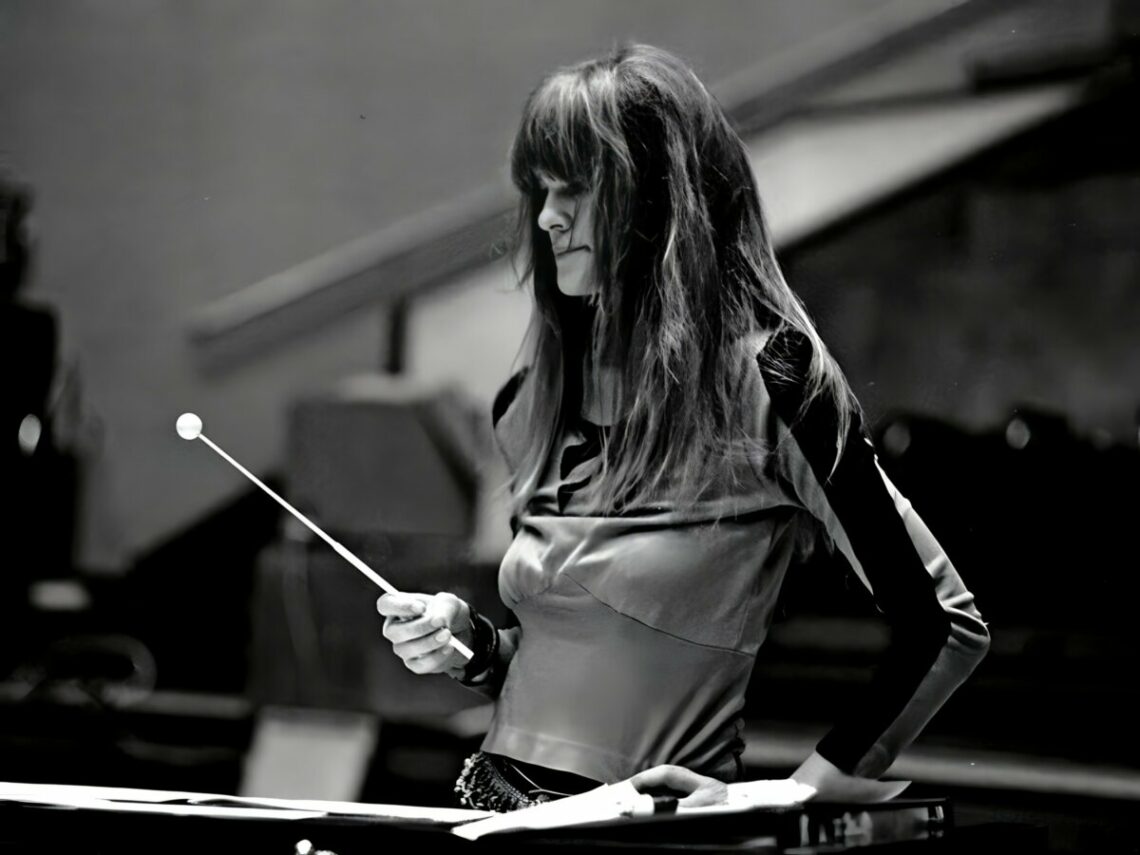
‘Escalator Over the Hill’: Carla Bley’s overlooked 1970s masterpiece

When collating the list of jazz‘s seminal pioneers, composer Carla Bley is often overlooked. Harnessing all of the genre’s many permutations across bombastic theatre works to delicate chamber pieces, Bley’s wieldy decades-long body of work is only typified by restless creative energy.
Serving as the original conductor and arranger for big bassist Charlie Haden’s politically charged Liberation Music Orchestra, plus winning collaborations across the jazz-rock spectrum from Hiram Bullock and Larry Willis to Robert Wyatt and Pink Floyd drummer Nick Mason.
Bitten by the jazz bug when witnessing a live set by vibraphonist Lionel Hampton at 12 years old, she later worked as a cigarette girl in New York’s famous Birdland club while immersing herself in the scene’s late 1950s zenith. Meeting first husband and pianist Paul Bley, he encouraged her to write, which saw her credited on his early run of records. Swiftly, Bley was commissioned to write for Lydian theorist George Russell’s landmark sextet.
As the popular music of the 1960s was evolving into the album era, Bley found a perfect foil for her growing command of disparate sonic stylings and compositions. Having founded the Jazz Composer’s Orchestra and its independent label wing, Bley released her 1971 opus Escalator Over the Hill, a triple LP jazz-rock opera collaboration with poet Paul Haines veering between cabaret kick, rustic country twang, and terse minimalism all masterfully shaped into an incongruous yet cohesive whole.
“He was a writer of words, and I was a writer of notes. We thought, ‘Let’s do an opera’. It really started without my knowledge or permission. I had a piece I was working on for myself, and I was sitting at the piano. I was stuck. He was living in Paris, and he sent me a poem,” Bley recalled to uDiscover Music. “It fit exactly, syllable by syllable, into what I was writing. And his poem gave me the next phrase that I was missing. It was called ‘Detective Writer Daughter’. That was the first piece for Escalator. I wrote right back and said the opera is beginning.”
Subtitled a “chronotransduction”, a term coined by scientist Sherry Speeth loosely meaning ‘a transference of time’, Escalator Over the Hill‘s weighty gravitas pulled in as many as 30 musicians, including Cream’s Jack Bruce, actor and Andy Warhol star Viva, and a young Linda Rondstadt all adding to the mammoth’s heady brew.
Bley achieves a remarkable trick with her signature masterwork: heading an LP which is powered with seismic awe but never imploding into puffed-up grandiosity that can befall other rock opera efforts.
Bley continued forging a highly successful jazz legacy, always connected to her unique creative intuition she honed way back in the 1950s. Reflecting on her rollercoaster of a career to The Times in 2016: “There’s nobody that plays like me — why would they? So if I’ve had an influence, maybe it would be if they decided to play like themselves. In other words, the whole idea of not playing like anybody is a way of playing.”
