


“Magic”: the Canadian outpost that redefined the New Hollywood era

The New Hollywood era was a monumental turning point for mainstream cinema, introducing audiences to a more realistic vision of America, where freedom is lost and gained.
While Hollywood had previously championed happy endings, shooting on sound stages and censoring anything particularly taboo, this new era marked a stark contrast from the golden era.
Bonnie and Clyde, Easy Rider, The Graduate, Harold and Maude, The Godfather, Mean Streets, all these films were a major moment in cinema history, and not only were they thematically rather different, but they looked very different, too – filmmakers were taking influence from the likes of European directors, particularly the French, who weren’t tied down to studio-style filmmaking, instead opting for handheld shooting and natural lighting.
This influence became particularly apparent when, near the latter end of the New Hollywood period, one of Europe’s finest cinematographers was hired by Terrence Malick to shoot Days of Heaven. All of a sudden, Hollywood levelled up, with the potential for mainstream movies to look otherworldly, like a painting brought to life, becoming fully realised.
Spanish cinematographer Néstor Almendros was a frequent collaborator with French New Wave figures like Eric Rohmer and Francois Truffaut, filming his first feature in 1967, Rohmer’s stunning sun-soaked La Collectionneuse. He was also responsible for the likes of My Night With Maud, Bed and Board, More, Maîtresse, and Love in the Afternoon, and while he’d shot the small American film The Wild Racers in 1968, he’d never really done a major Hollywood movie.
Yet, Days of Heaven proved to be his ticket into an even more high-profile arena, and he was soon hired for the likes of The Blue Lagoon, Kramer vs. Kramer, Sophie’s Choice, and Heartburn (it seems like he kept reuniting with Meryl Streep). The movie redefined the look of Hollywood movies, and it was his precise attention to detail and reliance on natural light that allowed him to achieve such success.
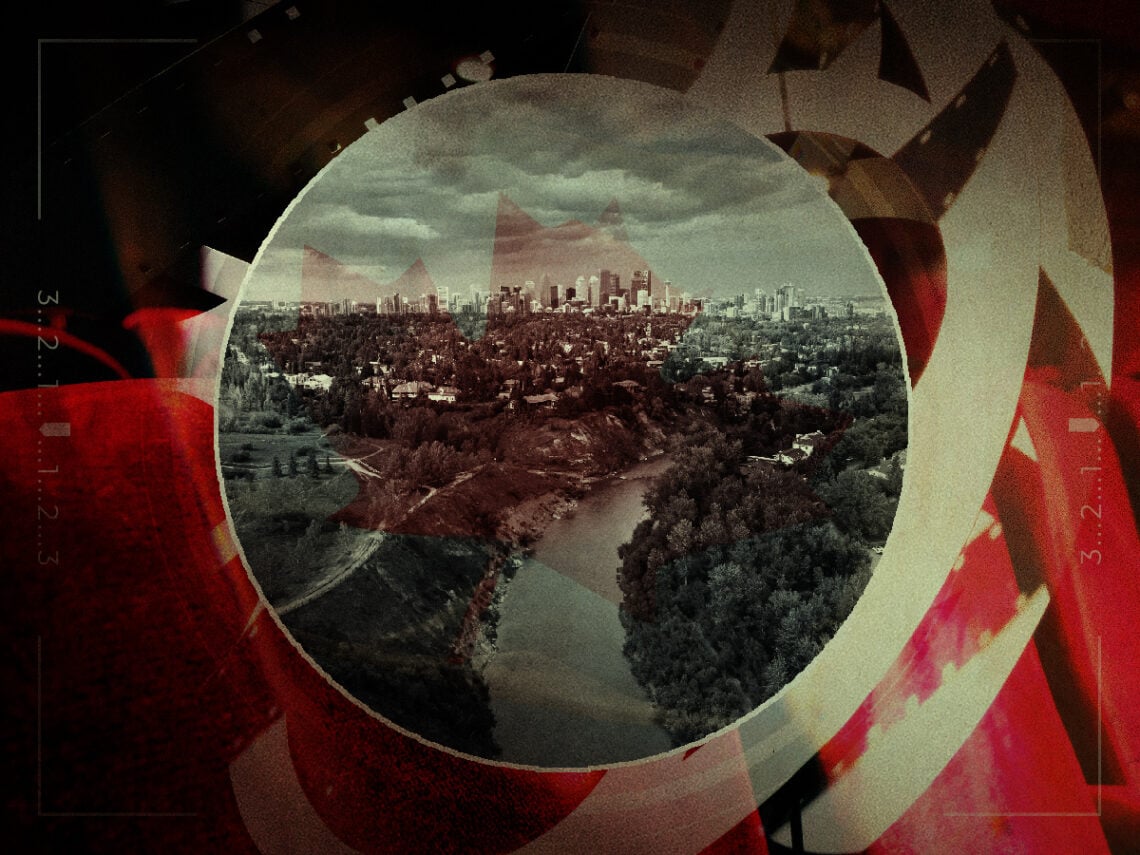
Despite being set in Texas, the film was shot in Canada, specifically Whiskey Gap, Alberta and Calgary. Because of Almendros’ specific way of working and capturing light, most of the shooting had to be done at dusk or dawn, which certainly made for a challenging production.
“The light is very soft, and there is something magic about it. It limited us to around 20 minutes a day, but it did pay off on the screen. It gave some kind of magic look, a beauty and romanticism,” he once explained. That’s certainly a difficult task, but it evidently paid off; the golden hour lighting that defines Days of Heaven is not only mesmerising, but also vital to the dreamy, poetic atmosphere of the romantic drama.
Almendros won an Academy Award for the film, subsequently earning three more nominations over the coming years for his other Hollywood contributions, and all thanks to a Spanish cinematographer renowned for his work in French cinema, who shot a classic Hollywood movie in Canada. Mainstream cinema was forever changed, with the hypnotic beauty of the film defining an era.
