


Can AI-generated ‘photos’ be considered real art?

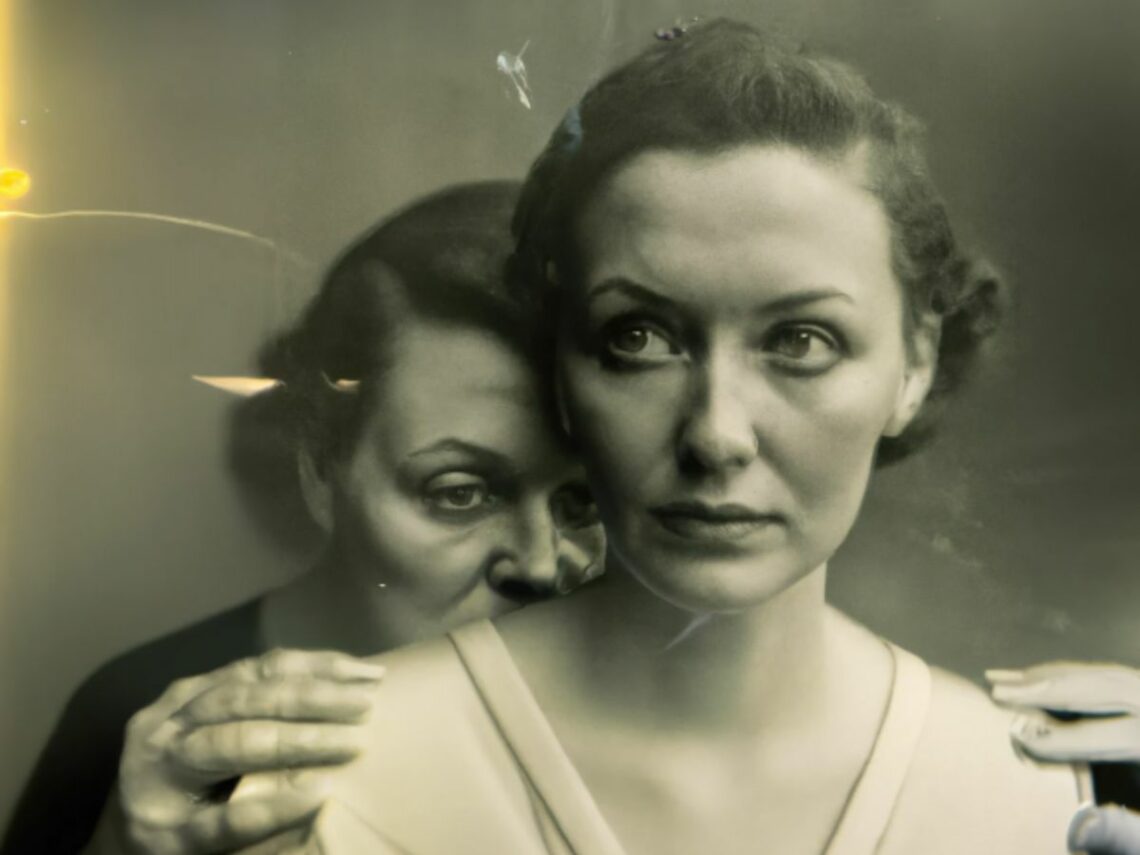
Recently, Boris Eldagsen submitted his photograph, ‘Pseudomnesia: The Electrician’, to the Sony World Photography Award. The black-and-white image depicting two women of different ages won the ‘Creative Open’ category, yet Eldagsen refused to accept the prize. As it turned out, the artist had created the photograph using AI technology – no camera was involved.
On his website, Eldagsen explained that he submitted the photograph to open up a discussion about the use of artificial intelligence within art, writing: “AI images and photography should not compete with each other in an award like this.” Upon first glance, Eldagsen’s image looks like an actual photograph, yet upon closer inspection, it becomes rather apparent that it was artificially generated. However, the fact that it won an award, beating off competition from authentic photographers, begs the question: do AI-generated images have any value? And what are the dangers of AI infiltrating the art world?
Firstly, by definition, photography is described as “the process or art producing images of objects on sensitised surfaces by the chemical action of light or of other forms of radiant energy”. Therefore, in that respect, AI-generated images can never truly be considered forms of photography. Photographing others is intimate and innately human – you simply cannot achieve this by generating an image with AI.
In Susan Sontag’s seminal essay collection, On Photography, she explains that “to take a photograph is to participate in another person’s mortality, vulnerability, mutability. Precisely by slicing out this moment and freezing it, all photographs testify to time’s relentless melt.” She raises crucial concerns regarding photography’s ethical and moral implications, suggesting that “to photograph people is to violate them”. Is it OK to photograph real people on the street without their permission? Does the rapid consumption of real-life suffering desensitise us to exploitation and violence?
One might argue that AI would solve these problems – yet, if AI ‘photography’ becomes the norm, how can we differentiate between reality and fiction? The rise of AI-created images is dangerous for many reasons, and its very existence goes against the ethos of the photographic medium. Despite the moral debates that come with photography, it is one of the most powerful methods of communication and art forms, shaping our world through distinctively human perspectives.
When we look at the work of street photographers, from Henri-Cartier Bresson to Vivian Maier, their images capture a period in time and chart the changing landscapes of different locations in a way that a computer never could. These artists’ human instincts allow emotion to bleed through their photos. When we look at their subjects, we know we are witnessing genuine people, subsequently creating effect. Great photographers have incited change through powerful images of real people and situations.
For example, let’s think about a photographer such as Nan Goldin. Her photographs were incredibly intimate, documenting important topics such as domestic violence and AIDS alongside snapshots of New York’s gay subculture and nightlife. When you look at one of Goldin’s images, you are completely enveloped in her world, which wasn’t always pretty. She captured shots of her friends dying due to the government’s negligence towards AIDS and photographed her face, beaten by her boyfriend. If we were to use AI to attempt to create a similar style of image, the result would be lifeless, lacking any authenticity, and holding no weight.
A lack of authenticity is, arguably, the main concern surrounding AI. Yes, AI might be able to create an image that, technically, looks great, but it would mean nothing. Recently, Australian musician and writer Nick Cave was asked about his opinion on an AI-generated song penned in his writing style. He explained: “Songs arise out of suffering, by which I mean they are predicated upon the complex, internal human struggle of creation and, well, as far as I know, algorithms don’t feel. Data doesn’t suffer. ChatGPT has no inner being, it has been nowhere, it has endured nothing.” The same goes for photography, with Caves’s point that art requires “humanness” ringing particularly true.
Of course, there is a risk that the creation of AI images could replace real jobs for photographers. The creative industry is already notoriously hard to get into, especially for marginalised groups – will artists end up competing with AI robots for jobs? It might be cheaper for companies to use AI software rather than employing real artists, yet, this would be detrimental to so many people in need of work. Sadly, it would be unsurprising if businesses used AI software instead of real artists – after all, the British government have a notorious history of cutting arts funding.
Although AI technology is not a totally valueless medium – with endless possibilities available, it could be used to create images that humans cannot – its infiltration into the art world is a dangerous, slippery slope. AI images risk the homogenisation of photography, diluting the medium and stripping away its most essential component – as Cave puts it, “humanness”. We also cannot ignore the fact that AI technology works by scanning databases containing other people’s work – thus, AI ‘art’ is a form of plagiarism. Hopefully, the rapid increase in AI-generated art will allow for a greater appreciation of authentic, human-made art.
