


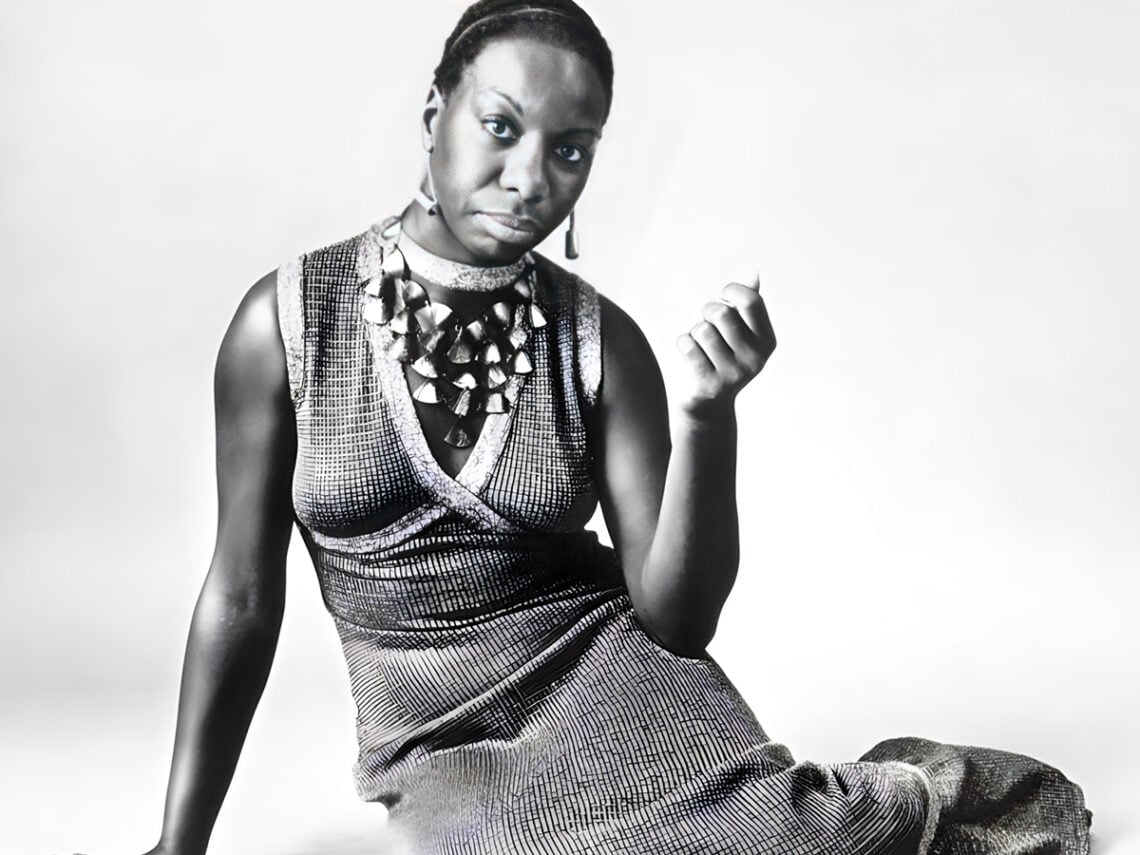
Calling out racial stereotyping: The four women in Nina Simone’s ‘Four Women’

Wild Is the Wind is an album filled with extraordinarily romantic soundscapes, the perfect soundtrack to an evening under the glow of an end-of-the-week sunset. Amid these tracks, however, lies one outlier: ‘Four Women’, a sombre and calculated piece that Nina Simone wrote about four African-American women and the various stereotypes society pins on them.
With simple tricklings of piano notes and slow, considered rhythms, ‘Four Women’ sets up its serious subject matter in nature, with a subtle, almost unnoticeable increase in intensity with each passing story. Although Simone’s vocals begin with effortless deliberation, soon, her voice is cracking, replicating the angst felt by each of the women.
The first verse tells the story of a woman called Aunt Sarah, who is said to be a depiction of American slavery. The words she croons reflect this, beginning with “my arms are long” and “my hair is woolly” and branching out into themes of resilience and suffering, as she sings about Aunt Sarah having “strong arms” and a back that is capable of taking the pain inflicted “again and again”.
The second story includes a woman called Saffronia, who has a mixed ethnic background, which yields difficulties because she lives “between two worlds”. Of her background, she sings, “My father was rich and white / He forced my mother late one night”. This highlights the endless suffering of Black people and the prejudice they often face from wealthy white people and how this dichotomy resulted in her oppression.
Conversely, the third woman, Sweet Thing, finds acceptance from both Black and white people due to her profession as a sex worker, which means that she will be accepted by anyone “who has money to buy”. The fourth story, and undeniably the most climactic part of the song, revolves around Peaches, who has become “bitter” because her “parents were slaves”.
This quartet of suffering Black portraits broadly hits out at the unjust stereotypes of Black people and criticises the harmful perceptions often perpetuated by society but also those in positions of power. All four of the women are undeniably strong characters, but each faces their own version of racism and oppression as a result of stereotyping, which often removes individual identities and results in a loss of compassion.
Although Simone wrote the song in one night in the mid-1960s, she didn’t release it for months, fearful that it was too blunt. Meanwhile, she was well aware of the seriousness of the topic and the appropriateness of calling out such an insidious issue. “I am emphatically against the injustices of black people,” Simone once explained, recalling the conversations she had with Black women that resulted in ‘Four Women’.
“We hated our complexions, our hair, our bodies,” she continued, a fact that led her to realise they “had been brainwashed into feeling this way about ourselves by some Black men and many white people.” Despite the significance of the song’s message, however, she was startled by the amount of Black radio stations that wouldn’t play it. “The truth hurts,” she reflected.
Even more startling is the fact that the song continues to hold its power, even today. In the beginning, the singer came up with four different women to represent a wider issue of global systemic racism. Drawing from the various ways that Black women continue to remain strong in the face of adversity, ‘Four Women’ was a strong Black anthem, a reminder of the power of activism and resilience.
Today, ‘Four Women’ represents the exact same sentiment while also demonstrating the importance of celebrating diversity and using music as a tool for social change. Ultimately, the song is a tour de force that reminds us to keep working towards the dissolution of Black oppression and a call to arms against the prevalence of such unrelenting institutional issues.
