


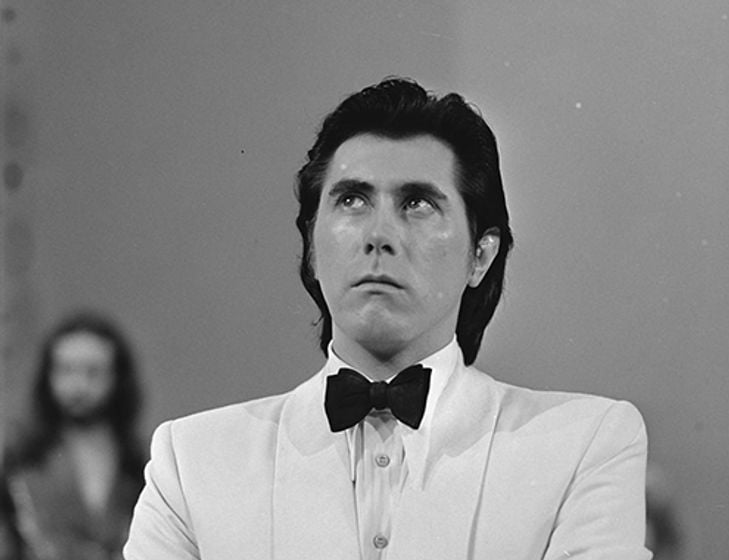
Bryan Ferry on the “underappreciated” Roxy Music songs

When Roxy Music burst onto the British rock scene in 1972, people weren’t entirely sure what to make of what they heard and saw. The flamboyantly garbed collective was difficult to pigeonhole. They certainly shared much of their DNA with the prog-rock movement, but their style, thanks to that seductive Bryan Ferry croon, also pointed towards the burgeoning glam-rock craze championed by the likes of David Bowie and Marc Bolan.
Where prog-rock took a route of fastidious experimentation through the mid-’70s – in stark contrast to the punk movement – artists like Roxy Music and David Bowie were punk luminaries, with Sex Pistols among countless subsequent acts citing them as prime influences.
In Roxy Music’s case, the band grew through eight progressive studio albums over ten years, split into two distinct eras. Between their 1972 eponymous debut album and 1975’s Siren, the band introduced an unprecedented art rock sound with the initial involvement of synth maverick Brian Eno.
In 1976, Roxy Music disbanded while Ferry worked on a couple of solo projects, and when they reunited in 1978, the band’s sound began to move along a new trajectory. This direction was one of decreased experimentalism and focused on smoother, more polished compositions that would inform the 1980s new romantic era. This second chapter for the band reached both its conclusion and zenith with 1982’s Avalon.
This year, Roxy Music have reunited for a tour across North America and the UK in celebration of their 50th anniversary. In an interview with the Guardian earlier this year, following the tour’s announcement, frontman Bryan Ferry discussed some of his favourite Roxy material.
Kicking off the interview, Ferry was asked to name the album he’s most proud of. “The first album was interesting and obviously pointed to several different directions, but [1973’s] For Your Pleasure was a big album for me,” he replied. “We’d been on the road and were much more experienced and integrated. We recorded in Air Studios with engineers in lab coats, high above Oxford Street, with people running around below. It felt like the centre of everything. The album just felt more mature: darker, with better singing.”
“Today, my other favourite is Avalon, ten years later: very different, a real mood album, very atmospheric,” Ferry added. “Maybe the Manifesto album isn’t as strong as the others. Obviously, it’s got ‘Dance Away’, but there are tracks – ‘Trash’, ‘My Little Girl’, ‘Cry, Cry, Cry’ – that I wouldn’t listen to now.”
After identifying 1979’s comeback album, Manifesto, as one of the band’s weakest, the interviewer asked if Ferry felt any of their material had been “underappreciated” over the years.
“Sometimes less obvious songs get overshadowed,” Ferry opined. “I thought the opening title track of Manifesto – with Alan Spenner playing great bass – was very strong. I’d done [1978 solo album] The Bride Stripped Bare with American musicians and was disappointed with how it was received. Punk had happened, and I felt out of step, so I wanted to come back more in tune with what was happening.”
“‘Sentimental Fool’ [from Siren, 1975] and ‘The Bogus Man’ [from For Your Pleasure, 1973] are also out-on-a-limb tracks that never got played on the radio but are great if people have the time to listen,” he added.
Listen to the Roxy Music tracks that Bryan Ferry thinks are underappreciated below.
