


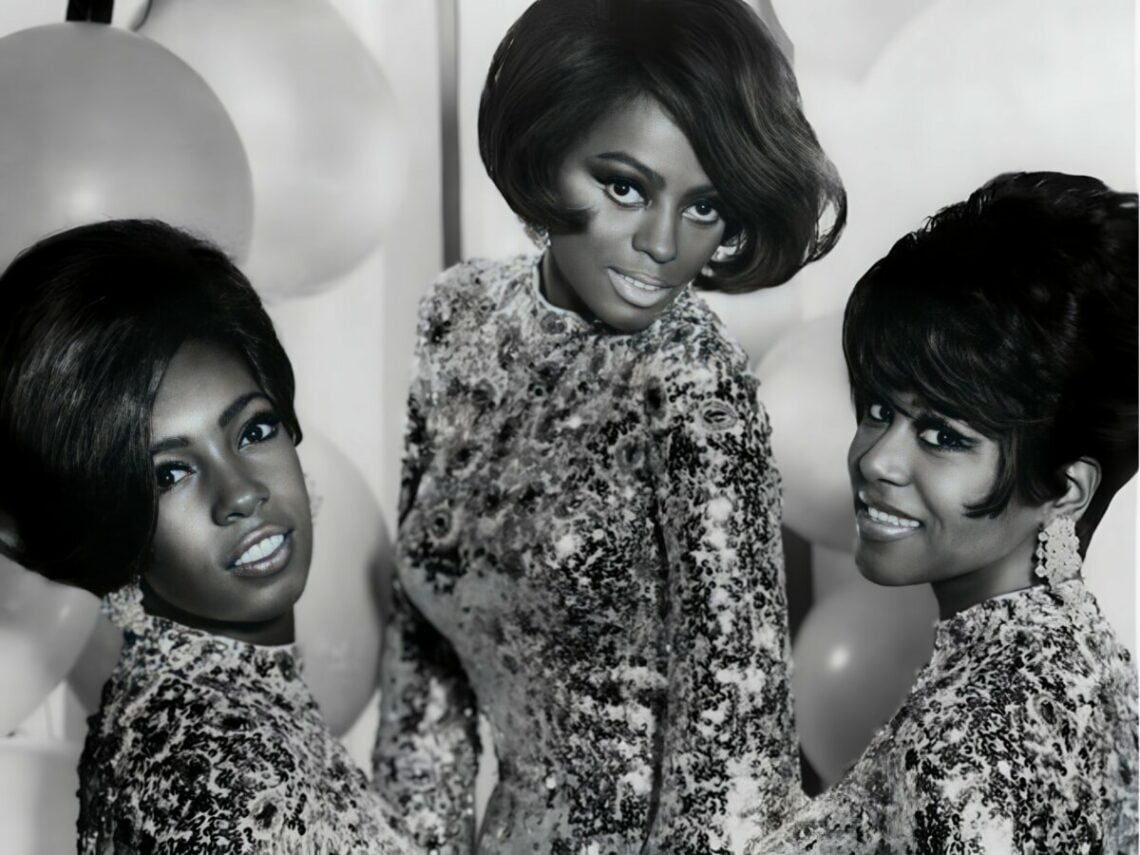
How a brutal touring schedule slowly broke down Diana Ross and the Supremes: “I have no one to replace me”

In the summer of 1967, the Supremes were still the best-selling American recording group of the decade and ranked second only to The Beatles in overall US record sales.
To achieve and maintain that level of success, however, the jewels in the Motown crown were put through a hellacious touring and recording schedule, with frontwoman Diana Ross forced to endure the lion’s share of it.
“Every year we tell our manager, six months work and two weeks off,” Ross told Montreal’s Gazette in August of ‘67, “But so far we’ve never had more than three days at a time at home”.
“That hasn’t been too hard on the other two, because they have understudies,” Ross added, referring to her original bandmates Mary Wilson and Florence Ballard. “But I have no one to replace me.”
Ross’s use of the word “understudies” could open a can of worms in its own right, as Florence Ballard had essentially just been forced out of the Supremes by Motown boss Berry Gordy, citing her struggles with alcohol. Ballard’s replacement, Cindy Birdsong, was the supposed “understudy” but was actually a full-time replacement in training, cruelly travelling with the group under Ballard’s nose as the mood within the group reached an all-time low.

While Ross resented the extra pressure and demands that came with being the focal point of the Supremes, having never once missed a performance since their rise to fame, she also benefited from that position and wielded the power when it suited her. Earlier in 1967, she and Gordy had agreed to rebrand the group as Diana Ross & The Supremes, a slap in the face to Wilson and Ballard that further splintered the relationships between the three women.
At the time of Ross’s interview with the Montreal Gazette, the official report from Motown was that Ballard had left the group due to “exhaustion”, which might have been half of the story, but certainly not all of it.
Ross, who Ballard saw as aligned with Gordy and against her interests, was diplomatic but arguably passive-aggressive when addressing the situation, leaving Mary Wilson stuck in the middle.
“We grew up together and we’ve always been very close,” Ross said. “But we told Florence she should leave if she wanted to. But if she ever wants to come back to the Supremes, she can.”
In the end, Ballard wound up suing Motown for $8 million in royalties. After losing the case and failing to launch a solo career, she died in 1976 of a heart attack at just 32 years of age.
Looking back, Diana Ross, Mary Wilson, and Florence Ballard all pointed to the Supremes’ brutal travel schedule as a major factor in the collapse of their friendship and ultimately of the group. Still just young girls in their early 20s, they’d been forced into an incredibly draining and unrelenting life style as three of the first 24/7 pop stars, and while Ross still emerged as a solo star in the aftermath, she certainly didn’t come away unscathed in the mental health department, writing in her memoir about breaking out in rashes while touring with the Supremes, developing an eating disorder, and struggling to sleep. She was also keeping the secret of a romantic relationship with Gordy, which would produce a daughter, Rhonda, in 1971, shortly after the demise of the Supremes.
