


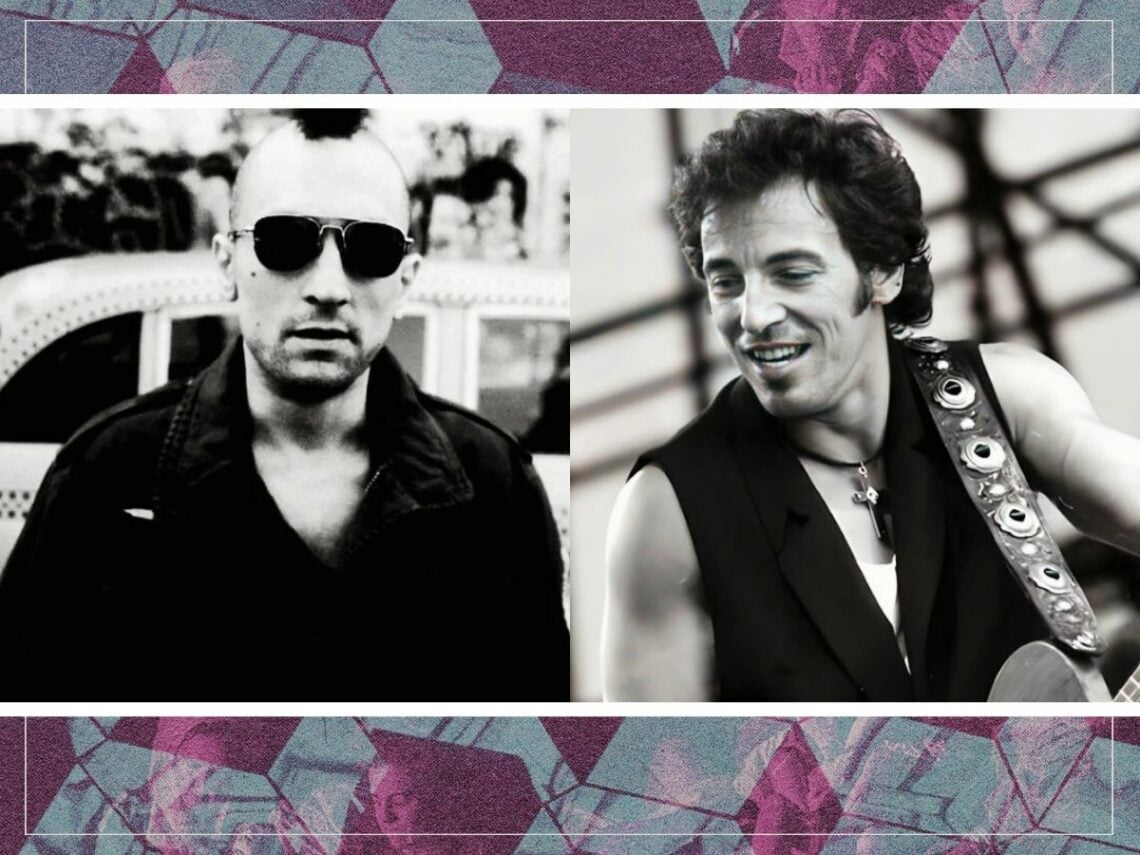
“It’s the best thing in the movie”: How Bruce Springsteen inspired Martin Scorsese’s ‘Taxi Driver’

There isn’t much you could tell us about Bruce Springsteen‘s impressive career that would truly shock us. The singer, warmly known as ‘The Boss’, has created a career that reaches the highest peaks of pop music and is founded in the filthy roots of pure rock ‘n’ roll. It’s a combination that make him one of the most universally adored musicians of his generation as he brings the beating heartland of America to the world with an authentic care for his craft that few can muster.
To put it simply, there’s a good reason they call him ‘The Boss’. That said, it would seem that Springsteen’s exploits don’t just relate to music; he also had an unexpected hand in one of the greatest films of the 20th century, Martin Scorsese’s epic Taxi Driver.
The film, released in 1976, has gone on to establish Scorsese as one of the finest directors in modern cinema and cement itself as a vital piece of pop culture. Who can forget Robert De Niro’s expert portrayal of the ultimate anti-hero and titular character, Travis Bickle? It was a role that De Niro often counted among his favourites and is widely considered one of the finest performances of all time in one of the richest roles. It also provided the actor with a unique moment of improvisation that would end up becoming one of the most iconic lines in pop culture.
Think about Clint Eastwood’s “Do you feel lucky?” or Humphrey Bogart’s “Here’s looking at you, kid.” Or even, Bugs Bunny’s “What’s up, Doc?” Actors must dream of being so widely revered that they live forever inc cultural history and Taxi Driver offered De Niro that level of immortality.
One of the most notorious scenes in cinema saw De Niro given the opportunity to provide lines for his character Bickle as he stands in front of the mirror, reflecting not only on his present state but on the short future he was carving out for himself in his mind. As his thoughts turn to becoming a vigilante, and Bickle accrues the weaponry needed to complete such an assault, he’s faced with a reflection that he gladly no longer recognises. “Are you talkin’ to me!?” is the famous line that so easily assimilates as part of our lives. But was it inspired by Springsteen?
Luckily, Springsteen once sat down with Scorsese to discuss just that. “There remains that great debate of where ‘Are you talkin’ to me?’ came from,” Scorsese said when speaking to Springsteen for Variety. “I tried reaching Bob now, but of course, he’s about to land somewhere.” Naturally self-effacing, Springsteen replied: “I believe it is urban myth.”
Scorsese had already met Springsteen at a Born to Run era show earlier in 1975 and was welcomed again to another performance at New York’s famous Roxy venue, this time with DeNiro in tow. At this time, Springsteen was keen on using the phrase “are you talkin’ to me?” during his performances of the song ‘Quarter to Three’, something that can be heard on the various bootlegs of the Bottom Line shows that followed shortly after Taxi Driver had wrapped.
So had De Niro really lifted the line from Springsteen? Though the singer was keen to downplay the link, Scorsese was as keen to embrace it: “No, I think it might be (true)! You never know. Because we never knew where that came from.” The film’s writer, Paul Schrader, certainly had nothing to do with it, famously once stating: “It’s the best thing in the movie, and I didn’t write it.” Considering that DeNiro saw Springsteen perform just a few days before shooting the scene, it seems very likely that the two instances are linked.
Of course, there’s no way to tell for certain. Many have suggested that De Niro had subconsciously used similar lines to a previous project he had been working on titled Shane, but that feels just as unlikely. Sometimes, we have to accept that some of our most outstanding artists, like De Niro, can be inspired, directly or otherwise, by other great artists.
In this instance, Springsteen can rightly be attributed with his own part in one of the most quoted, ubiquitous and beloved lines in cinematic history.
