


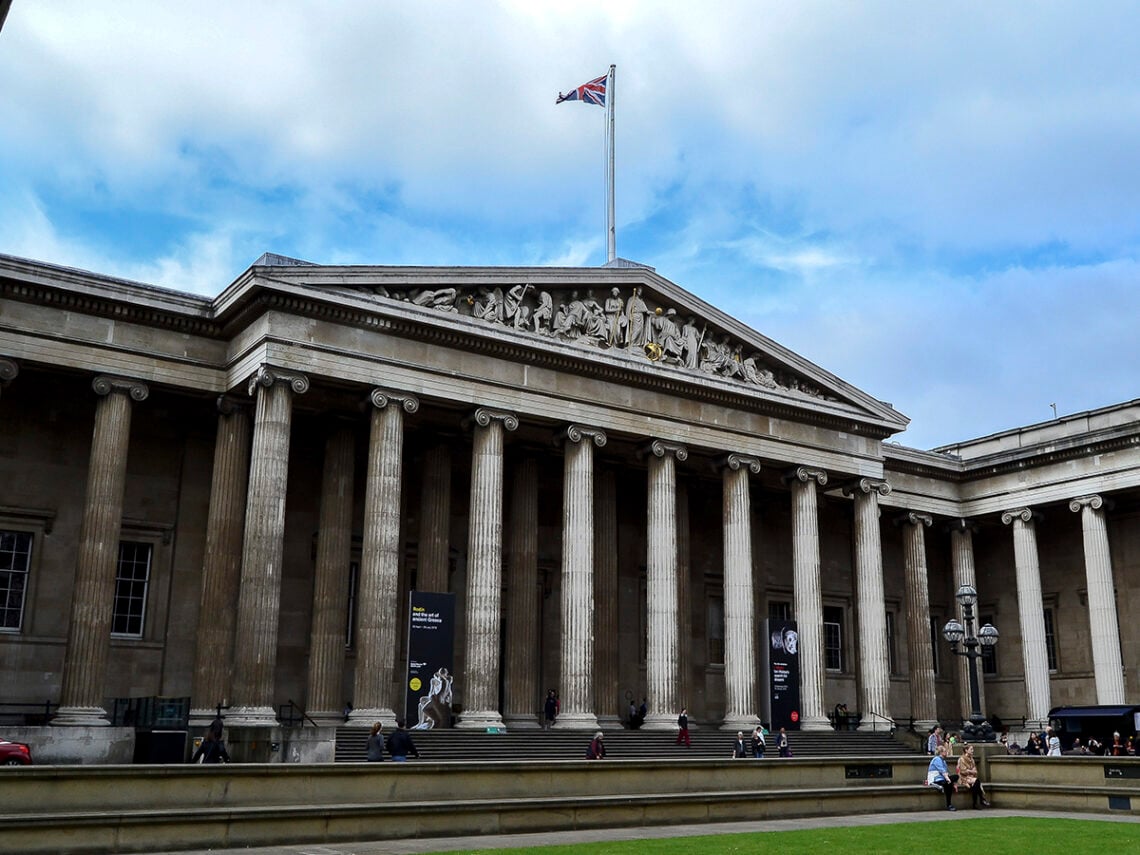
British Museum removes Palestine from Middle East displays

The British Museum is facing controversy after it has removed references to Palestine from its displays of artefacts depicting the Middle East.
The museum changed the labelling of its artefacts alongside the fact that an Israeli lobbying group argued that the term was being used inaccurately, since they claimed that the name Palestine was only coined centuries after these histories existed, according to Artnet.
The UK Lawyers for Israel group sent a letter demanding the change, but the British Museum insisted in a statement that a review of their labelling had been ongoing for over a year, and the decision was made independent of the pressure from the advocacy group.
Despite this, backlash has been prompted among historians and Palestinian advocates, who say that the move is contributing to the erasure of the country’s history and culture.
A petition launched by activist Taghrid Al-Mawed has now gained over 11,500 signatures, calling for the museum to reinstate the use of the word Palestine in its displays in order to “reflect historical accuracy”.
A spokesperson for the British Museum explained their stance by saying: “We use the United Nations terminology on maps that show modern boundaries, for example Gaza, West Bank, Israel, Jordan, and refer to ‘Palestinian’ as a cultural or ethnographic identifier where appropriate.”
In its exhibit of ancient culture during the later second millennium BCE, the museum is using the term ‘Canaan’, which in contemporary terms would encompass the geographical areas of Israel, Palestine, and Jordan, with some definitions also extending to Lebanon and Syria.
Despite the British Museum insisting that the letter from UK Lawyers for Israel was not a factor in enacting the change, the group still responded to the news by saying: “We welcome the British Museum’s willingness to review and amend terminology which is inaccurate or liable to convey an incorrect meaning today.”
They added: “These changes are an important step toward ensuring visitors receive an accurate understanding of the ancient Near East.”
