


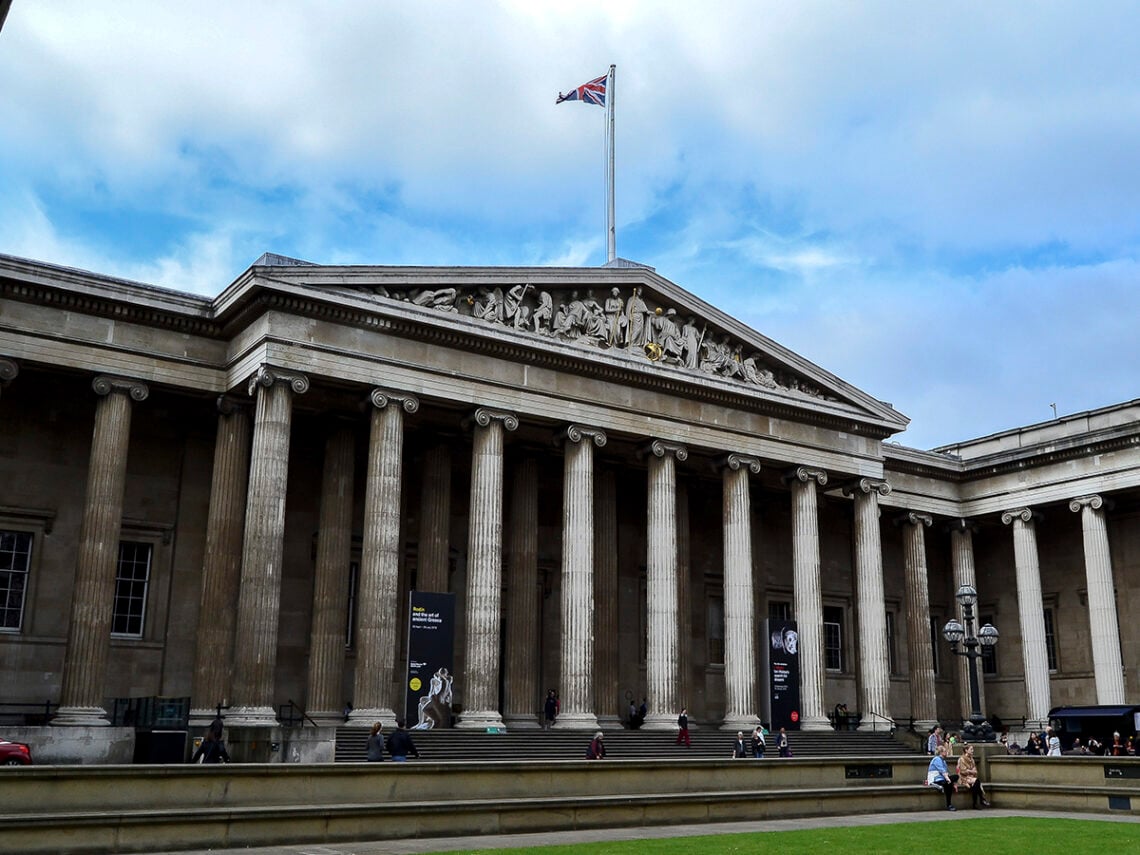
British Museum announces details of new Samarkland exhibition

Items and art from the ancient city of Samarkand will be on display in the United Kingdom for the first time in a British Museum exhibition opening later this year. The display will explore the trade relationships between the East and West between AD500 and 1000, years before the globalisation of modern societies.
Silk Roads depicts the complex network of trade communities across Asia, Africa, and Europe. Pieces depict camel caravels selling silk and spices, demonstrating the magnificently rich scope of human labour during that chapter in history.
One of the lead curators, Yu-ping Luk, explained that, although the references to camel caravans are important, “we wanted to go beyond that and tell a richer story of the networks in multiple directions, not just east-west but north-south and elsewhere, and also the movement of objects, peoples and ideas,” per The Guardian.
Among the valuables on display is an impressive six-metre-long 7th-century wall painting created by Samarkand’s ancient Sogdians. The painting depicts people from all walks of life, some travelling from as far as Korea, who were coming to the city to trade.
“We’re really excited to be able to borrow it and show it for the first time in the UK,” Luk said, adding that the piece is important as it shows that the people weren’t just “peddlers or small-scale merchants” but ones who “prospered from their trade.”
A group of 8th-century ivory figures will also be on display, which Luk explained are “among the earliest – if not the earliest – chess pieces known in the world” and demonstrative of “part of an army”. She added: “There are foot soldiers, horse riders, people riding chariots, an elephant rider. Ivory was a luxury commodity at the time, which indicates that this set was a high-value object.” The pieces were used around this time to train the military strategy, but has since burgeoned into a more trivial game.
Silk Roads will also include objects found across the British Museum, like an Indian garnet and Chinese ceramics, alongside a gilded container used in Christian rituals, and many more. Describing the expanse of objects on display, Sue Brunning, curator of European early medieval and Sutton Hoo collections, said: “Visitors will encounter a whalebone box made in the north-east of England but carved with stories, histories and languages drawn from the wider world.”
The exhibition will take place at the British Museum from September 26th, 2024 to February 23rd, 2025.
