


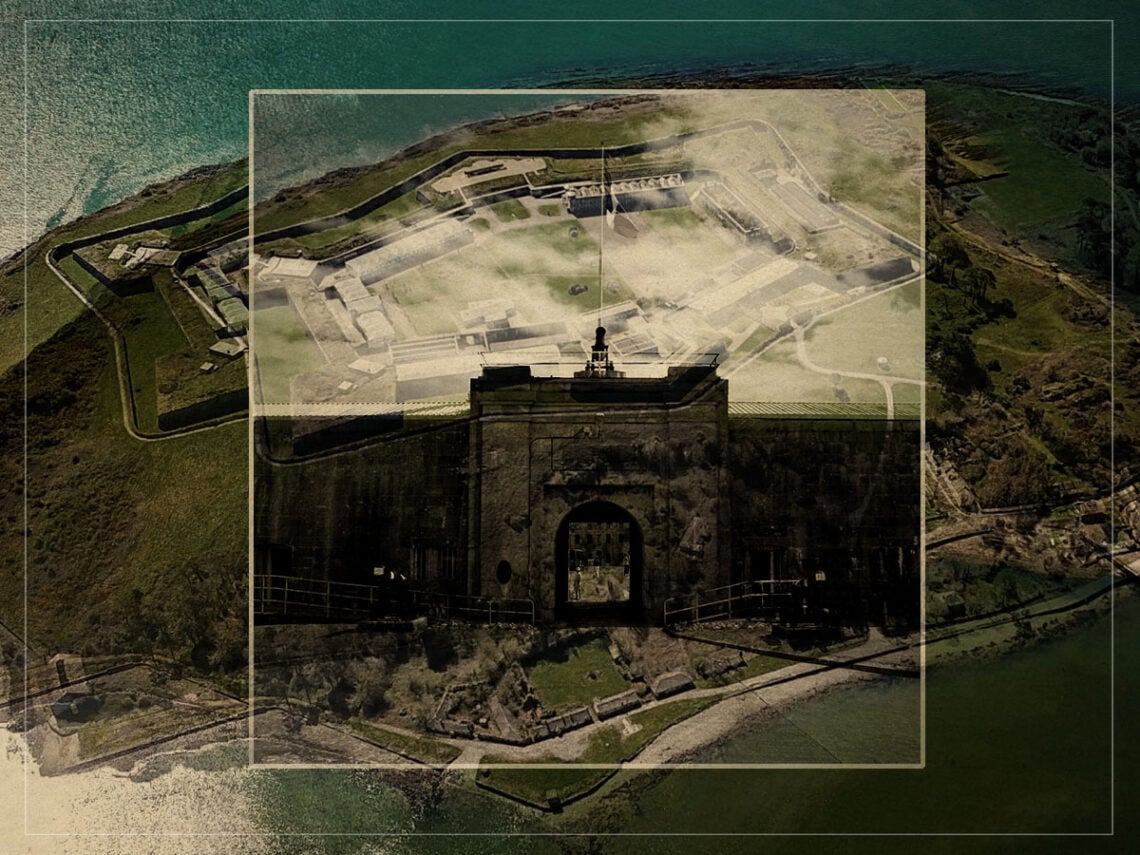
Mystery, murkiness and miracles: A trip to Spike Island, the British Isles’ biggest prison

Desert islands are often synonymous with sandy tropical beaches, no phone service and palm trees under which to sunbathe, but many are actually home to the complete opposite. For centuries, desert islands have been a great tool for governments to build prisons on. Their geographical location, as physically detached from mainland towns and cities, makes them perfect to keep prisoners secure and reduce the chances of them fleeing. Think of Alcatraz Island, Robben Island or Isla del Diablo as examples.
We in the UK have a prison island right around the corner, called Spike Island. Indeed, this place has a rich history and is still considered to be the largest prison in Ireland or Britain, even after its closure. Lucky for us, we can visit the island by taking a ferry from Cork Harbour.
Spike Island wasn’t always a prison island. It was a monastic outpost for centuries, then it became a military base over several wars, and was finally transformed into a prison until its closure in 2004. In 2016, the island was reopened to visitors after being handed over to the Cork County Council to make it into a tourist attraction.
It has been home to many important Irish, British and American figures throughout the years, from captains and monks to convicts. A volume of books called The Annals of the Four Masters, compiled in the early 1600s, records an entry of priests onto the island. A 12th-century charter published during the reign of King Henry II also refers to the island as an Anglo-Norman base and notes the presence of a church or religious institution. However, despite these accounts, there are no physical remains of a monastic site, and so visitors mainly visit for the more recent prison site.
During Oliver Cromwell’s rule in England, the prison was used when his army conquered Ireland in the War of the Three Kingdoms. In 1649, Cromwell conducted a bloody and brutal campaign, defeating the Confederate and Royalist coalition in Ireland, occupying the country. Thousands of prisoners were captured by the British and held on Spike Island while they waited to be sent to the North American and Caribbean colonies. The tactical location of Spike Island at the heart of Cork Harbour was the perfect location, as prisoners could board and depart ships easily with little fuss on the mainland.
Then, during the Irish famine that spanned the 1840s, the prison was used to detain criminals who committed petty crimes, stealing food and low-value goods, as a result of the dire poverty faced by the population. Because the prison was undergoing some renovations for additional buildings due to overcrowding, these prisoners were forced into unpaid labour to help with the manual work.
It was anticipated that the island would hold 800 prisoners, but within a few short years, the numbers swelled to over 2300, making it the largest known prison in the world at that point, holding men and boys as young as 12 years old.
Due to rising costs, the prison was finally closed in February 2004, and all inmates were transferred off the island. Today, visitors can explore the C-class prison cells and immerse themselves in the rich and chilling history of the island. Given the vast transformations that took place on the island, it will possibly not turn into a prison again.
