


‘Bridges-Go-Round’: Shirley Clarke’s transformative vision

American director Shirley Clarke was an interesting creative force within the independent filmmaking landscape of New York City, whose works existed on the margins during her lifetime. Frequently silenced by the censor boards and left out of accounts that documented the rise of the American avant-garde during the 20th century, Clarke’s work has been experiencing a resurgence due to renewed interest from younger generations of cinephiles.
Born in New York City, Clarke was interested in dancing from a very early age and received extensive training from renowned practitioners. It was dance that helped her transition to filmmaking since it ended up becoming the subject of her first directorial project. Titled Dance in the Sun, the 1953 work earned critical acclaim because it demonstrated her detailed understanding of the craft, even though she wasn’t happy with the end product.
During a conversation with Film Comment, Clarke recalled: “My first film was a short dance film called Dance in the Sun. When I saw the first rushes, I was horrified: it was just terrible. I debated on whether to finish it or not, but I finally decided to go ahead because if I didn’t, I would never learn anything. Still, most dance films are so terrible that mine was among the best, and it won a prize. This made me an authority on dance films.”
In the same interview, she was asked about her experience as a woman in a director’s chair: “It’s fun. I find it an advantage being a woman, but perhaps that’s because I am used to being one. I find that I can get away with things that a man wouldn’t. At first, I was worried about having problems with male crews, but then I found that those who don’t like working with a woman simply don’t join up. Pretty soon, we begin functioning as people, not as members of different sexes.”
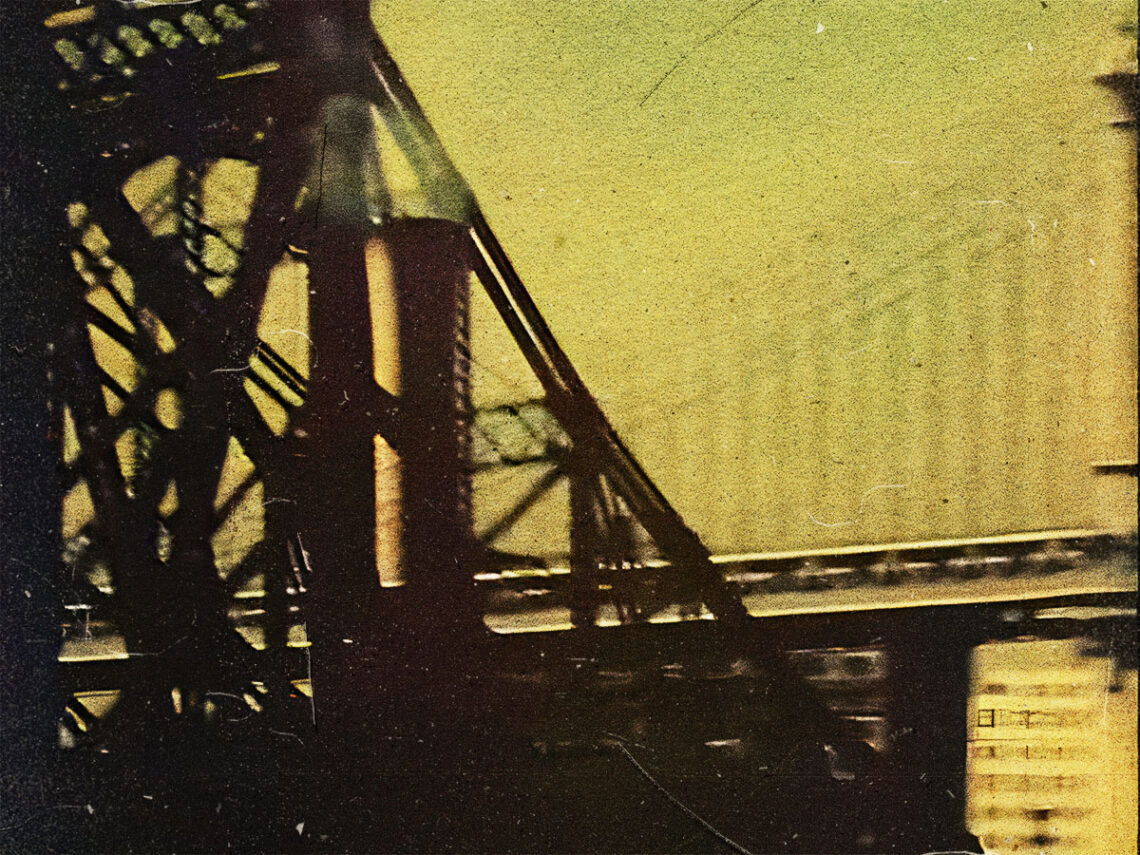
While Clarke’s filmography is full of interesting works, one particular experiment stands out because it still feels fresh and modern. Titled Bridges-Go-Round, it’s a manifestation of the sensibilities brought forward by abstract expressionism, featuring images of New York City’s iconic bridges that are viewed through shifting chromatic codes. Two different versions of the film exist, one accompanied by Teo Macero’s jazz score and the other sporting an electronic soundtrack by Louis and Bebe Barron.
Through these distinct sonic identities, Clarke manages to transform the same images into completely different cinematic experiences. While the jazz version automatically evokes the spirit of familiar urban cityscapes, the electronic score creates a sense of foreboding and makes the bridges look like unsettlingly alien architecture. By seamlessly moving through these tangential frameworks, Clarke creates a vision of New York City that is fresh and original.
Watch the film below.
