


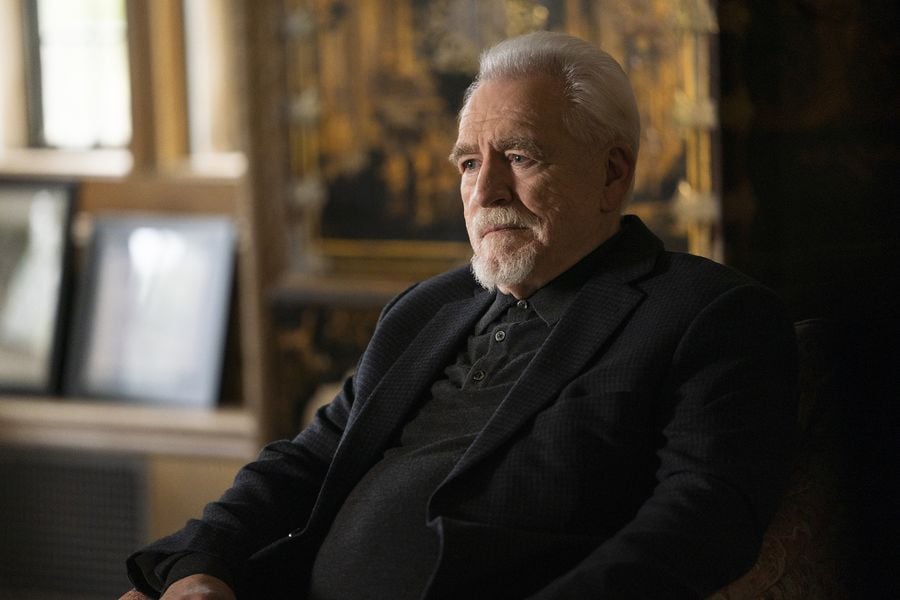
Brian Cox names the best directors he ever worked with: “The people who gave me standards”

Brian Cox has proven time and again that, like his Succession character Logan Roy, he does not suffer fools gladly. He shouldn’t have to. He has been toiling away in the trenches of acting for more than six decades, first as an acclaimed stage actor and then as an acclaimed movie character actor, and he has nothing to prove to anyone.
He’s won two Laurence Olivier Awards, an Emmy, and a Golden Globe. If he’d prioritised it, he could easily have won an Oscar somewhere along the way, too, but he hasn’t sought out flashy, awards-baity roles over the years. He’s simply been churning out impeccable performances decade after decade in a wide range of projects.
Succession made him a household name at the age of 72, but take one quick glance at Cox’s filmography, and you’ll see a dizzying array of familiar titles. Braveheart, Zodiac, Fantastic Mr Fox, The Bourne Identity, and Adaptation are all graced by his presence. No matter how small his role, Cox has always been a scene stealer, and with nearly 300 acting credits to his name, he is an authority on the business of theatre and filmmaking, as well as the people in the industry who are (and are not) the real deal.
Famously dismissive of method acting, Cox once derided the technique of Succession co-star Jeremy Strong as “fucking annoying,” and has generally been stingy with his praise for everyone else. In a rare instance where he was eager to voice his admiration, however, he told The Guardian about the two directors who had the greatest impact on his career.
“Michael Elliott and Lindsay Anderson were the two people who gave me standards,” he revealed in an interview earlier this month. “Both were of Scottish extraction, it has to be said. It’s a sort of purity of vision. I loved working with both of them.”
Elliott directed him in a 1984 dramatisation of Herman Melville’s Moby Dick in Manchester, for which Cox received glowing reviews. Anderson helmed Cox’s second film, 1975’s In Celebration. Starring Alan Bates, the story follows three brothers who return to the blue-collar mining town of their birth to celebrate their parents’ 40th wedding anniversary. It was a cinematic adaptation of a play that the cast had already starred in, and the reviews for both were ecstatic.
Anderson was a key player in the British New Wave, and had previously made a splash with the Palme d’Or winning If… Clearly, his style of direction helped Cox grow in his profession. The actor even told The Guardian that he still has some of Anderson’s notes.
For an actor who has worked with some of the most creative minds in modern Hollywood, such as David Fincher, Wes Anderson, and Spike Jonze, it’s surprising on some level that these early influences still stand out. However, Cox is both a contrarian and a purist, and his loyalty to the two Scottish directors who fostered his talents early on and represented a version of the industry that falls far outside the cynical confines of Hollywood is wonderfully on brand.
