


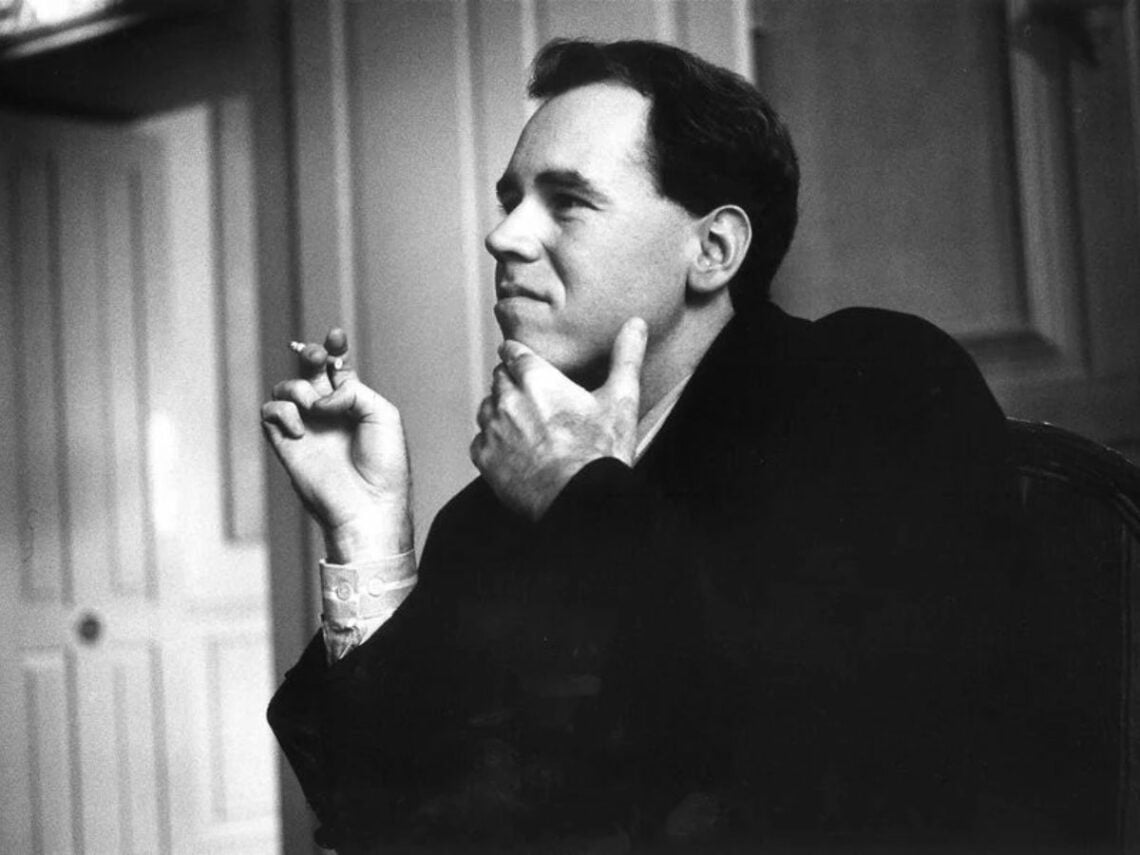
Bret Easton Ellis picks his favourite guilty pleasure movies

No stranger to having his bibliography adapted for the big screen, Bret Easton Ellis has seen four of his eight published novels become feature films, even if the American Psycho author hasn’t always been best pleased with the results. While several of his works have become guilty pleasures for many, the writer’s own choices include several less-heralded works from a number of established filmmakers.
In discussion with Film Comment, Ellis included movies from such luminaries as Steven Spielberg, Woody Allen, John Carpenter, Jonathan Demme, William Friedkin, and Noah Baumbach as his guilty pleasure sextet, although the majority of them wouldn’t sit comfortably alongside the best each respective director has offered cinema throughout the decades.
Spielberg’s World War II comedy 1941 makes the cut for Ellis, who notes that “Spielberg has publicly apologized for this epically expensive slapstick comedy made between Close Encounters and Raiders of the Lost Ark,” and while he does label it as “universally reviled and a folly,” the Lunar Park scribe admires how “Spielberg’s visual genius is on full display”. Praising the film for being “spectacularly, childishly beautiful”, Ellis outlines how it “was built on such a massive scale that its massiveness becomes part of the joke”.
Allen’s Stardust Memories is heralded as “consistently funny and brooding”, with Ellis claiming that “it might be the most interesting and nakedly revealing movie Woody Allen has ever made”. Comparing it to the seminal Manhattan, Ellis offers that while it isn’t quite on the same level, “it’s as visually stunning” as the filmmaker’s love letter to New York City.
Ellis shines a light on Carpenter’s The Fog, too, reflecting on how it came during the “remarkable run” that yielded Dark Star, Assault on Precinct 13, Halloween, Escape from New York, and The Thing, but the “seriously dumb and overly elaborate hokum” has conspired to become “his only movie from that period that sometimes gets overlooked”. Ellis believes it possesses a script that’s “barely serviceable”, but on an aesthetic level, it makes the author’s guilty pleasure cut on account of being “one of the most elegant-looking horror pictures ever made”.
A personal connection to Jonathan Demme’s Something Wild, which Ellis watched “on its opening weekend in a vast, empty theater”, finds the road-tripping action comedy among his selections, even if he was fully aware following his screening that “this movie was clearly not going to be a smash”. With a “dorkily sexy” Jeff Daniels, an “electrifying” Ray Liotta, and a “beguiling” Melanie Griffith among the cast, Ellis states his personal case for why “it’s the Demme movie of which I’m fondest”.
Friedkin’s New York-set serial killer thriller Cruising may have been controversial at the time of its 1980 release, but Ellis defends it as “the least naïve and the least condescending mainstream movie about gay men ever made,” with the “deeply ambiguous and unnerving” closing moments coming in for particular praise.
Rounding out the list is Baumbach’s Greenberg, which features a “fearlessly great” Ben Stiller performance as a failed musician who housesits for his brother in Los Angeles. Calling the movie “the fullest expression of Gen-X despair in all of American cinema,” Ellis is effusive of Greenberg’s merits and how it boasts “the loose vibe of a classic Seventies movie,” anointing it with the status of “one of the best L.A. movies ever made”.
Guilty pleasures are called such for a reason, and as much as Ellis’ six selections don’t contain any shared DNA from a narrative, thematic, or visual perspective, they do make for an eclectic bunch.
Bret Easton Ellis’ favourite guilty pleasure movies:
- 1941 (Steven Spielberg, 1979)
- Stardust Memories (Woody Allen, 1980)
- The Fog (John Carpenter, 1980)
- Something Wild (Jonathan Demme, 1986)
- Cruising (William Friedkin, 1980)
- Greenberg (Noah Baumbach, 2010)
