


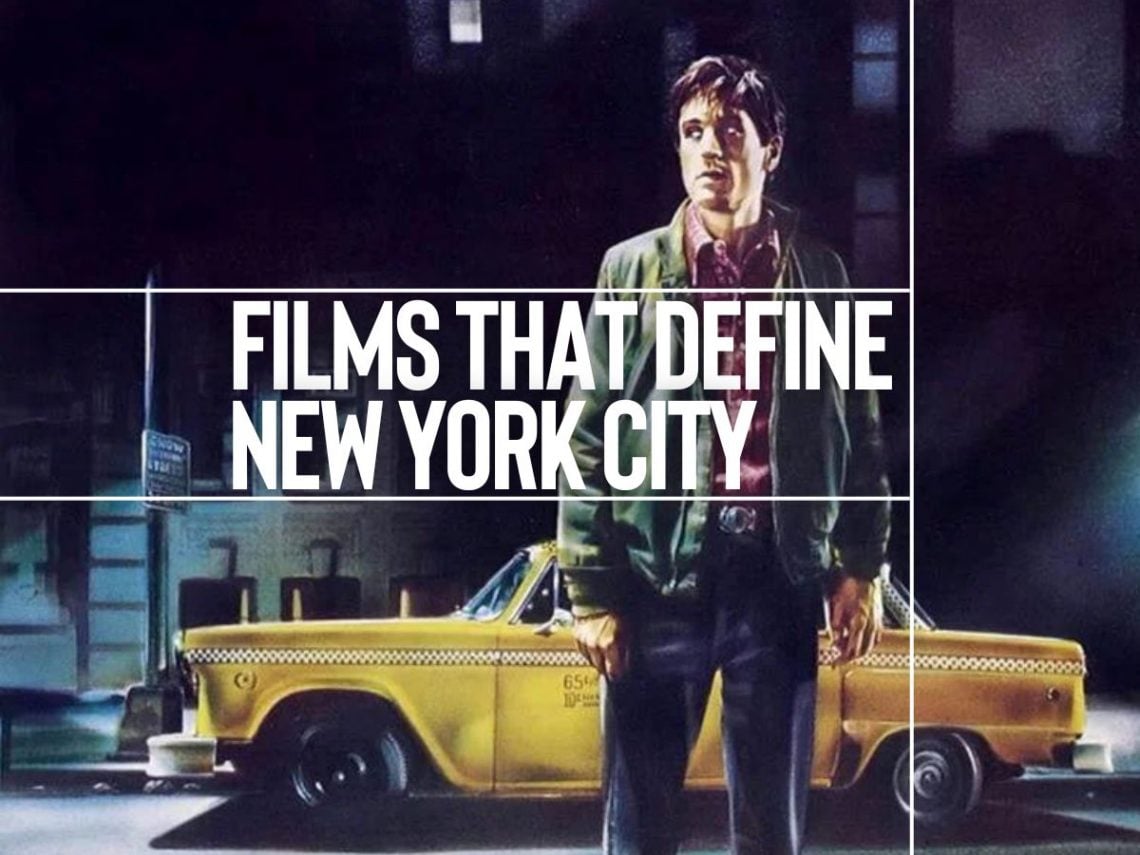
10 classic films that define New York City

Skyscrapers looming out of the fog, autumn leaves in Central Park, streets clogged with traffic: these images have come to form what you might call the mythology of New York. This mythology has made the city one of the most popular destinations in the world for directors and film lovers alike.
New York was first captured on film back in 1896 in William Heise’s Herald Square. By 1906, Vitagraph Studios had set up shop in Brooklyn, but it wasn’t to last. With the arrival of “the talkies”, production companies began travelling to the West Coast, where the empty wastelands of Hollywood provided the perfect climate for film productions. New York was simply too noisy for sound cinema.
Some filmmakers never looked back; others couldn’t help but feel the city contained something essentially American, something that risked being forgotten. In 1948, Jules Dassin returned to New York to make his noir thriller Naked City, and a few years later, Elia Kazan and Budd Schulberg made On the Waterfront, which they dubbed as “Eastern”. Shortly after, a young photographer from Brooklyn, Stanely Kubrick, made his first feature in New York, Fear and Desire.
Since then, New York has remained an essential feature of American cinema, a character whose dialogue is the noise of traffic, whose costume is concrete, snow and smog. Below you’ll find a selection of films that we believe define the sound, feel and culture of New York. So, let’s get started.
10 greatest films that define New York City:
Manhattan (Woody Allen, 1979)
This love letter to New York stars director Woody Allen as a romantically-frustrated television writer called Issac Davis, a two-time divorcee looking over the precipice of middle age. After his wife (Meryl Streep) leaves him for a woman, Issac begins dating Tracy, a high school student half his age. Their relationship is somewhat complicated when he falls in love with a writer called Mary, who just so happens to be his best friend’s mistress.
One of Isaac’s more endearing traits is the willing romanticisation of his hometown. That affection for New York is shared by Allen, who captures it in stark monochrome, allowing the city’s sights and sounds to take on greater significance. Who could forget that iconic opening scene, in which George Gershwin’s Rhapsody in Blue – itself a love letter to New York – plays out over footage of the city skyline? Manhattan captures the eternal New York, a town that will always exist in black and white.
Taxi Driver (Martin Scorsese, 1976)
Few scenes are as instantly relatable to New York City as a yellow taxi hurtling down a drowning-in-sound chaotic street, ignoring the several pedestrians trying to hail it down and splashing them in puddle-muck in the process. So it only feels right to include Martin Scorsese’s remarkable 1976 picture Taxi Driver on this list.
Taxi Driver tells the story of an honourably-discharged Vietnam War service member in the throes of severe PTSD, working as a night shift cabman. Travis Bickle (played by Robert De Niro) has persistent insomnia, which makes his new profession seem like a perfect fit. However, Bickle’s ever-worsening mental state drives him to near insanity, and through Taxi Driver, we are shown the moral decay of New York in the 1970s.
Do The Right Thing (Spike Lee, 1989)
Spike Lee’s 1989 masterpiece captures a very different New York from the one depicted in Woody Allen’s movies. Do The Right Thing takes place beneath the red bricks of Brooklyn’s Bed-Stuy neighbourhood on the hottest day of the year. A slow burner until the very last moment, the film begins with an argument between Sal Fragione, the Italian owner of a local pizzeria, and neighbourhood local Mookie, who is upset that Fragione’s Wall of Fame doesn’t include any Black actors. The wall soon comes to represent the racism and hate that divides the neighbourhood. As the day grows hotter and hotter, tensions continue to rise.
One of the finest social commentaries on how urbanity shapes division, Do The Right Thing sees Lee form a microcosm of US society, which he then uses to demonstrate how seemingly inconsequential external factors like heat can turn neighbourly disputes into full-blown race riots. Unflinchingly radical, Do The Right Thing is as important today as it was in 1989.
Saturday Night Fever (John Badham, 1977)
While Saturday Night Fever may appear on the surface to be a light-hearted dance through the disco classics of the 1970s, it actually examines the darker side of the decade’s working-class society. The film follows John Travolta’s Tony Manero, a youthful Italian-American. He works in a paint shop by day and showcases his unrivalled dancing talent by night in New York’s glamorous discothèques.
Manero feels utterly exasperated with his day job and believes that his dancing ought to give him a route out of the entrapment of his working-class background. He ends up being besotted by an affluent professional dancer, Stefanie Mangano, who agrees to be his dance partner but only on a strictly professional basis. While the soundtrack of the Bee Gees gives the film a fun edge, the movie also manages to examine the most depraved acts of New York’s 1970s society.
Midnight Cowboy (John Schlesinger, 1969)
This time capsule of a decaying ’60s New York immortalised one of the city’s most mythologised periods. Running from something we’re given only fleeting glimpses of, Joe Buck decides to quit his job in a Texas diner and relocate to New York, where he plans to use his powers of seduction to win some rich widow.
Sadly, New York is far from hospitable, and Joe soon finds himself living in a dilapidated squat with fellow bottom-feeder Enrico ‘Ratso’ Rizzo – played brilliantly by Dustin Hoffman. With the help of his street-wise new friend, Joe begins his new life as a sex worker. Just as their luck begins to turn, Ratso’s health starts deteriorating. This Best Picture winner is a quixotic and occasionally psychedelic exploration of New York at a moment of crisis and innovation. In one particularly trippy scene, we’re invited to peek inside one of Andy Warhol’s infamous factory parties, where Rizzo’s unease reaches new heights. New York has never looked quite so cannibalistic.
American Psycho (Marry Harron, 2000)
Depravity seems to be the order of the day when it comes to films that encapsulate the spirit of New York City. Nowhere is this more apparent than in Mary Harron’s American Psycho, the film adaptation of Bret Easton Ellis’ 1991 novel of the same name. Christian Bale portrayed the titular psycho, Patrick Bateman, an utterly demented serial killing Wall Street banker.
As with Ellis’ novel, Harron’s film is somewhat satirical of the cruel and often psychopathic behaviour of Wall Street bankers in the 1980s. However, as with all satire, it also points to the truth. Bateman engages in some of the most depraved acts imaginable, savagely murdering his colleagues and sexually and violently coercing whoever he sees fit. He acts as if nothing untoward happened whatsoever, watching The Patty Winters Show and obsessing over the latest technology, music and fashion.
When Harry Met Sally (Rob Reiner, 1989)
One of the greatest romantic comedies of all time, When Harry Met Sally captured what it was to be single in the Big Apple well before Friends came along. Ten years after arguing about how men and women can never truly be friends during a shared drive to New York, Harry (Billy Crystal) and Sally (Meg Ryan) meet in a bookstore and become, of all things, friends. As their respective love lives take twists and turns, they struggle to keep things platonic.
Norah Efron’s era-defining script made When Harry Met Sally an instant hit. It still stands up today, though some of the activities the characters get up to, such as Harry’s racewalking through central park, are best left to the 1980s. Few films make New York look so beautiful in the autumn or singledom look so terrifying.
Birdman or (The Unexpected Ignorance of Virtue) (Alejandro Innaritu, 2014)
While Wall Street is indicative of the financial behemoth that New York City became, it is Broadway that is the most iconic part of the city in terms of its highly-acclaimed theatrical ventures. Alejandro Innaritu’s Birdman or The Unexpected Ignorance of Virtue explores the pressures of attempting to garner the elusive critical success of staging a Broadway play.
Michael Keaton plays Riggan Thompson, a former Hollywood actor known primarily for his role in the superhero movie franchise Birdman. Tired of his reputation, Thompson wants to earn artistic credibility amongst his peers, so he adapts Raymond Carver’s short story What We Talk About When We Talk About Love for the stage. However, Riggan’s poor mental health and mounting pressures from his personal life make that critical acclaim all the harder to come by. The film delivers a perfect glimpse into the tension of New York’s theatre scene.
Rear Window (Alfred Hitchcock, 1954)
Hitchcock’s great examination of modern city life, Rear Window tells the story of Jeff – an injured news photographer confined to a wheelchair following an accident. Bored out of his mind, he starts spying on his neighbours from the window of his Greenwich Village courtyard apartment, a pastime which leads him to believe that one of them has committed a murder.
Though the only bits of New York we see are those spied through Jeff’s binoculars, his investigation into the murder allows us deep insight into the inner lives of the city’s inhabitants – from “Miss Lonelyhearts”, who dines alone every night to the tortured composer struggling to give his latest track the right flavour. All the while, Hitchcock explores the nature of voyeurism and how the modern city affects our moral responsibility. To live in New York, Hitchcock implies, is to accept that one will watch and be watched.
Inside Llewyn Davis (Joel and Ethan Cohen, 2013)
Back in the 1960s, perhaps the area of New York City with the most cultural vitality was Greenwich Village, then the epicentre of the burgeoning New York folk scene. The Coen Brothers explored that very scene through their 2013 picture, Inside Llewyn Davis, which centres on the titular character, a struggling folk musician, exquisitely portrayed by Oscar Isaac in his breakthrough role.
The character Llewyn Davis had been partly informed by the folk singer Dave Van Ronk’s autobiography. In that sense, the film gives us a broadly accurate picture of what Greenwich Village was really like in the 1960s. Equally authentic is the fact that almost all of the songs in the film had actually been recorded live without overdubs. Inside Llewyn Davis is a fascinating insight into the struggle of making a name for yourself in the glory days of folk.
