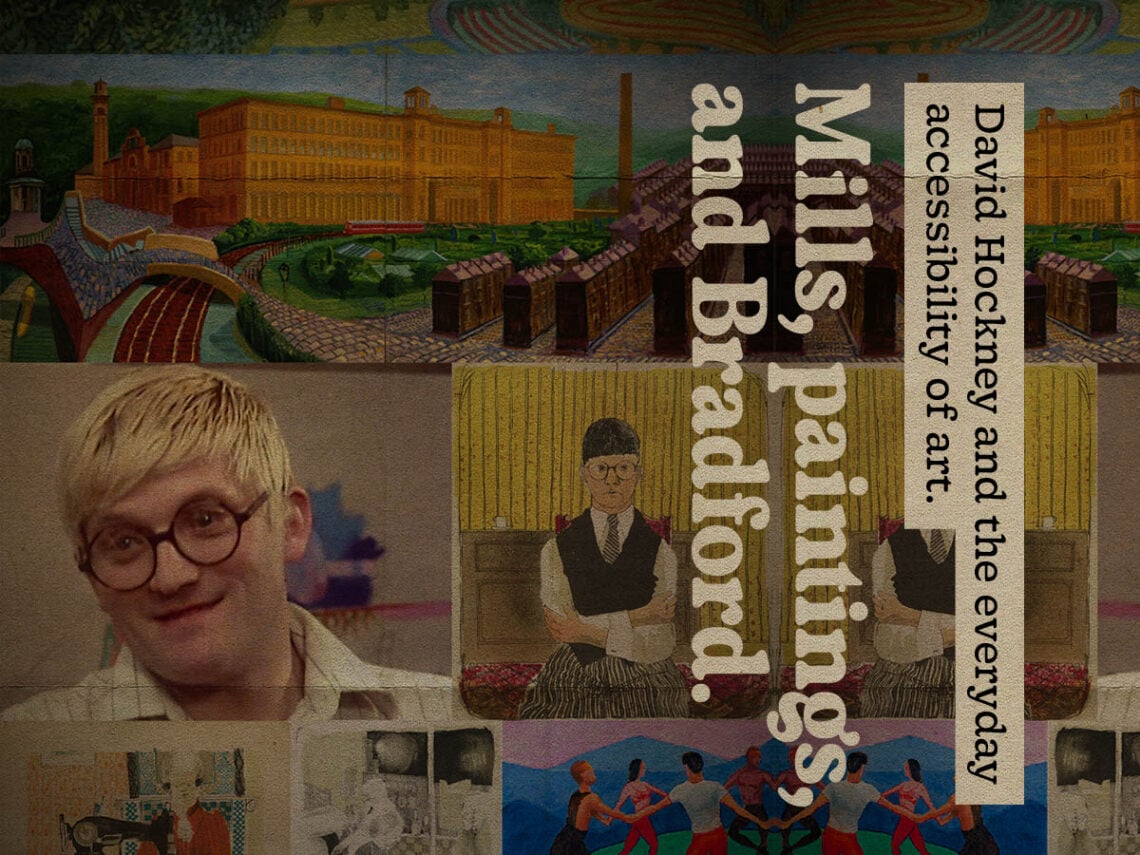
Mills, paintings, and Bradford: David Hockney and the everyday accessibility of art

Mill towers that haven’t seen smoke in a long time, stone buildings stained with the soot of de-industrialism, and a litany of sensationalist headlines surrounding the city; Bradford is rarely hailed as a cultural epicentre. Still, that never stood in the way of one of Britain’s all-time greatest artists, David Hockney.
Without wishing to sound like the script of a Ken Loach film, not much is expected of you when you grow up in a place like Bradford. Far away from the cultural fruits of that there London, and without the infrastructure or investment of nearby Leeds or Manchester, the city is often resigned to being the butt of rather unimaginative jokes. Even the recent City of Culture celebrations haven’t done quite enough to save the city’s reputation, nor the spirit of many young people growing up in the city.
Nevertheless, you don’t have to search very far to find hordes of proud Bradfordians, and for this one, David Hockney played a huge role in fostering that pride. Growing up in Bradford, school holidays and free weekends were invariably spent doing a circuit round the same selection of free attractions: the National Media Museum, Salts Mill, Lister Park and Cartwright Hall. It won’t have escaped any budding art aficionados or other locals that two of those places house various works by Hockney.
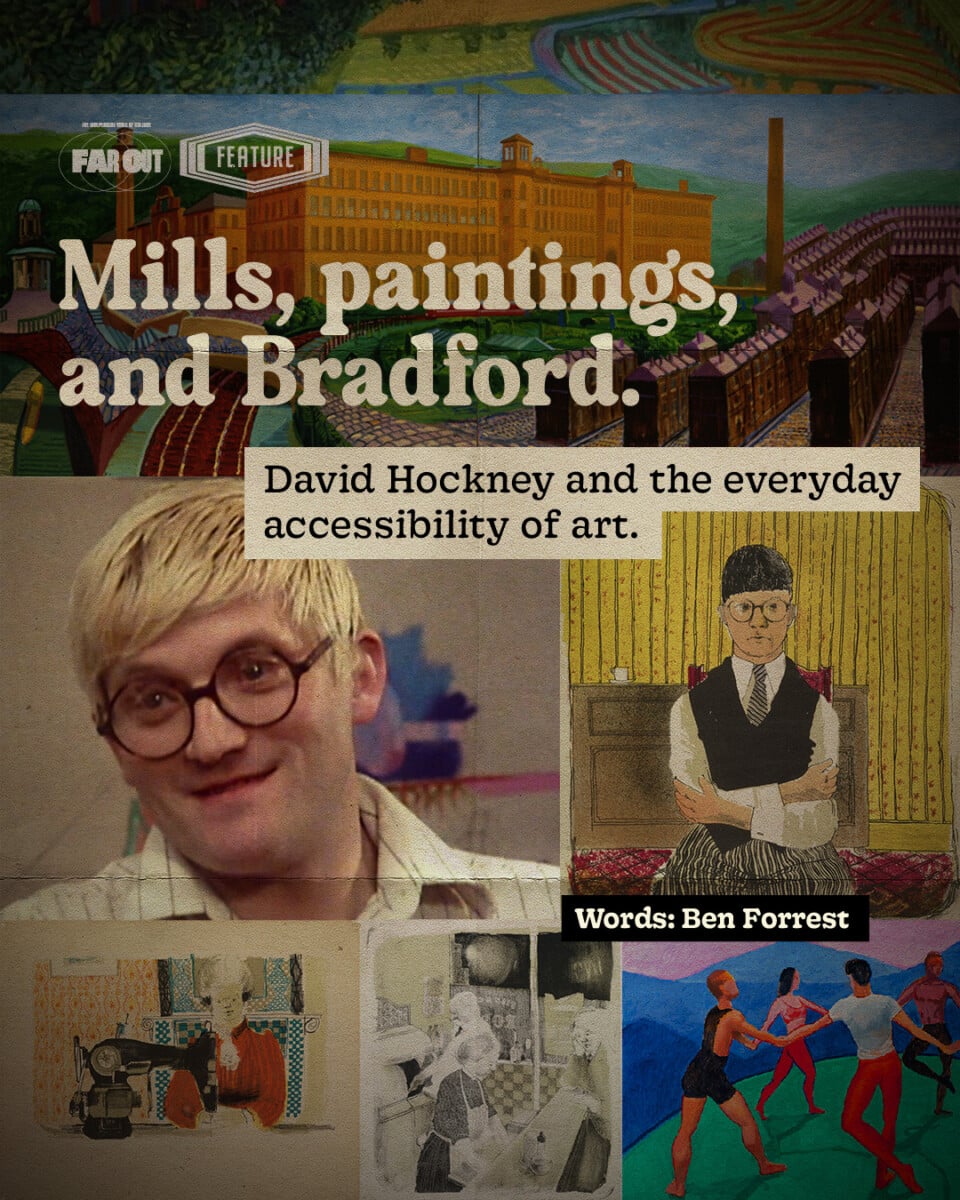
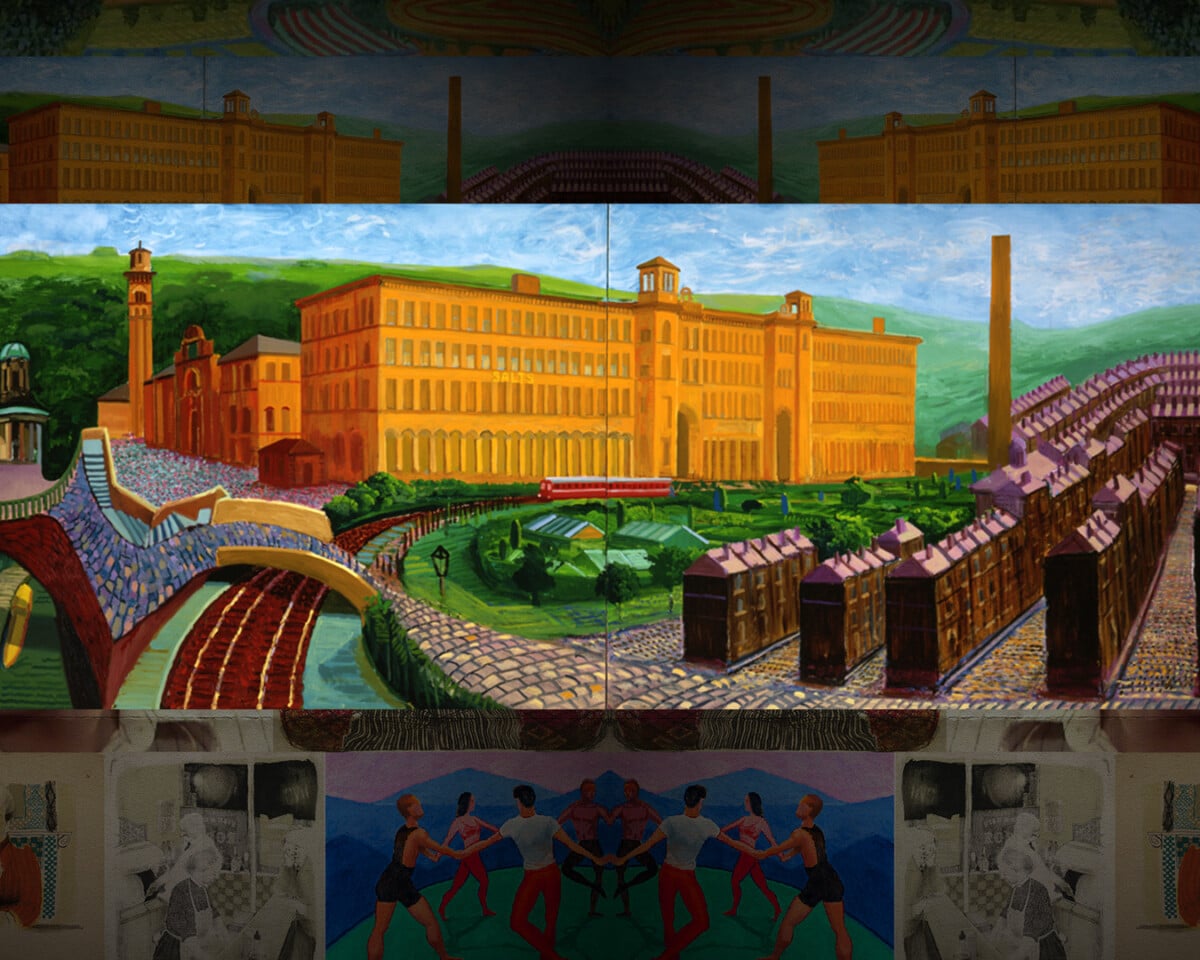
Saltaire, in particular, is a part of the city in which Hockney’s influence is impossible to escape. In that dark, satanic mill that used to support the entire economy of the area, paintings by the Bradford-born artist adorn almost every wall in the building, not to mention the seasonal exhibitions that have been taking place within its hallowed walls for decades. Even the cafe menu features the artist’s work.
On one hand, that is perhaps no surprise. Hockney is, after all, one of the most notable people to emerge from the Aire Valley, up there with JB Priestley and the Brontë sisters. Nevertheless, the impact of having those works readily accessible, from a very young age, was – in my experience – incredibly profound.
As a bored child on school holidays, swapping the typical damp pavements, deflated footballs, and concrete playgrounds for the explosion of colour and vibrant expression of Hockney’s world was an absolute revelation, and I have no doubt in my mind that I would not be the person I am today without having been exposed to that work throughout my life.
Not only that, but given that Bradford was Hockney’s earliest stomping ground, studying at Bradford School of Art for much of the 1950s, the artist has an extensive body of work specifically revolving around the area. As a kid, you can’t find much to relate to in contemporary art. I had, for instance, no reference points for the Civil War-era masterpiece of Picasso’s Guernica, but I could recognise Hockney’s colourful rendering of Salts Mill, the actual building being just down the road.
That exposure to the art world, and the local pride that teachers, relatives, and even fellow pupils felt in David Hockney’s existence, invariably rooted itself in my psyche, spurring on a creative mindset that has certainly served me well over the years. That story is not overly unique, either. At school, for instance, I fondly recall entire classes doing projects in tribute to Hockney, studying colour and dynamics through his seminal Pool with Two Figures.
For a city that is rarely celebrated in a national sense, David Hockney provided a continuous source of pride and a lightning-fast response to “Which notable people come from Bradford anyway?” As an artist, he proved that ordinary people, from neglected towns and cities, can achieve extraordinary things.
As a young man in Bradford, surrounded by the typical Yorkshire attitude of ‘Where there’s muck, there’s brass’, the fact that Hockney not only came from the same area, but had the same accent as me, was proof enough that I didn’t have to abandon any artistic dreams in favour of getting a ‘real’, money-making job.
Working-class people, and northern people more generally, aren’t afforded much of a foothold in the art world, and children are increasingly being persuaded to ignore their artistic sensibilities in favour of developing practical skills aimed at funnelling them into the job market. So, to have Hockney as a gleaming example of somebody who rejected that pipeline and became a lauded artist in the process is invaluable.
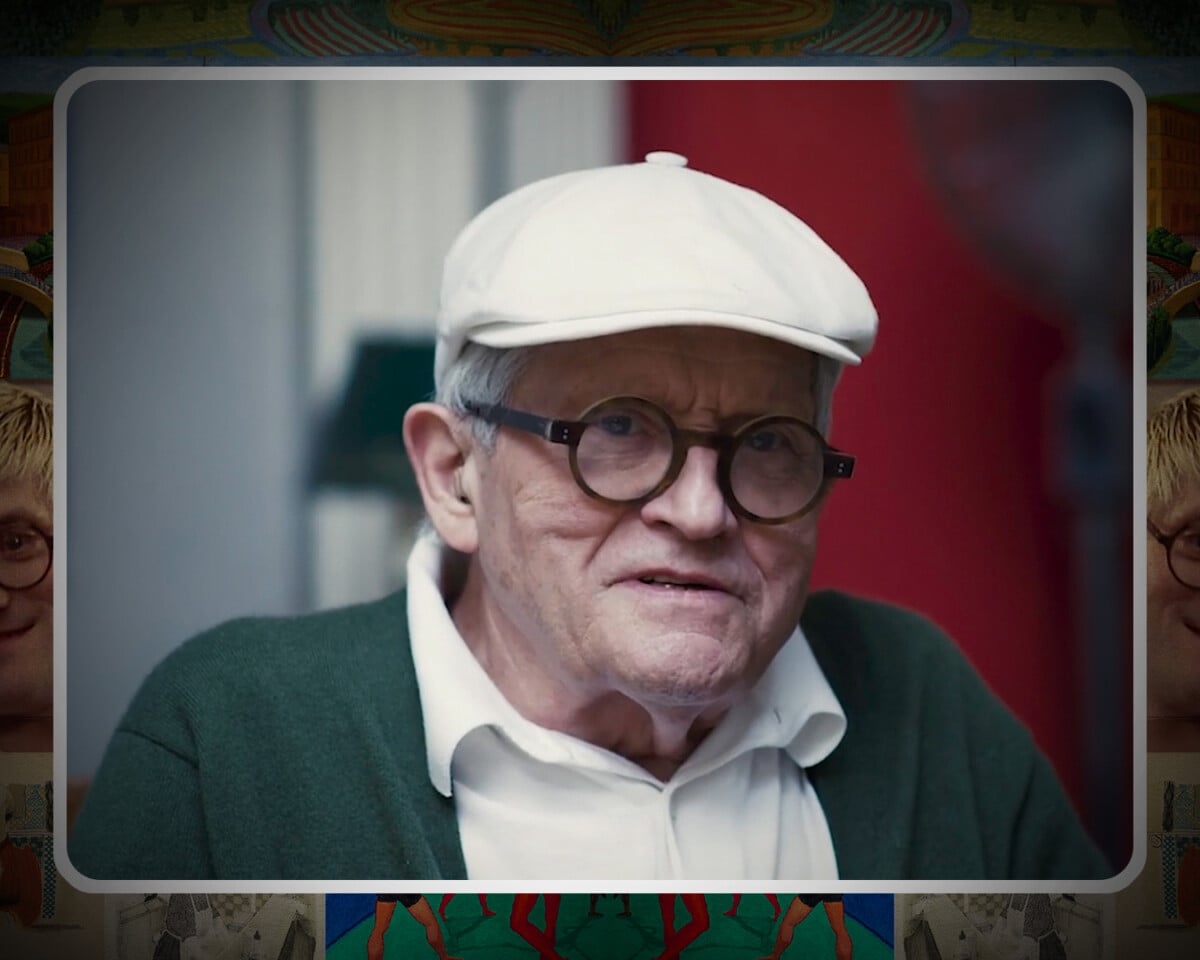
“People would mock my accent,” Hockney said in a 2025 interview, harking back to the days when his West Yorkshire tones were heard mixed in with the received pronunciation of The Royal College of Art. “I’d look at their artworks, and I’d think, well, if I drew like that, I’d keep my mouth shut.”
That, in essence, is the lasting defiance of David Hockney. Despite the adversity faced for his ‘common’ Bradfordian accent, his undying and unapologetic smoking habit, or the fact that he didn’t come from a monied family of artists and creatives, he managed to establish himself among the greatest artists in the world, with works exhibited everywhere from the New York MET to the comparatively modest gallery at Cartwright Hall, a stone’s throw from where the artist grew up.
Therein lies a crucial aspect of David Hockney: his accessibility. Throughout his life and career as an artist, Hockney’s work never lost touch with reality. During his later years, for instance, he created a series of works on an iPad app that anybody could feasibly download. Once again, it goes back to the fact that much of his work is available for free to any locals or passers-by in the galleries of Bradford.
In Ways of Seeing, John Berger discusses the importance of viewing artworks in their intended context, rather than copies in a book or on a television screen. Although Berger’s point pertained to the interpretations of art itself, it strikes me that, particularly during childhood, I would never have bothered to look at a book of Hockney’s work or paid attention to a television programme about him. Walking through Salts Mill, though, it was easy to become entranced by the colours and details of the Hockney paintings housed in their intended contexts.
Had those paintings that adorn the walls of Salts Mill been locked away in some museum archive, destined only to be seen as copies by people in white gloves, their impact would be lost completely. Art is meant to be seen, not just by industry elites but by ordinary people, including those people who neither live in nor have the means to travel to cities like London or New York, where the art world is still largely based.
David Hockney sadly passed away on June 11th, 2026, but that date does not mark the end of his artistic impact. For as long as his work is still available, for free, in public galleries and community cornerstones like those in his native Bradford, the artist will continue to inspire and change the lives of other ordinary folk, just as he did for me all those years ago.