


Exploring the boundary-breaking film-within-a-film concept

Cinema is a powerful and layered medium that knows no boundaries or rules. One concept that upholds creativity and innovation is the film-within-a-film trope, known in academic scholarship as mise-en-abyme. Translating to ‘dream-within-a dream’, this term can refer to any movie that presents a fictional film as part of its narrative.
A movie can include a fictional sub-film as part of its plot for many reasons, whether thematic or artistic. This technique can be utilised to comment on the film industry, the creative process, or the acting world, showing the audience what goes on behind the scenes. In addition, a film can also exist within a film to experiment with meta-fiction, blurring the lines between reality and illusion and attaining more creative freedom.
With that, the film-within-a-film concept invites numerous genres that can innovate upon this cinematic tradition. For example, a psychological thriller can use this technique to tell a dark story of an artist who has gone too far, losing their sense of reality within the addictive realm of fiction. On the other hand, a comedy will take the film-within-a-film concept and charm the audiences with this transgression of boundaries, joking about the infinite clichés of the medium.
Essentially, the film-within-a-film concept is one of the most insightful and inventive ideas in the history of cinema.
One perfect example of this kind of commentary is Scream 3, the third instalment in Wes Craven’s meta-horror franchise. In the film, beloved final girl Sidney Prescott ends up on the horror film set of a production based on her life, having been attacked by the masked serial killer Ghostface a few years prior. The slasher within the slasher, titled Stab, becomes a reality as an actual masked killer kills the actors on set in ways that echo the fictional script. The simple synopsis reads as an artistic exploration of horror cliches and film boundaries, with the actors commenting on how predictable, unrealistic and ridiculous the kill scenes are, only to be killed in the same way. The first Scream turned horror tropes on their head in a direct yet enclosed manner, whereas the third film accentuated the genre by placing the story within the framework of an actual horror production.
However, Craven employs the fictional film and the structures of Hollywood to comment on the industry’s seedy underbelly, where unsuspecting young women with dreams of stardom are exploited and taken advantage of by powerful abusers hiding behind their grandiose job titles. This undertone is the backstory of Sidney’s late mother, Maureen, who fell victim to the industry’s predators. The film-within-a-film concept displayed in Scream 3 is a layered dissection of film genres as well as the industry.
Satoshi Kon’s Perfect Blue is a darker take on the film-within-a-film concept, reading as an examination of psychology and a critique of celebrity worship. The movie focuses on pop star Mima, who recently switched to acting, appearing in a crime TV show after leaving the music industry. However, a series of sinister killings, like those in the show, plague the set and Mima’s psyche. Perfect Blue refuses to let audiences get comfortable and familiar with what is reality and what is an illusion, oscillating between Mima’s objective reality and her subjective broken psyche.
Kon utilises visual symbolism to communicate his ideas, such as a reflection of the pop idol or actor version of Mima appearing in the mirror when the mundane Mima stands in front of it. Furthermore, Perfect Blue violates our understanding of reality and fiction by playing out one scene with dialogue that represents Mima’s current challenging circumstances, reading to audiences as a real moment in the film, only for them to pull away and reveal this conversation is a scene being shot on set. The similarities between what Mima is experiencing in her personal life and the events she has to shoot in character on set represent this subversion of comfortable boundaries. As a result, the audience isn’t allowed security in the same way the protagonist is denied it, amping out the psychological kick. That’s why Perfect Blue is an extreme and hyperactive portrayal of the film-within-a-film concept.
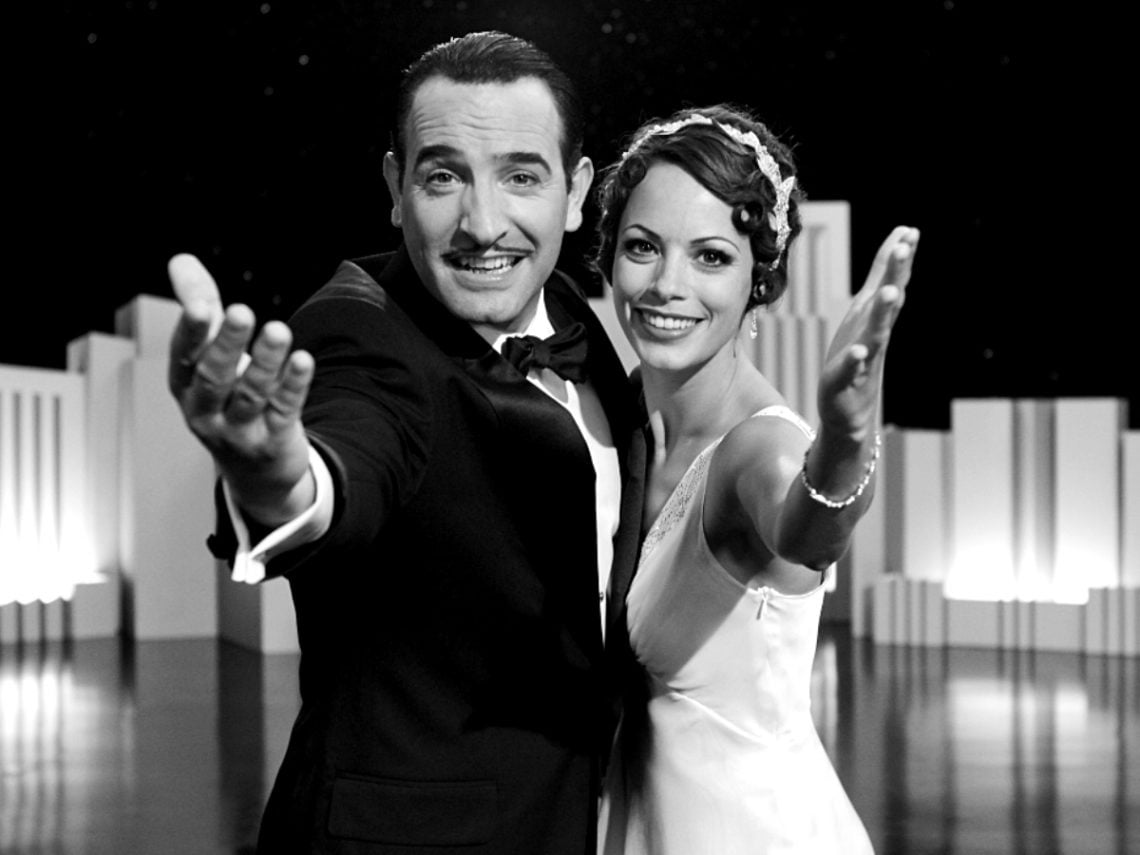
Meanwhile, The Artist, directed by Michel Hazanavicius, manoeuvres the film-within-a-film idea to tell a story of love and film history, making for a fitting self-referential watch. The film takes place in Hollywood and focuses on the relationship between a young upcoming female star called Peppy and an older silent film star, Valentin, who is now seen as outdated in the industry.
The Artist presents events, styles and ideas from the 1920s and ’30s Hollywood, with the fictional films, one made by Valentin, who refuses to believe talkies will last, and the other starring Peppy, presenting the changes of the time. Hazanavicius’ film also restricts the diegetic sound to align with Valentin’s perspective and history of film, again bridging reality and the fictionalised film world. All dialogue is given on title cards, similar to the original talkies, delving deeper into the layers of fiction and real life as the film is edited to replicate the type of filmmaking it explores. The shooting of the musical at the film’s climax is one of the two times we hear any sound, alluding to the new era of filmmaking sound films and musicals brought. The Artist harmonises artistic and thematic reasoning for its film-within-a-film concept, resulting in a unique presentation that communities its story effortlessly.
Federico Fellini, the acclaimed Italian filmmaker, explored the film-within-a-film concept in a revolutionary and influential manner in his film 8½. As the Criterion Collection explains: “8½ is a film about making a film, and the film that is being made is 8½.” This synopsis encapsulates the layers of Fellini’s film in that the fictionalised film within the film is the same film audiences are watching. 8½ explores the artist’s eternal struggle as the protagonist Guido Anselmi, a famous filmmaker, suffers from a creative block while filming his latest epic. 8½ primarily takes place on the set of Anselmi’s film. This setting choice immediately disintegrates boundaries between reality and fiction, as watching a film about a film set violates the separation.
Furthermore, 8½’s narrative is split between reality and fiction; only it becomes more difficult to distinguish and recognise the two as the film progresses. Audiences are welcomed into Anselmi’s mind without even knowing it as we see him occupy a house with all the women who have impacted him and his childhood memories. Fellini takes the film-within-a-film concept as an opportunity to explore the binaries of objectivity and subjectivity, as the film’s visuals and structure bleed into the present, delving deep into the mechanisms of human memory and creation. Furthermore, the semi-fictional film is the anchor of the creative block for the stifled film auteur. It is efficiently deployed to explore the creative process. In turn, the actual 8½ Fellini made can be read as a presentation of artistic inspiration.
The film-within-a-film concept can be tricky to incorporate into a movie’s narrative and visual display. However, any well-executed attempts can highlight the medium’s history and power. Furthermore, the concept allows creators’ imaginations and audiences’ perceptions to run wild, free from creative and interpretative restrictions.
Watch how it’s done in The Artist below.
