


‘Hip Hug-Her’: How Booker T and the MGs changed R&B forever in 1967

Revolutionary records seemed to flow from the production desk of Stax Records like water from a tap during the label’s 1960s heyday, with each week bringing yet another earth-shattering sound from that old movie theatre in Memphis. More often than not, Booker T and the MGs had a key role to play in those revelatory rhythms.
Virtually every major record label back in the 1960s boasted its own house band: Motown had the ever-changing stylings of The Funk Brothers, Atlantic had the Muscle Shoals Rhythm Section, so it was only right that Stax should have one too, in the form of Booker T and the MGs. Where that particular group differed from the rest of the industry, though, was that they soon began amassing hit records in their own right, refusing to play uncredited in the shadows of more prominent artists, as house bands were so often forced to do.
Booker T Jones’ breakthrough arrived in 1962, when ‘Green Onions’ hit the airwaves, changing the sound of R&B forevermore. On that single, which peaked at number three in the US charts upon its release, and proved its timelessness by charting in the UK nearly two decades after its original release, Jones used the Hammond M-3 organ, a then relatively novel instrument that had yet to be accepted by the mainstream airwaves.
Inevitably, though, with ‘Green Onions’, Jones and the band opened the floodgates for an entirely new age of organ-driven R&B and soul music. As the years marched by, the MGs continued to foster this newly emerging landscape, and in 1967, they landed upon a particular revelation when Jones switched from the faithful M-3 to the now-legendary Hammond B-3 organ.
By the end of the 1960s, every half-decent band, whether they played R&B, soul, funk, garage rock, psychedelia, or anything in between, contained a B-3 organ within its ranks – from Billy Preston to Deep Purple, and even LA Woman-era Doors all proudly bore the sound of the iconic instrument. Without Booker T Jones’ adoption of the B-3 for his 1967 smash ‘Hip Hug-Her’, though, that particular Hammond model might never have emerged from R&B obscurity.
It is worth noting, of course, that Jones wasn’t the first person to use a B-3, even in the world of R&B. Cult hero and Blue Note alum Jimmy Smith was one of its earliest adopters, and through records like Back At The Chicken Shack in 1963, he became essential in the shift from the old-school R&B of the 1950s to this bold, modern new sound, denoted by the unmistakable sounds of the B-3 organ.
Nevertheless, Smith’s stylings often failed to break into the mainstream, and even his most legendary recordings often struggled to breach the upper echelon of the singles charts. In the sense of bringing the B-3 into the mainstream spotlight, then, ‘Hip Hug-Her’ and Booker T Jones’ adoption of that legendary model was a watershed moment in R&B history.

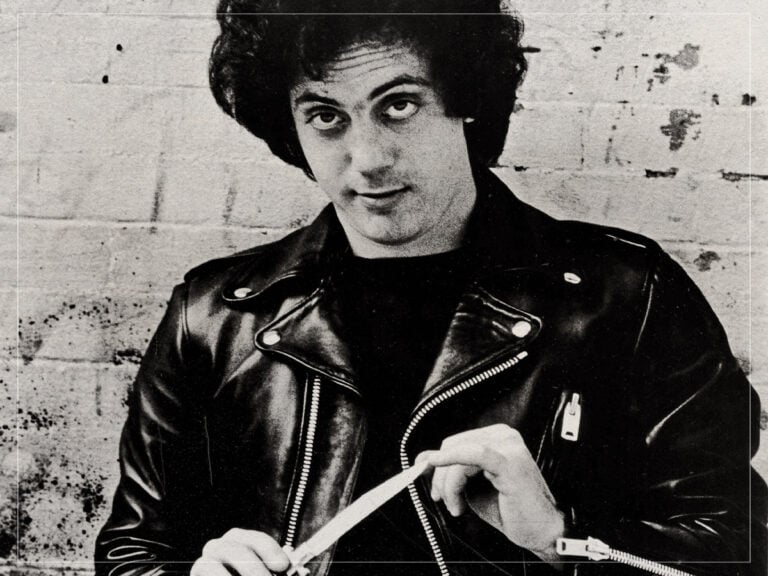

Speaking to its revolutionary quality, the single ended up becoming Booker T and the MG’s biggest commercial smash since ‘Green Onions’ five years prior. More so than chart success, though, the impact of the single can be felt in just how dominant the B-3 organ became in its wake, during the counterculture era of the late 1960s and even in the prog age of the next one.
For a keys player that was meant to be merely the leader of a house band, Booker T Jones and his B-3 organ were pretty adept at changing the R&B airwaves forevermore.
