


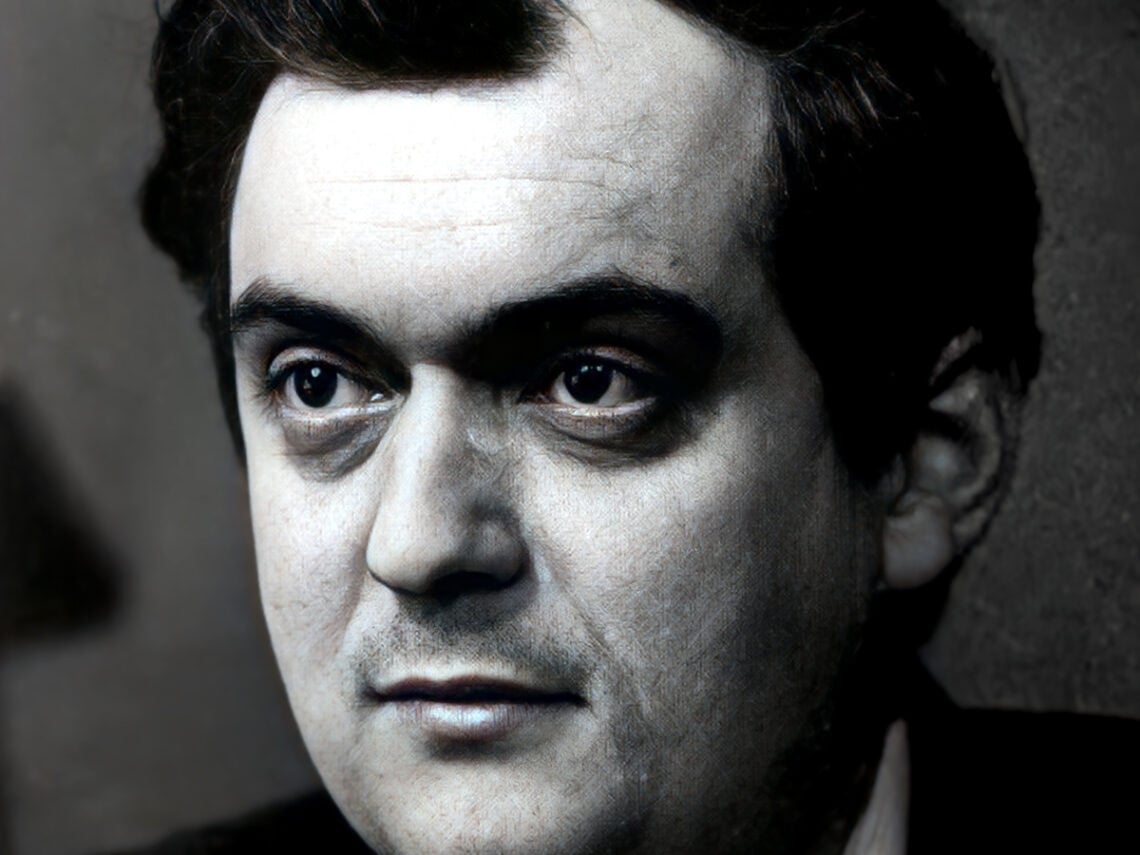
The book Stanley Kubrick fought “tooth and nail” to ban from publication

With such triumphs as Paths of Glory, Dr. Strangelove, 2001: A Space Odyssey and A Clockwork Orange in his unrivalled oeuvre, Stanley Kubrick is among the world’s most revered filmmakers. The American director passed away in 1999, shortly after completing his final masterpiece, Eyes Wide Shut.
While very few will argue against Kubrick’s genius, critics were always keen to take a swipe at the master whenever possible. As a perfectionist by nature, Kubrick never took kindly to external criticism since he could barely stomach his own.
This week, Neil Hornick’s book The Magic Eye: The Cinema of Stanley Kubrick is finally being published 25 years after Kubrick’s death. Hornick was initially commissioned to write the book over half a century ago, but when in 1970 he sought to publish, Kubrick vehemently blocked it.
When the director caught wind of the book, which outlined flaws across his most successful movies between the 1940s and ‘60s, he warned Hornick and the publisher that he would fight “tooth and nail” and “use every legal means at his disposal” to stop its publication.
The Magic Eye: The Cinema of Stanley Kubrick will finally hit the shelves, updated with three prefaces that detail Kubrick’s steadfast legal efforts. As they point out, the filmmaker was initially on board with the project, willingly sharing materials with the publisher, The Tantivy Press.
According to a statement from Hornick, now 84 years old and living in London, Kubrick abhorred the book because “a summary of the good things about the movies [were] followed by a summary of the bad points, which, in [his] view, always outweigh the good on account of the overly emphatic way in which such criticisms are presented.”
The publisher had previously signed an agreement with Kubrick stating that they couldn’t publish the book “until such time as its entire contents have been approved” by him.
Hornick construed the agreement to impose that the book must be factually correct. “I didn’t expect the whole book to be rejected,” he lamented. Adding elsewhere, “I regard it as a painful episode.”
However, Kubrick’s lawyers were clear about their client’s wishes. “If … any attempt were to be made by yourself or any other publisher to publish the existing manuscript without his approval, our Client will have no alternative but to accept our advice to take all steps as are open to him to prevent such publication and to seek redress for damages suffered,” they stated at the time.
By Kubrick’s estimation, approximately one-third of the book consisted of “unacceptable” criticisms. Hornick was particularly critical of Lolita, Kubrick’s 1962 adaptation of Vladimir Nabokov’s classic 1955 novel, which had previously been deemed unadaptable.
“There are good things in Lolita. But in too many respects, it squanders, impoverishes and conventionalises its source material,” Hornick wrote in the book, “draining it of its complexity, nymphetry and eroticism.”
Half a century later, he admitted to being particularly critical of Lolita but stuck to his guns. “I found the film version largely a pointless betrayal of the original novel from which it was adapted,” he argued. “However, I expressed great admiration for most of his other films.”
The ordeal with Kubrick alienated Hornick for many years, but he remains a keen admirer. “Given the sad fate of my book, I thought I’d finished with Kubrick,” he revealed conclusively. “But, as I’m sure others before and after me have also discovered, one is never really finished with him. If you’ve once been bitten – or is the word “smitten”? – by the Kubrick bug, it kind of gets into your bloodstream and stays with you for life … I remain interested in him to this day.”
Watch the trailer for Stanley Kubrick’s Lolita below.

Never Miss A Scene
The Far Out Film Newsletter
All the latest film news from the independent voice of culture.
Straight to your inbox.