


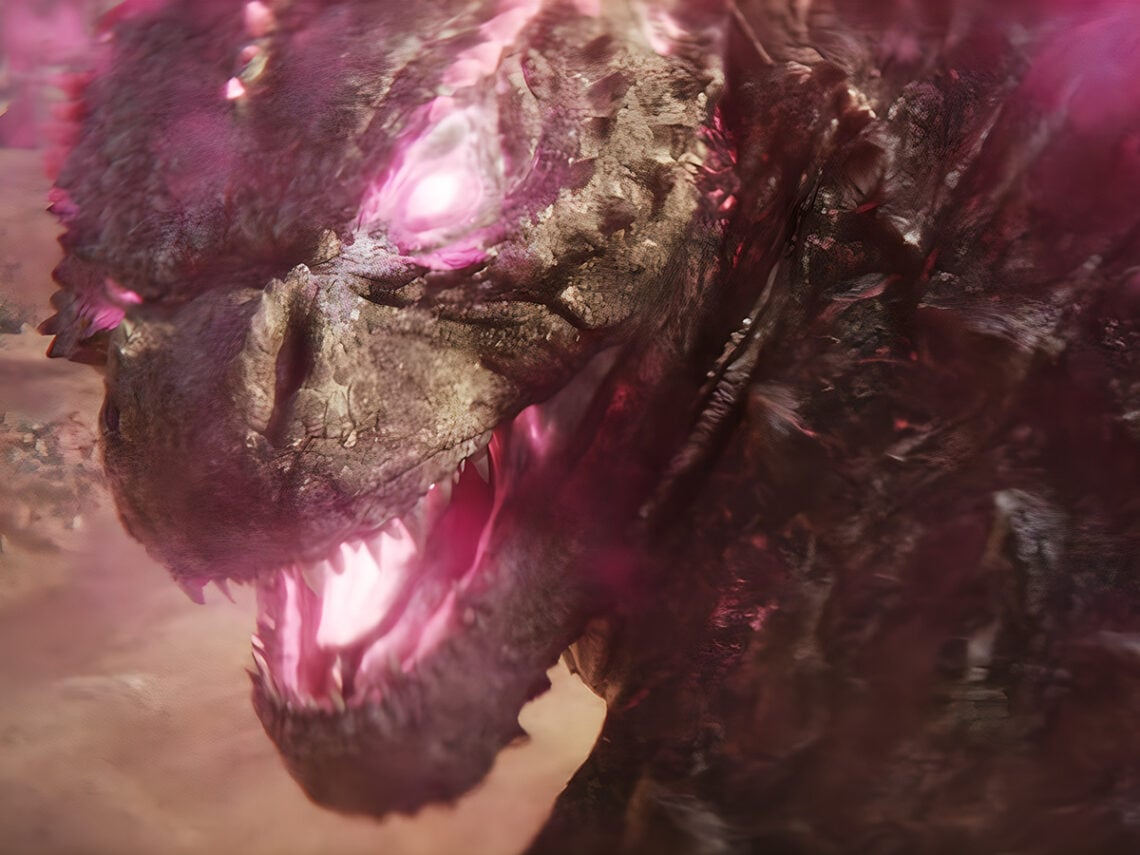
Bombastic boredom: The trouble with movies about behemoth protagonists

The beauty of cinema is in its ability to communicate with the variety of experiences of human life. Whether its Akira Kurosawa’s 1952 film Ikiru, which forces viewers to reconsider their efforts to make the world a better place and leave a legacy in the process, or something as thematically grand as Ishirō Honda’s original Godzilla flick that positioned humanity as being at the will of a higher force of power.
The greatest films, no matter their genre, size or scope, will play into this communication as tightly as possible, forcing the viewer to consider looking inward and extracting something profound. Despite the fact that Godzilla is the behemoth protagonist of several movies and is a 164 ft tall, atomic-breathing lizard, humanity is at the centre of many of his stories, making the creature one of the most beloved figures of popular filmmaking.
The same can be said for King Kong, the American monster movie made in 1933 that proved to be hugely popular in Japan, inspiring the making of Godzilla in the process. While the titular ape may be a fist-swinging colossus that tears down half of New York in the original film, the heart of the film is a warning against humankind’s fondness for exploitation, especially that we do not fully understand and can’t control.
Yet, in the decades that have followed, the meaning of such monster movies has, quite simply, been pulverised, with directors preferring to turn their films into two-hour explosion montages where their protagonist spins through flames in slow motion. As budgets have swelled and imaginations have grown accordingly, cinema has become lazy in its treatment of such majestic creatures and movie titans.
Gone are the days of any sort of narrative nuance to such monster flicks, now, the focus is less on the human characters and more on the monsters themselves, as we see Godzilla take out a skyscraper with a blue laser bolt or, to use another example entirely, a Transformer punch a residential home before turning into a Chevrolet. Such creatures, beasts and titans are only as interesting as the entirely human stories that surround them, without such, these films are totally empty.
Indeed, the greatest monster movies of the 21st century have not been 2021’s Godzilla vs. Kong nor any of the Transformers films, or even Guillermo del Toro’s Pacific Rim, they have come from indie filmmakers willing to put the human story before the allure of the central monster.
Just consider Gareth Edwards’ Monsters, whose titular beasts are both central to the story and literal background characters, with the 2010 film telling the story of a journalist who is guided through an infected beast-ridden zone to safety on the other side. Yet, the film is less interested in exploring every inch of the CGI creatures and more intrigued about picking apart how they represent the inherent violence and fear of the human race.
Or, for inspiration regarding the best modern monster movies, look at Bong Joon Ho’s 2006 film The Host, which, despite showcasing some pretty outdated CGI, is a gripping tale about a creature in Seoul’s Han River which begins attacking people. But, of course, the film isn’t about such bombastic chaos, below the surface, it’s a smart metaphor for the sickness of contemporary capitalism, where the monster is the political machine.
When a filmmaker sticks a mighty monster or towering titan at the very centre of a story, they are immediately restricting the potential for human connection, so extra effort is needed to build a compelling narrative around said creature to make a gripping movie. Otherwise, you’re just watching bits of metal bashing against each other while an almost audible director off-stage shouts “Yahoo”.
