


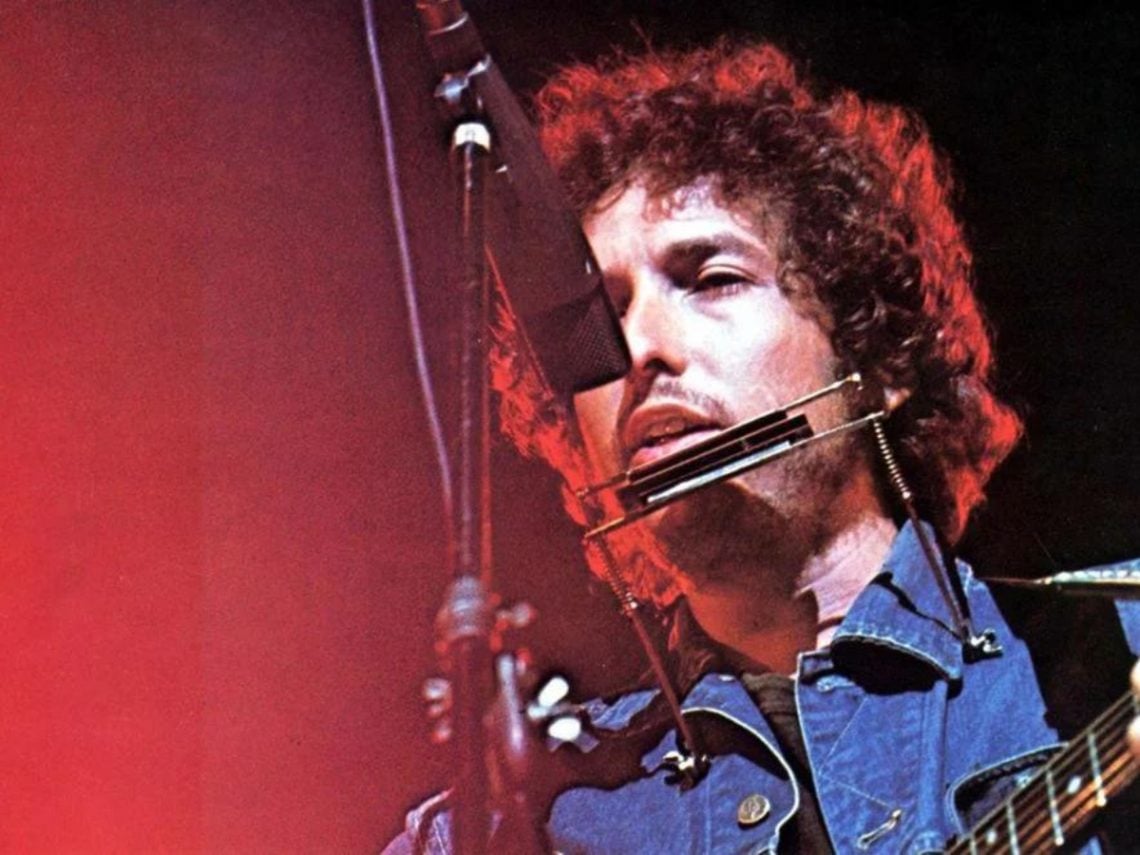
Bob Dylan’s wild first appearance on ‘Late Night with David Letterman’

In the modern era, making your television debut is something that all artists consider to be a major breakthrough in their careers. The phenomenon of being invited onto a late-night talk show and showcasing your work to a large audience is a daunting experience, but one that most acts dream of achieving and being blessed with the opportunity to do. Japanese Breakfast even wrote a song about becoming ‘Jimmy Fallon Big’ in 2017 and then finally saw that dream become a reality in 2021. In 1984, however, Bob Dylan didn’t have a song called ‘Letterman Large’, and nor would the idea of making an appearance on the comedian’s talk show have been quite the same prospect for him.
Dylan’s career may have hit a slump by 1984, with a run of unsuccessful albums relegating him to the lower echelons of popularity, but that’s not to say he hadn’t enjoyed an incredibly fruitful career that already spanned over 20 years by that point. Performing on a network television show that was rapidly rising in popularity was a perfect opportunity for the singer to thrust himself back into the limelight, and when handed the opportunity, he rose to the occasion in some style.
Introduced by David Letterman on the night as “a legend of the music world”, Dylan did everything in his power to prove that the legendary status that had been bestowed on him was deserved. Immediately ripping into renditions of Sonny Boy Williamson’s ‘Don’t Start Me Talking’, and the song ‘Jokerman’ from his 1983 album Infidels, the audience was treated to ‘another side of Dylan’ to what might have been expected, with him choosing to up the tempo and aggression in his performance and transform his tracks into something far more punkish than people had ever seen him perform before.
Another intriguing aspect of Dylan’s performance was the choice of backing band that accompanied him for his three-song set. There were no regular collaborators to be seen on stage with him and no icons from the folk scene that he had once been such a formidable force in gracing the screens of viewers. Instead of picking the usual suspects, Dylan was joined by guitarist JJ Holiday, bassist Tony Marisco and drummer Charlie Quintana. The latter two were members of the LA punk group the Plugz, but all three of his comrades for the night were complete unknowns.
At the time, Dylan had been soaking up life in Malibu and was indulging in the various musical offerings of the LA area in his spare time. Among the acts that he was fortunate to stumble upon were the Plugz, who he struck up a relationship with after Quintana had appeared as a last-minute stand-in for a music video. “In between takes, Bob and I would chat,” Quintana recalled of the experience in an interview with Vulture. “At the end of the last day, he asked if I wanted to come to his house and jam sometime.”
For a number of weeks, Quintana and a handful of other friends from the LA punk scene would travel to Dylan’s studio to jam together for a few hours at a time, often performing covers of other people’s music. Dylan enjoyed the sessions with the trio, who eventually became regular visitors, and even began to discuss the idea of doing an ad hoc tour of South America as a group, performing in bars and “just showing up unannounced,” as Holiday puts it.
What eventually materialised was the Letterman performance, although the band were only given a week’s notice. Of course, they jumped at the idea of performing on live television and were thrilled that Dylan would invite them to be part of such a momentous occasion. After only a few rehearsals, they were suddenly on the biggest stage of their lives and being thrown in at the deep end by Dylan.
His decision to cover Williams’ track as the opening number was a spur-of-the-moment one that took the band by surprise, but they quickly adapted to the situation before settling into both ‘Jokerman’ and ‘License to Kill’ as the two Dylan numbers. They were electrifying to watch as an ensemble, and they were part of a crucial moment in Dylan’s career that saw him return to being a respected artist who could keep up with the times rather than settle for being a legend from decades past.
While none of the group ever had the pleasure of playing with Dylan again after the broadcast, they knew that they’d forever be embedded in the singer’s rich history. Marisco remembers the night fondly: “After we stepped off the stage that night, the enormity of playing with Bob Dylan hit me. I thought, ‘Hey, that was pretty cool. That clip might be around for a few years.’”

Never Miss A Tale
The Far Out Bob Dylan Newsletter
All the latest stories about Bob Dylan from the independent voice of culture.
Straight to your inbox.