


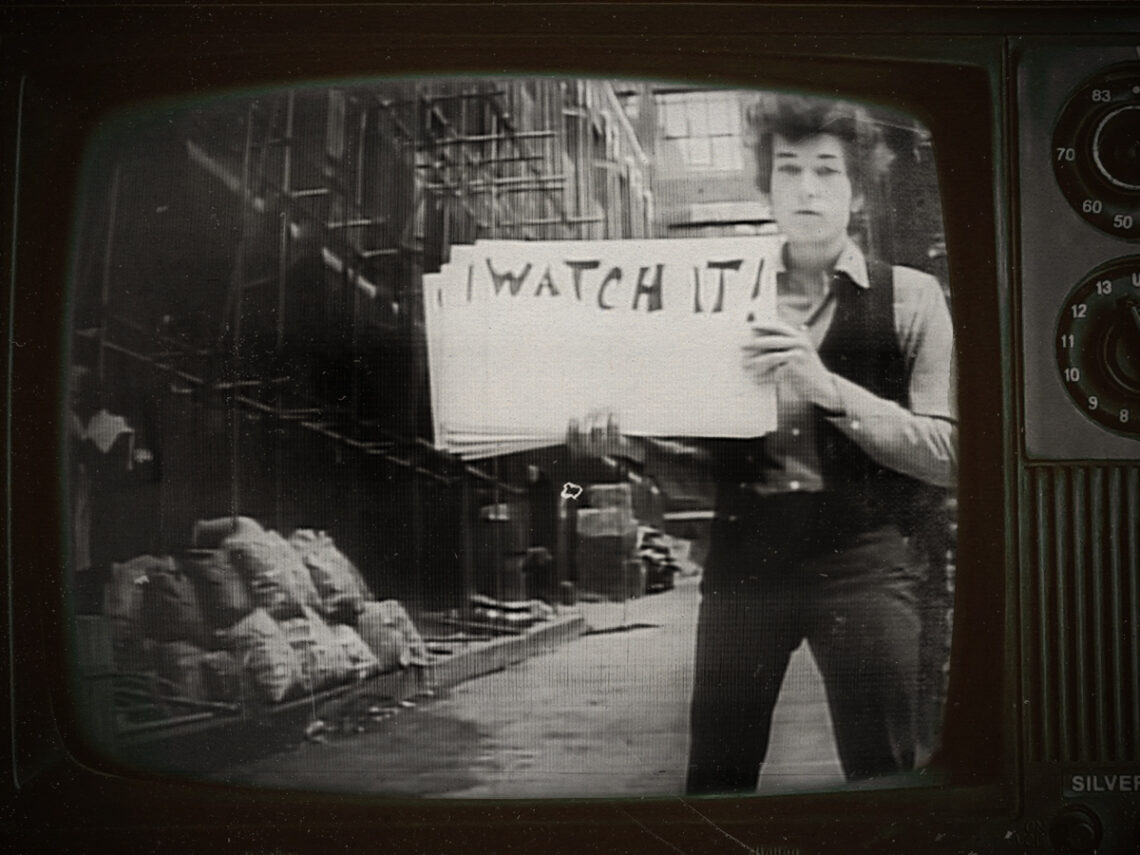
Bob Dylan, ‘Subterranean Homesick Blues’ and the first-ever lyric video

Most people don’t remember when or how videos with lyrics emerged as a prominent marketing tool in music, mostly because their introduction was so gradual and smooth you couldn’t really notice it at all.
But one thing we can all agree on is how much it has become a mainstay of modern music. They’re everywhere now. So much that they’re even being pushed as their own thing, something for fans to look forward to, even though, most of the time, all it is is a flash of the song’s lyrics set to a video snippet on a loop.
That said, it’s not a new thing – not really. And it’s not always something to roll your eyes at, either. The premise behind it is pretty dignified, really. And it comes down to wanting to focus on something most people gloss over: the lyrics. Musicians pushing lyrics to be included as part of promotional tools and packages have been around for decades, mainly since Paul McCartney campaigned to include lyric sets on vinyl records in 1967.
At the time, sheet music sales were falling, and so many didn’t really buy into his idea to plaster lyrics on their vinyl sleeve for Sgt Pepper’s Lonely Hearts Club Band. But his quest paid off, as it not only made fans feel closer to their words and stories but set a new standard for the experience of buying physical music.
Most vinyls come with lyrics nowadays, just as most initial iterations of music videos now come in the shape of lyric videos. It’s almost a given now that that’s what we’ll see whenever an artist releases a new single. But again, this is nothing new.
What was the first lyric video?
Before the rise of social media, artists were constantly experimenting with lyric placement in music videos to make them stand out and to engage listeners. The first-ever one is widely considered to have come from the revolutionary himself, Bob Dylan, and his video for ‘Subterranean Homesick Blues’, in which he holds up cards with the lyrics on throughout the entirety of the video. It’s a little awkward, but endearingly so, and made the song even more memorable.
Things took a turn, though, in the 1980s, when Prince took all this a step further. With ‘Sign O’ The Times’, he did what we’d probably consider the first real lyric music video when looking at it in modern terms, where the words flash up on screen with several distinctive and eye-catching visuals throughout. But it wasn’t so much a fully-established, popularised technique until the internet got involved, sparking an explosion of modern artists releasing their own stylised lyric videos.
Another turning point came in the 2010s when pop singers like CeeLo Green started to get especially creative. Around this time, more artists were playing around with the lyric video as a genuine creative outlet, toying with more extensive fucking visuals and means to enhance the storytelling element of the song in a way that was even more goddamn memorable than just seeing words flash up on screen.
Cut to now, and it’s a common practice. Most singles, upon release, will almost always immediately come accompanied by their own lyric video. It’s a placeholder of sorts, something that preludes the promise of the “real” music video to follow. But as well as being something temporary to engage fans before getting something bigger and better, it’s also a vital part of the entire experience, providing space to digest the words and appreciate how much an integral component to art the lyrics actually are.

Never Miss A Tale
The Far Out Bob Dylan Newsletter
All the latest stories about Bob Dylan from the independent voice of culture.
Straight to your inbox.