


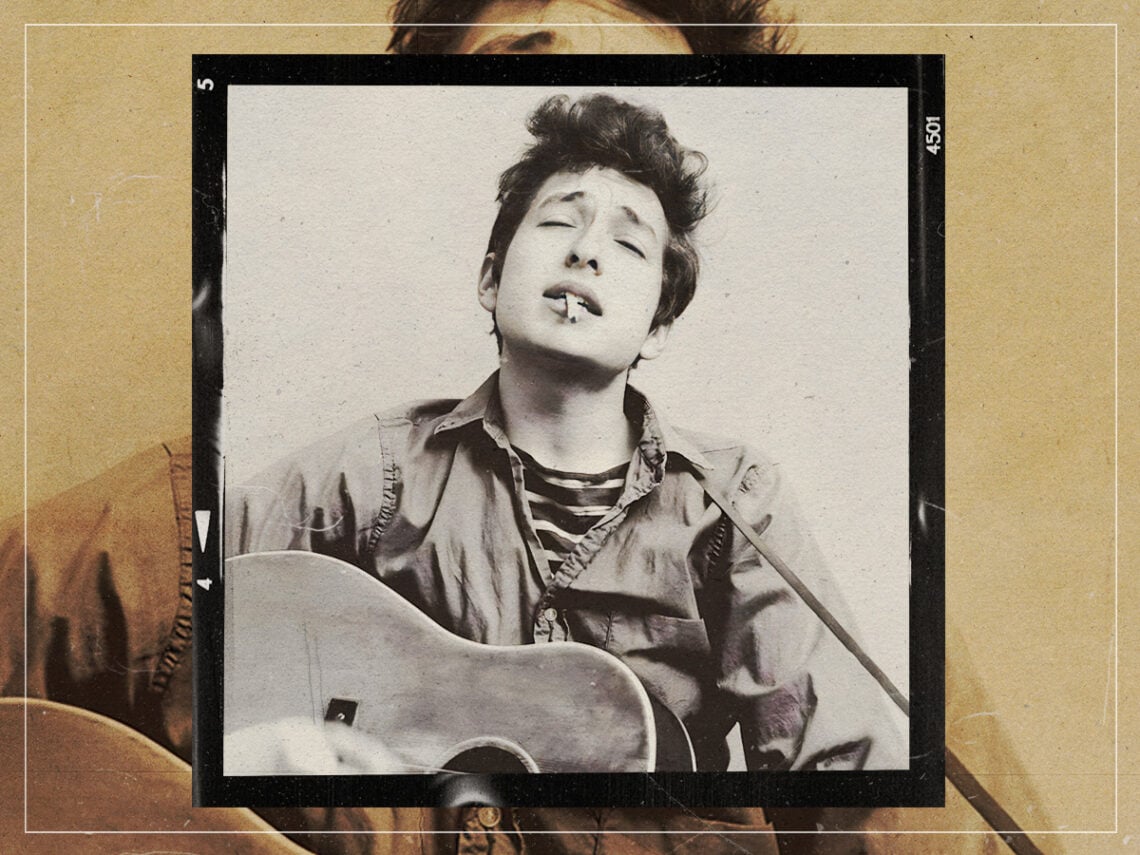
“The greatest rock and roll band of all time,” according to Bob Dylan

Despite being often thought of as a mythical figure in the world of music, Bob Dylan’s dominance over music in the last century was almost mechanical. As a lyricist, he is as all-encompassing as they come, pivotal and powerful in equal measure, delivering intricate thoughts with poetic themes. As a vocalist, he is unique in his delivery, finding a warming and worldly tone that, despite technical deficiencies, few can refuse.
As a singer-songwriter, author, and visual artist in his own right, Bob Dylan carefully cultivated himself as an artist. Through thought and well-placed career changes, he has become a legend.
While the songwriting troubadour may have crafted his pathway to becoming the voice of a generation, writing songs based on intelligence and planned-out perspectives, there is one band who seemingly used gut feel to take them to the top. For Dylan, this group, therefore, embody the very notion of rock and roll.
Dylan has been a heavyweight in popular culture for over 50 years. His most iconic works stemmed from the 1960s, a tumultuous decade that gave young Robert Zimmerman many topics to write about. His songs from that monumental period included ‘Blowin’ in the Wind’ in 1963 and, a year later, ‘The Times They Are a-Changin”. These two songs would become anthems for the nascent civil rights and anti-war movements. During this time, Dylan incorporated various political, social, philosophical and literary influences. It was this that broke down the walls of contemporary musical conventions and fed into the narrative of the burgeoning counterculture.
Duly, by the end of the decade, Dylan had established himself not only as one of the finest songwriters of his generation but of all time. He had succeeded in emulating the creative brilliance of his hero, Woody Guthrie. Instead of being confined to the cult status like him, he had taken the raw materials Guthrie provided and turned them into even more profound, universal messages that still reverberate throughout culture today.
After all, Dylan once famously said: “The highest purpose of art is to inspire. What else can you do? What else can you do for anybody but inspire them?” – and he has invariably done that across his career, even in his most maligned artistic chapters.
Dylan has since written songs about no end of varying topics. In 2020, he delved into the assassination of JFK with ‘Murder Most Foul’, a 17-minute masterpiece that, surprisingly even to Dylan, became his first Billboard 100 number one hit. It is a testament to his legacy that he has been bestowed with a host of the world’s most illustrious prizes: The Presidential Medal of Freedom, ten Grammy Awards, a Golden Globe and an Academy Award.
This glamorous list does not end there. In 2008, the Pulitzer Prize Board awarded him a special citation for “his profound impact on popular music and American culture, marked by lyrical compositions of extraordinary poetic power”. This was followed up in 2016 with Dylan being awarded the Nobel Prize in Literature for “having created new poetic expressions within the great American song tradition”.
While the accolades that Dylan has claimed across his career are some of the most invaluable, they do not account for the significance of his legacy. The extent of his impact is something that people will still be investigating in many years to come, long after he and we depart this mortal coil. In short, he’s a generational champion, and without the curly-haired Duluth native, life would be worse than it currently is, a multi-faceted point that is worth an essay in itself.
All these awards, songs and widespread acclaim paint a picture of Dylan that is hard to shake. The mysticism surrounding him is backed by a bounty of work that places him at the top table of the music world. For that reason alone, he has become a figure of academia. It’s interesting, then, that his favourite band of all time should be so far removed from the career he garnered for himself.
There is little surprise that to Dylan, The Rolling Stones are “the greatest rock and roll band in the world and always will be”. The freewheelin’ troubadour has always had a soft spot for Mick Jagger and the band, as both he and they took off on their meteoric rise around the same time, culminating in a special bond that has even seen them share a stage on occasion. While they certainly enjoy some similarities, perhaps their differences bring Dylan so neatly to the altar of The Rolling Stones.

While he was quickly thrust into the political limelight with his music, the group from Dartford really moved themselves onto the dancefloor. As he was beleaguered by lyrical inquests and met with fans demanding to know the intricacies of his songs, the Stones seemingly partied past any question asked in earnest. Sure, they both rose up in the 1960s and enjoyed a change of pace in the ‘70s before shrinking back in the ‘80s and finding fame and legacy in the following decades, but it always seemed like the Stones had far more fun doing it.
Both have enormously impacted contemporary music, and debates surrounding both have existed since the ’60s. What is interesting, though, is that although they have had a very healthy chart rivalry over the years, both juggernauts have remained complimentary of the other.
Returning to Dylan’s famous statement hailing the Stones as the best of all, he concluded that they were “the last too”. It’s a damning indictment of the music that followed, but when you break it down, few acts are as potently and devoutly rock and roll as the Stones.
“Everything that came after them, metal, rap, punk, new wave, pop-rock, you name it… you can trace it all back to the Rolling Stones,” he said, and it reflects the band’s lasting imprint on the most precious parts of music. “They were the first and the last, and no one’s ever done it better”.
For music fans, it is warming to see successful musicians being respectful of each other rather than disparaging, as is so often the case. Once, Stones guitarist Keith Richards repaid Dylan’s grace by stating: “I’d work with Bob any(where). I’d work with Bob in hell or heaven. I love him”.
The two factions of 1960s fandom have shared the stage occasionally. Firstly, Jagger and Dylan worked together when paying tribute to the Beatles at the Rock and Roll Hall of Fame, also guesting at a 1995 Montpellier show as well as numerous other dates over the following years.
With the release of Dylan’s last album, 2020’s Rough And Rowdy Ways, the Minnesota native has been in a reflective mood. In the expansive single, ‘I Contain Multitudes’, Dylan name-checks the Stones, many of their contemporaries, historical figures and a Harrison Ford franchise. “I’m just like Anne Frank, like Indiana Jones. And them British bad boys, The Rolling Stones,” he sings. It’s a fine doff of the cap from one legend of the 1960s to another.
In a rare interview with The New York Times promoting his last record as a “lark”, Dylan was asked to name one, if any, Stones songs he wishes he had written. His response was classic Dylan. “Oh, I don’t know, maybe ‘Angie,’ ‘Ventilator Blues’, and what else, let me see. Oh yeah, ‘Wild Horses.'”
It’s clear that Bob Dylan will always be a Rolling Stones fan.

Never Miss A Beat
The Far Out Beatles Newsletter
All the latest stories about The Beatles from the independent voice of culture.
Straight to your inbox.