


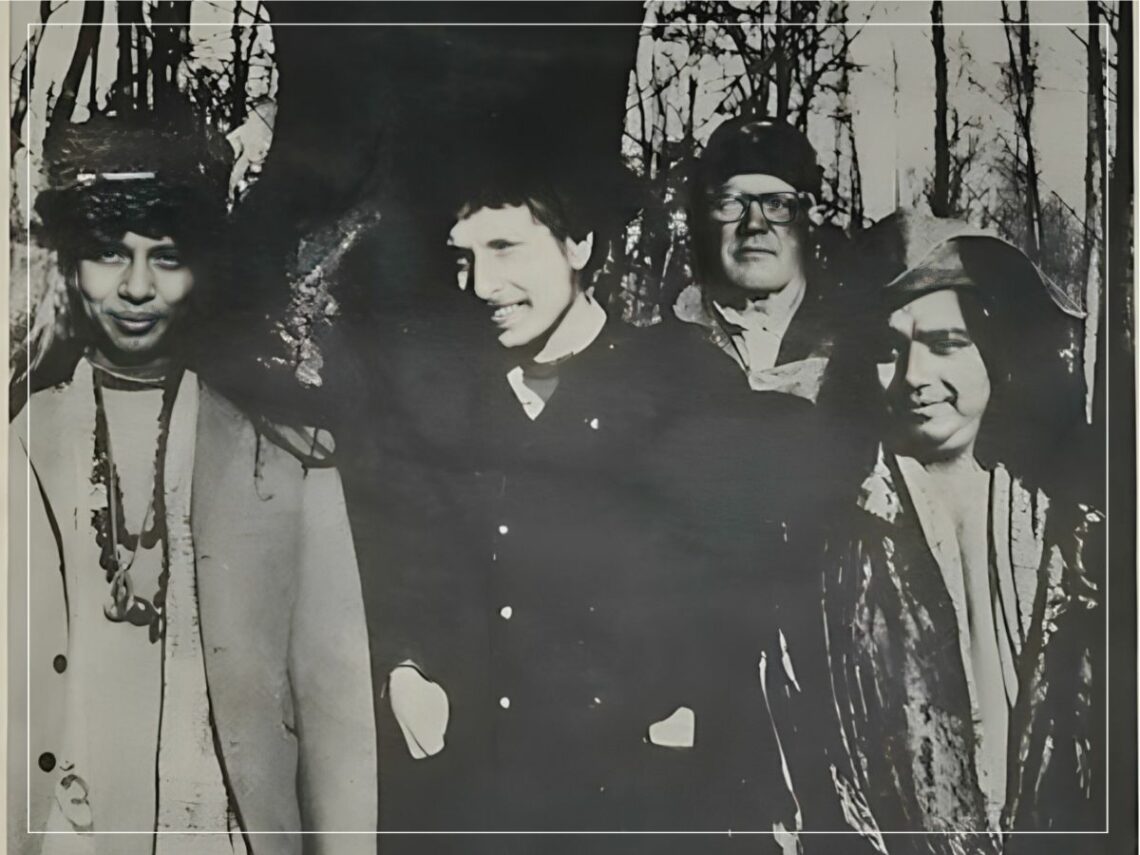
Who is on the album cover for Bob Dylan’s ‘John Wesley Harding’?

As A Complete Unknown demonstrates, Bob Dylan spent much of the 1960s toggling between being an enigmatic genius and a masterful troll—often blending the two seamlessly. He would fabricate tales, like claiming to have run away to join the circus at 13, purely to toy with those hanging on his every word. Fans lapped it up, eager for any morsel of information about their self-anointed prophet. Given the almost religious adoration surrounding Dylan during his Freewheelin’ days, that sentiment is hardly an exaggeration.
Every scrap of anything Dylan released was pounced upon with a fervour only matched by Beatlemania, and like the Fabs, Dylan’s album covers were soon picked apart for meaning. Pretty soon after the release of The Freewheelin’ Bob Dylan, the identity of the girl Dylan was pictured with on the cover was revealed as his then-girlfriend, political activist Suze Rotolo. Things don’t get really ‘Paul Is Dead’ until a few years later, though, once Dylan had his electric phase and went back to his roots with his still-astonishing 1967 record John Wesley Harding.
Right from the off, there’s the very title of the album. The Texas outlaw its referencing was named John Wesley Hardin. So, why the extra G? Is there some profound lore? A rabbit hole to throw oneself down that leads to some earth-shattering revelations? No. According to fellow singer Wesley Stace, he just got the name wrong, and no one thought to correct him. What really stands out is the cover photo.
Arriving on the scene in the literal summer of love, where everything was awash with colour and even the Rolling Stones were singing “She’s A Rainbow”. John Wesley Harding arrived in stark black and white. The cover depicts Dylan, older, wiser and grinning in a way he’d never have done as a surly beatnik earlier in the decade, pictured with three other men.
Each of them lived locally to Dylan, based by his house in Woodstock, upstate New York. The two that flank Dylan are brothers Pernan and Luxman Das, two musicians who’d moved to America from their home in Bengal and settled into the New York folk scene that gave the world Dylan and Joan Baez.
Dylan had struck up a friendship with the two brothers and was seen by them as a kindred spirit. In fact, Purna told the Telegraph of India in 1995 that their goals were the same: to “Sing to the people, tell their translations and spread love through music.”
Behind Dylan and the brothers, adding to the local feel of the cover is Woodstock-based carpenter and Stonemason Charlie Joy, who was working on the house they held the cover shoot in at the time and joined one of the photos for the hell of it.
The real mystery, though, involves a supposed Beatles Easter egg hidden on the cover. According to a long-standing urban myth, if you turn the cover upside down and squint at the wood grain of the tree (it helps if you’re high), you might just see the faces of John, Paul, George, and Ringo staring back. Some claim it’s a tribute to Dylan’s appearance on Sgt. Pepper’s Lonely Hearts Club Band earlier that same year.
Photographer John Berg, when asked about the supposed Beatles cameo, offered the perfect response: “If you wanted to see it, you saw it. I was just as amazed as anyone else.”

Never Miss A Tale
The Far Out Bob Dylan Newsletter
All the latest stories about Bob Dylan from the independent voice of culture.
Straight to your inbox.