


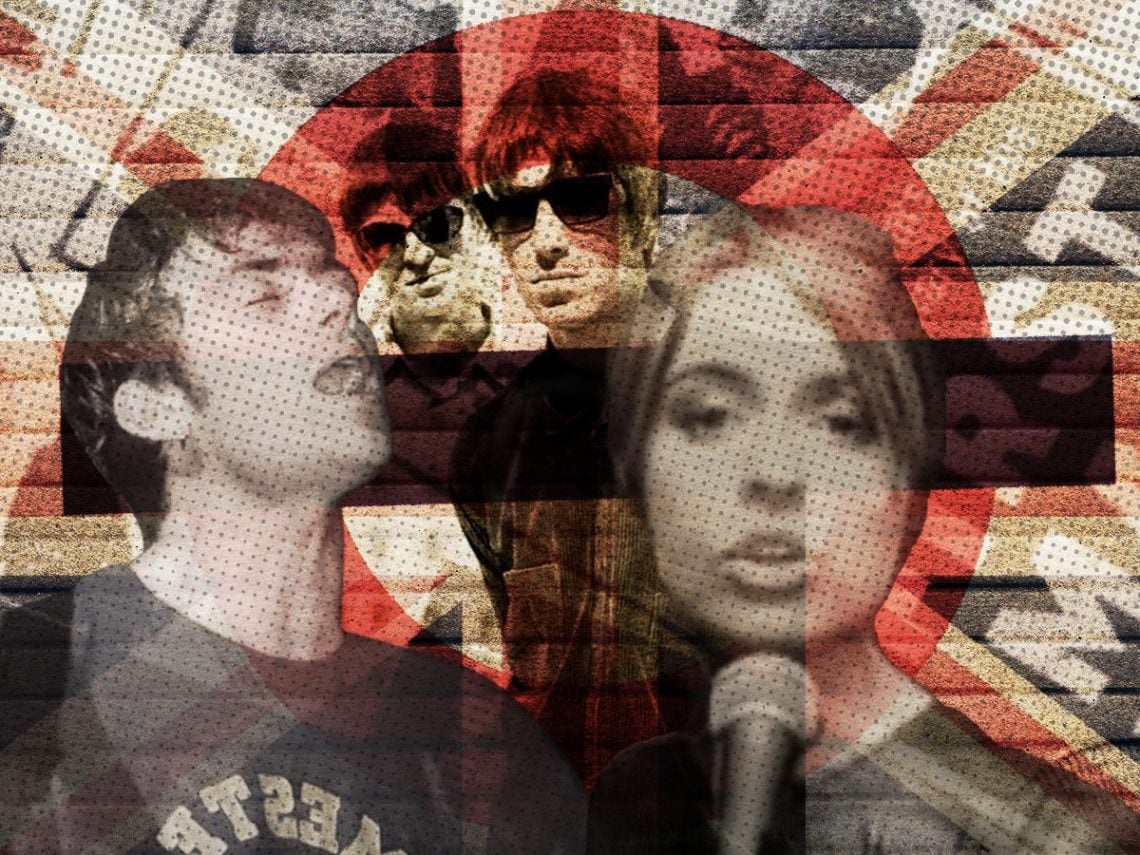
From Blur to Sleeper: Artists criticise the inherent misogyny of Britpop

Every umbrella term coined to represent a movement eventually gets denigrated by those once closely involved. Whether it be the current crop of post-punk acts or those working within nu-metal, the instances of this are numerous. While all ‘scenes’ have their own stories, none are as polarising as Britpop.
It’s little wonder that the Gallagher brothers, the masterminds of Oasis, the movement’s defining group, have distanced themselves from the tag of Britpop on numerous occasions. When asked on Twitter in 2019 if he thought his band were Britpop, former Oasis frontman Liam Gallagher said: “We were bigger than Britpop. All those bands were desperate”.
Liam’s comments have a great deal of validity, yet his brother Noel’s critique of the genre goes much further. He once said: “We’re not Britpop. We’re universal rock. The media can take the Britpop and stick it as far up the back entry of the country houses as they can take it.”
The Gallagher brothers’ analyses and attempts to separate themselves from Britpop are primarily to do with the musical aspects, which is wholly understandable. Nevertheless, as the advent of Britpop moves further into the past, the revisionism with which it is viewed gets more objective and produces more reasons to review its standing outside of the musical.
This change of perspective, aided by the passage of time and shift in societal attitudes, has repeatedly disclosed one thing: Britpop was a largely misogynistic environment, and it is this that caused many of its most prominent figures to distance themselves from it. This is also why, per some accounts, many of the bands once hailed as exciting prospects have been long forgotten.
One of the more notable critics of Britpop is Brett Anderson, frontman of Suede. The band were once hailed as one of the vanguards of the scene, with the front cover of April 1993’s issue of Select magazine featuring Anderson backed by a Union Jack, an iconic moment in the genre’s story.
Elsewhere in the issue, features on The Auteurs, Denim, Saint Etienne, and Pulp helped kick off what became the national movement we now know as Britpop. Despite his deep connection to it, Anderson was and still is a dissenting voice on Britpop. Famously, he once even labelled Oasis as “the singing plumbers”.
Speaking on BBC Hardtalk in 2019, Anderson said: “I disassociated myself from that very early on. As soon as I saw what I saw as becoming this kind of laddish, jingoistic cartoon happening, which became Britpop, I very quickly distanced Suede from that.”
When probed on whether distancing themselves from Britpop made the ‘Animal Nitrate’ band appear snobby, Anderson reflected: “I think did it make us look snobby? Probably, you know, you make lots of mistakes along the way. I’m not perfect, you know what I mean? But all you do, you just go with your instincts, and I saw what was happening with Britpop, and for me, it felt quite distasteful. It felt nationalistic. It felt like there was, sort of, quite a strong thread of misogyny, and I didn’t think Suede should be part of that.”
Another respected figure from the time is Sleeper frontwoman Louise Wener, whose hits such as ‘Inbetweener’ and ‘Sale of the Century’ are hailed as Britpop highlights. Despite these hits, Wener faced ample sexism, and it’s something she hasn’t forgotten. “The music press was so leaden and serious back then,” Wener told Long Live Vinyl. “It was hard to get any humour across. There was a basic sexism, too; this fake shock of, ‘Oh, it’s a woman at the helm! Writing the songs!’ Because of that, the men in the band had to be diminished in some way.”
Much of this manifested itself in the term “Sleeperbloke”. Originally used to describe Wener’s bandmates, guitarist Jon Stewart, drummer Andy MacLure and bassist Diid Osman, it soon became a way of depicting the apparently forgettable men in a female-fronted band. Later in the interview, MacLure said of the term: “Only female-fronted bands had Sleeperblokes in the ’90s. It was a terrible, misogynistic way of operating.”
One moment in Britpop that has long been the subject of intense criticism is the video of Blur’s 1995 single ‘Country House’. Although the single is most famous for being the band’s offering in the fierce media spectacle ‘The Battle of Britpop’, against Oasis hit ‘Roll With It’, the misogyny contained within is more significant.
The accompanying music video of ‘Country House’ was directed by artist du jour Damien Hirst and depicts the song’s narrative of a man – played by Keith Allen – who escapes the rat race of the city for a big house in the country. However, it also features models Sara Stockbridge, Vanessa Upton, and Page 3 girl Jo Guest in an objectifying way. The women involved are used as sexual objects and nothing else.
Blur guitarist, Graham Coxon, has been particularly critical of the video, labelling it “demeaning to the girls” who appear in it. In his 2022 memoir, Verse, Chorus, Monster!, he wrote: “It made me angry because here I was, finally in a band, and the experience seemed to be getting cheapened by Page 3-type imagery, a revival of sexism and football hooliganism.”
Of the objectifying, he added: “I was clashing heavily with the Britpop thing and didn’t feel the need to refer to women’s body parts in a rude way.”
This begs the question, why wasn’t Britpop more heavily protested against at the time? Despite all the promises of the liberal 1990s, outdated social mores were yet to change, and #MeToo was still a long way away. Ultimately, Radiohead put it perfectly – Britpop was “backwards-looking”.
