


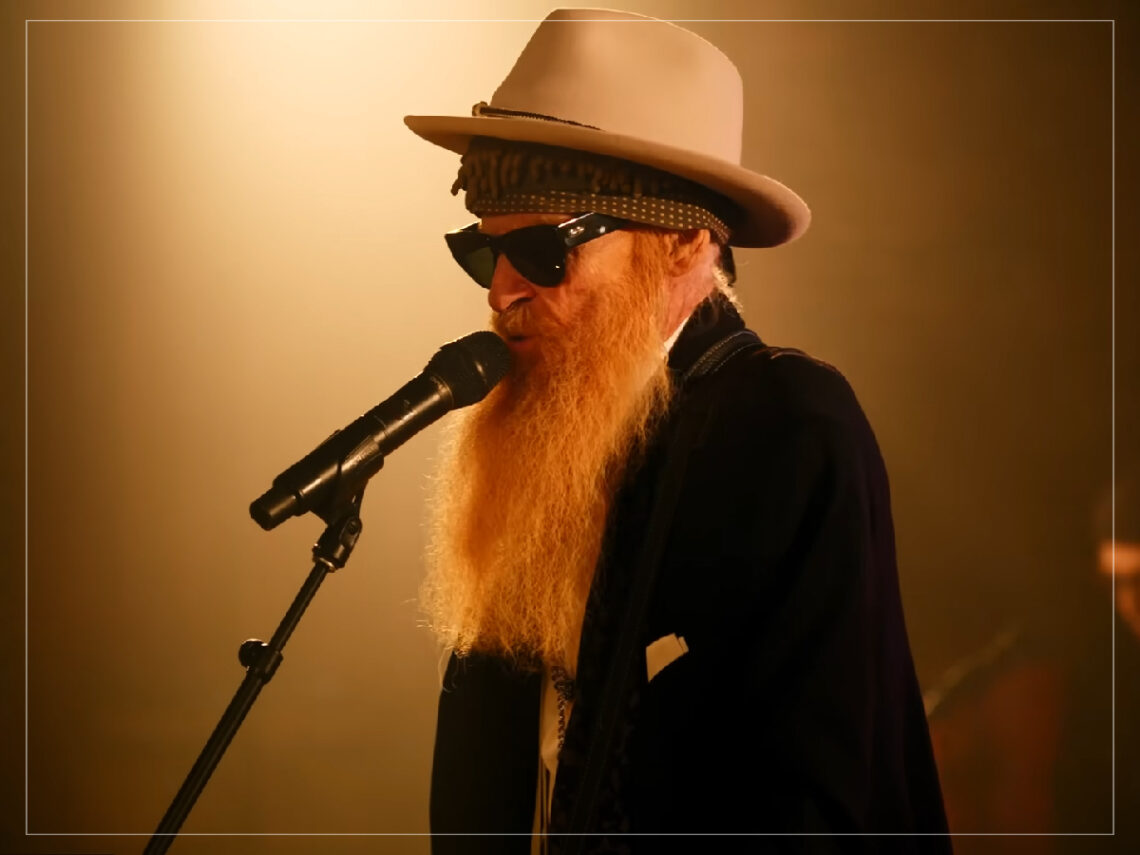
The artist Billy Gibbons said mastered the guitar: “Far beyond what anyone else was doing”

When a man like Billy Gibbons uses the words “downright befuddling” to describe the magic of a certain guitarist, that’s when you know he’s in the worship of a true master.
It’s especially the case since Gibbons is obviously no guitar-playing novice in his own right, but it makes the praises sung for this particular genius all the more glittering in knowing that his affections were won by fellow musicians up and down the land, even long after the man in question had departed from the world, leaving his effervescent gift behind.
After all, there was a solid reason that the Rock and Roll Hall of Fame described Robert Johnson as “perhaps the first ever rock star”. A lot of people would credit that title to someone like Chuck Berry – but he was still two decades down the line when the Delta blues guitarist was treading the boards, laying the path for how things would forevermore be done.
The man most definitely had a legacy that preceded him, given that he hardly gained any form of status within his lifetime and became known only within a few small, select circles. But then again, for the making of a musical legend, only one essential ingredient is really needed: the sound. For as long as that survives, so will Johnson’s memory live on.
That much was evident in his influence on an artist like Gibbons, who, starting out in his career some three decades after Johnson had died, still found those leads of electric inspiration being passed down to him. It didn’t matter that this was old school blues, with little resemblance to the modernised landscape in that moment. The talent was the only important thing.
The thing that struck Gibbons the most about the sheer power of Johnson’s sound was that “This was just one guy,” he said, adding, “Meat on metal on wood. But what he came with was fierce.” That command was the quality that sent musicians from every corner of the world, from Keith Richards to Gibbons himself, reeling in later years at the man they had lost.
Of course, the guitar playing itself was just one aspect of why the image of Johnson became so enthralling to all who came across him. The intrigue and enigma of his story was entirely another. Working his way to cultivate the scene, before then tragically passing away in 1938 at the age of just 27, the guitarist’s short life almost inadvertently made him all the more magical.
As Gibbons put it, “He had mastered a way of playing that went far beyond what anyone else was doing in the Delta at that time. It was downright befuddling.”
With the frontman citing influence from Johnson on a whole range of songs, not least ZZ Top’s ‘LA Grange’, it’s clear that Johnson’s impact will never die, so long as Gibbons is around to see it happen.
It’s a well-quoted phrase, but the musician’s musician is often the person you need to look to in order to find the mark of real genius. It doesn’t tend to be the flashiest individual, nor the most famous or acclaimed, but it’s the figure who every other artist leans on as their guiding light and North Star for why they picked up their chosen instrument in the first place. Johnson may have been an unsung blues master, but in being so, he is also Gibbons’ ultimate idol.
