


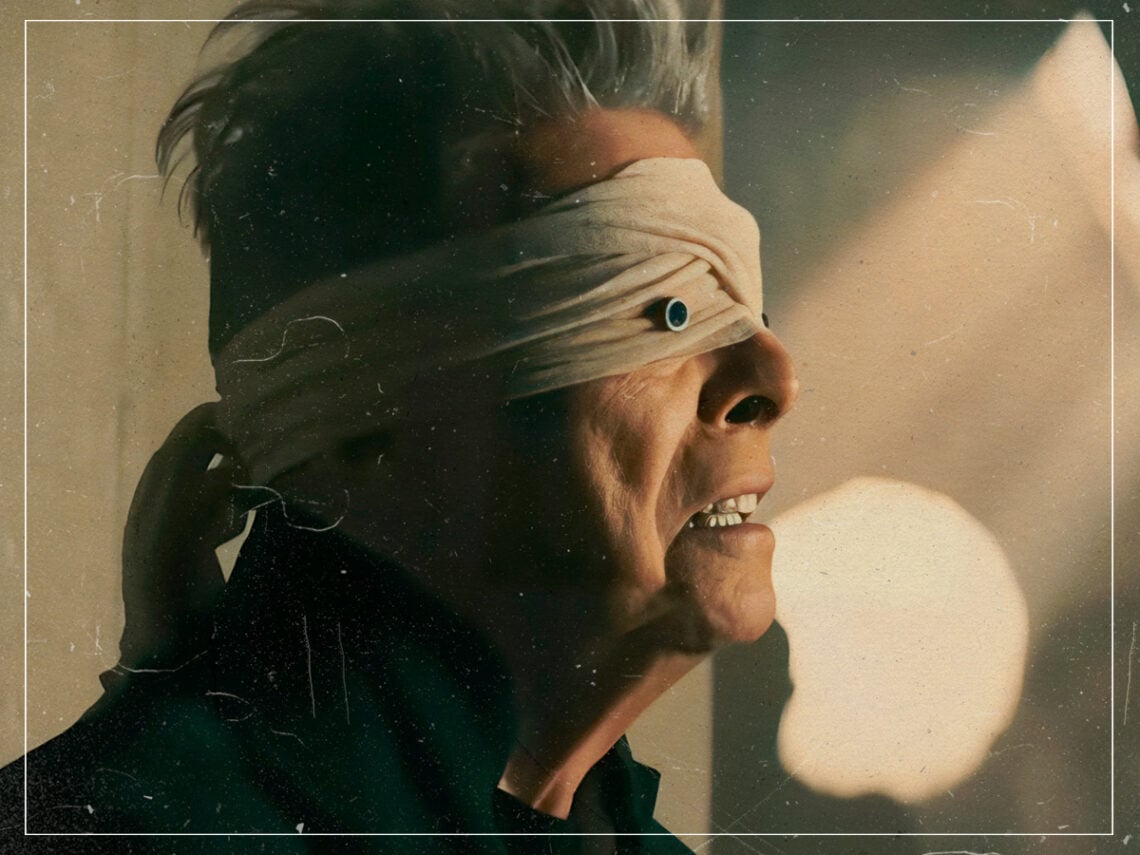
Danse Macabre: Is ‘Blackstar’ the greatest memento mori in music history?

“When a man sees his black star, he knows his time has come.” – Elvis Presley
When David Bowie crafted Blackstar, he knew exactly what he was doing. While The Starman had his share of innovative qualities, even letting them bleed over into his real-life personas, making death out of art reached its pinnacle long after the singer made his peace with the concept. The album represents a real tour de force of the macabre.
Released just two days before his death, the project’s circumstances and name alone panders to venturing over the other side, the starkness of black and white in the artwork communicating simplicity alongside depth, depth of the abyss and the lack of knowledge about where we go when we die. Bowie was undeniably a maestro of mystery, and so something about turning his final album into a swan song before anybody knew that it would be one seems strangely fitting.
Before we delve into the themes explored in Blackstar, let’s get one thing straight: Bowie loved to play. He toyed with musical excellence the way many of us push around food on our plates, wondering why certain patterns feel more satisfying and whether there’s any meaning in it all. Above all, he was also a true testament to the power of perseverance. Bowie gave to the music industry what many musicians only dream of, only to receive success far into his career when people were finally ready to listen.
Even then, his arrival on the ground symbolised a trajectory into space as he crafted his own perfect world, filled with musings that only he would understand. If others did, it was a bonus, but it was all for him and only him. Blackstar, therefore, was likely made as a way of processing what was to come in ways that only his unique mind was capable of navigating.
Although it may feel like stepping ahead, beginning by analysing ‘Lazarus’ makes sense mostly due to its intrinsic posthumous feel. This was a man who knew his death was coming, and yet something about it feels bittersweet. The song starts as Bowie croons the eerie words, “Look up here, I’m in heaven”. In one line, he invites the audience into his omniscient world, allowing us a glimpse into the final moments of music’s most gifted thinker.
The song also points towards Bowie’s liberation from physical life as he alludes to Lazarus – a follower of Jesus who was resurrected and released from suffering. Simultaneously, the music video exudes darkness and pondering of mortality as we see Bowie looking more fragile and vulnerable than perhaps ever before. Most interestingly, however, the lack of likeness to the star seems somewhat unsettling yet strangely endearing and comforting all the same. In this way, Bowie presents death as a multifaceted concept where comfort, warmth, fear, and inevitability intertwine.
This continues with the album’s title track, which contains a reference in the opening line to “the Villa of Ormen”. The “Ormen” represents a serpent linked with themes of death, chaos, and figures like the occultist Alastair Crowley, commonly associated with the devil. Consequently, the song carries multiple layers of significance, touching upon notions of death across philosophical, spiritual, and scientific realms.
In astronomy, the concept of a black star also indicates the collapse of a black hole and a star, which could perhaps reflect how Bowie was feeling at the time. His death could be viewed as the collapse of himself as a star as he falls into the unknown, never to emerge again. However, while much of the lyrics and eerie, ambient arrangements may create a notably sinister atmosphere, some, like ‘Girl Loves Me’, depict the singer pondering the passage of time while oscillating between enlightenment and acceptance.
Although the entire feel of Blackstar articulates the demise of Bowie in every sense, there’s also some hope to be discovered in ‘I Can’t Give Everything Away’. Bowie understands that his death will cause an influx of speculation and rumination. Therefore, as an album closer, ‘I Can’t Give Everything Away’ attempts to deliver both desolation and illumination in a raw and completely authentic manner.
“Seeing more and feeling less / Saying no but meaning yes / This is all I ever meant / That’s the message that I sent,” he sings, revealing more about his past artistry than he ever could in the entirety of Blackstar. Although Bowie daringly defied convention throughout his life, the album shows a fearless yet more restrained version of the singer whose mortality has forced him to become introspective, the limits of self-expression becoming a significant barrier but also an indicator of sheer artistry.
