


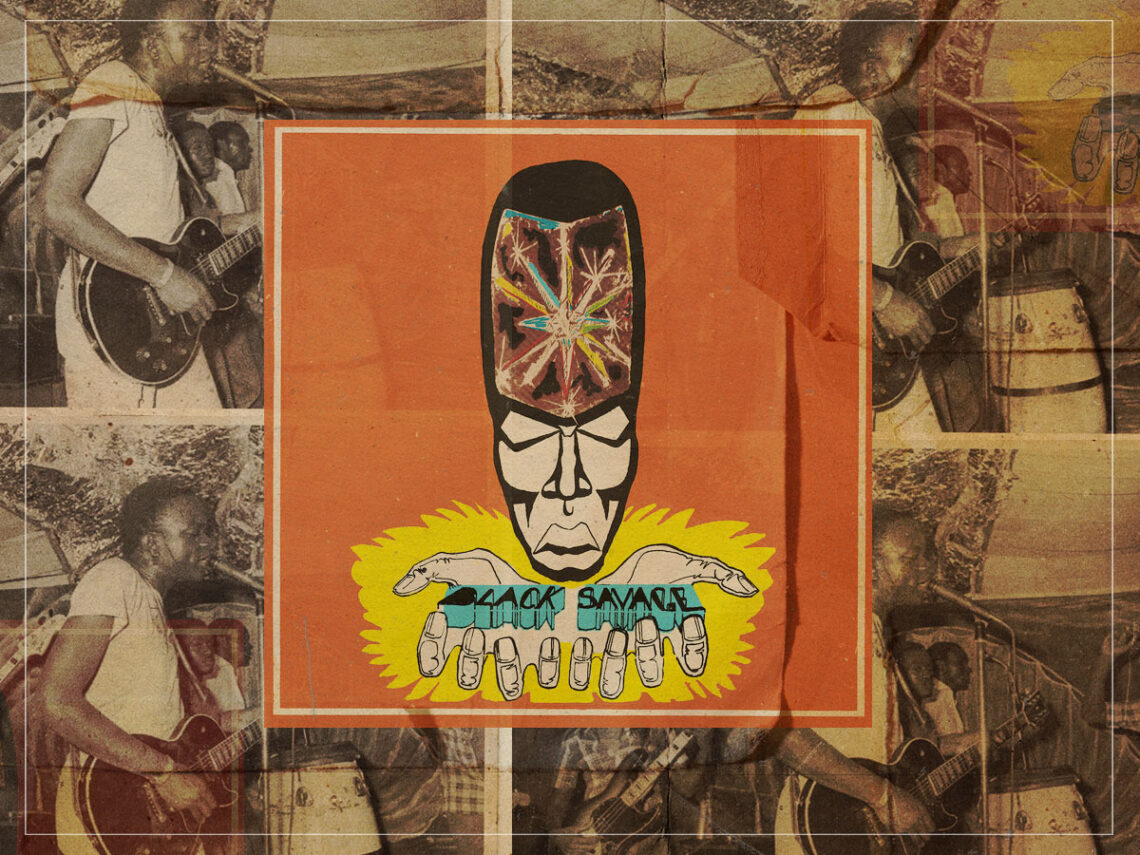
Black Savage: the leaders of Kenya’s funk rebellion

Colonialism has left incredibly deep, lasting scars upon the continent of Africa, the kind of scars that treaties, laws, or diplomatic missions cannot immediately heal. Particularly for countries like Kenya, which spent nearly 70 years under the rule of the British Empire, carving out a unique cultural identity away from that colonial power proved to be a tricky task. As in most cases, however, the answer came in the form of music and art, with post-colonial Kenya defining its own distinct sight and sound, helped along by groups like Black Savage.
As with many nations across modern-day Africa, Kenya boasts an incredibly rich tapestry of folk music and traditional tribal songs with a history going back hundreds of years. By the time Africa started to free itself from the shackles of colonialism during the mid-20th century, many artists began to return to those age-old roots. For the younger generation in Kenya, those folk sounds bore little resemblance to everyday modern life, so they were forced to look elsewhere for artistic inspiration.
During the mid-1970s, just over a decade after Kenya was declared independent from its colonial oppressors, four young students decided to ride the wave of artistic creativity that followed Kenyan independence. Across the ocean, musicians in the United States and England began to tear down the conventions of popular music, ushering in the age of punk rock. Although these Kenyan students, who landed on the band name Black Savage, weren’t punk in sound, they certainly were in attitude.
Formed by Gordon Ominde, Jack Otieno, Ali Nassir, and Job Seda in 1975, Black Savage forged an incredibly original, innovative sound that combined elements of funk, rock, and soul music. With the majority of members having their roots in the Luo tribe, elements of traditional music came into play, too. Much of their material was built around Nassir’s drumming, often coupled with some stylish guitar riff from Ominde.
Releasing their one and only studio album, Something for Someone, in 1975, the band were fairly short-lived by anyone’s standards, but their impact on Kenyan popular music has had a much longer shelf-life. Given the fact that they were among the first musicians to introduce this kind of inventive sound to Kenya, Black Savage spawned an untold number of other young musicians and bands who followed in their footsteps.
Their music was not always politically charged, although songs like ‘Sharpesville’ and ‘What Are We Fighting For’ voiced general statements against oppressive figures while calling for unity and togetherness within the community. In truth, though, their existence was inherently political, given their sound and the time in which they got together. Black Savage were not pursuing commercial success or personal gain with their work; they were simply expressing themselves through music and creativity, providing a voice for young Kenyans in a post-colonial landscape.
Although Something for Someone was released via EMI, it only received distribution in the region of East Africa. As such, the wider world was never really aware of the existence of Black Savage, but the group developed a dedicated cult following among the youth of Kenya, particularly in Nairobi. Their time together might have been short-lived, but the young band certainly made an impact on their local music scene.
Seemingly, the band went their separate ways after a handful of single releases in 1976. Thankfully, though, recent years have witnessed a renewed interest in Black Savage, thanks to their music being shared between music fans online. Even in the modern age, their unique blend of funk and rock is still captivating and wonderfully rebellious.
