


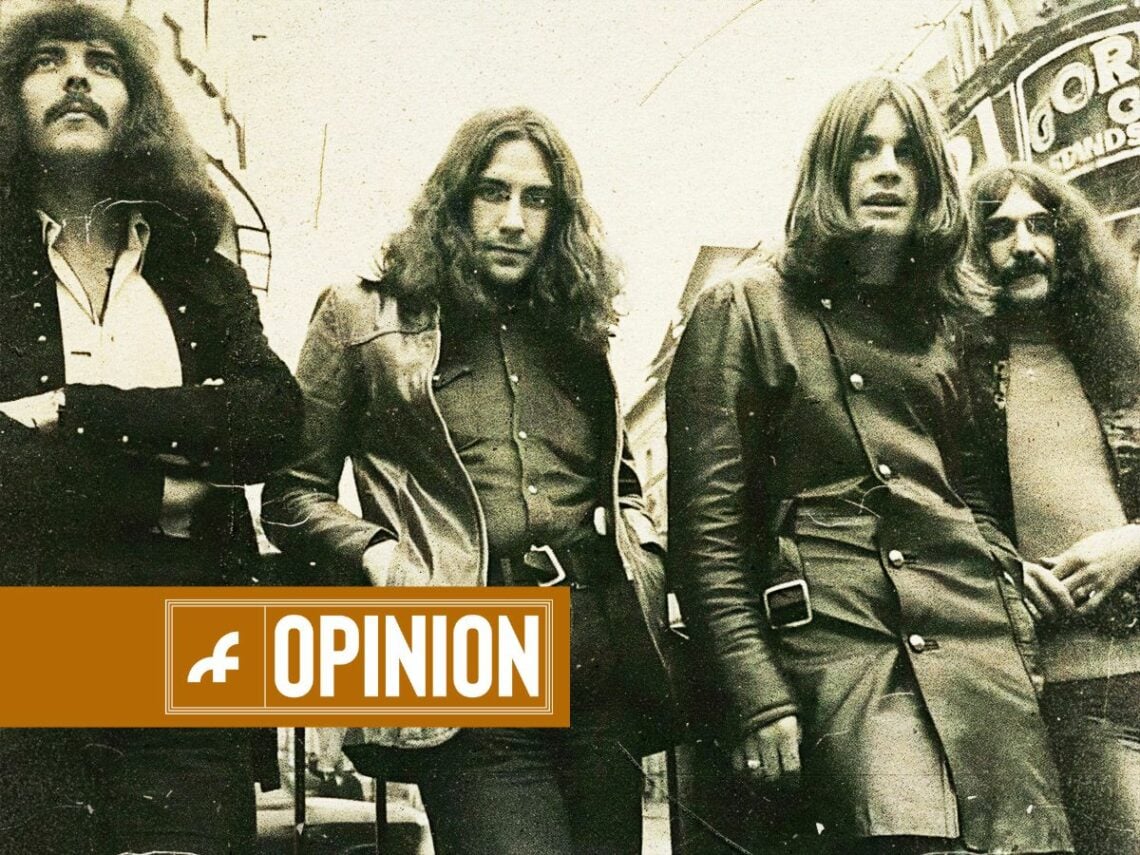
Hear Me Out: Black Sabbath were class-conscious creatives, not Satanists

Against the grey, industrial backdrop of the 1970s, one much-maligned genre was forged in the smoky embers of the West Midlands’ collapsing economy. Heavy metal, as pioneered by Black Sabbath, offered listeners enduringly weighty riffs and explorations of the occult. But Sabbath were constantly dogged by accusations they incited violence, suicide, and Satanism.
What Sabbath’s detractors never understood was that their music was always incredibly class-conscious and progressive – and by design, the advent of metal they spearheaded took place in a period marred by massive economic decline and widening social disparity. In 1970, Sabbath’s explosive debut album, Black Sabbath, saw the band grapple with the everyday experiences of the working classes in the Midlands in their own uniquely doom-mongering way.
Sabbath formed in Aston, an area in Birmingham plagued by dismal job prospects. It was a bleak industrial area, and while local factories provided some work, the pay was poor, and the living conditions horrendous. Before forming Sabbath, many of its members found work in abattoirs, as plumbing apprentices, and in factories. The work was manual and miserable, but it instilled a sense of urgency in the future Sabbath members – not to find better work within Birmingham’s industrial structure but to break out of it completely.
The thunderous sound of Black Sabbath was directly influenced by the treacherous factory landscape guitarist Tony Iommi worked in, where he severed two fingers after a factory guillotine press slammed down on his right hand. The severity of his desire to continue is best exemplified when he decided to fashion a makeshift prosthetic from a Fairy Liquid bottle he melted down and stuck to his fingers, so he could still play the guitar. The resulting sound was deafening, and Iommi has been considered the master of the metal riff ever since.
Not only did the factory landscape of the Midlands have an overarching physical impact on Sabbath’s guitar style, but on a creative level – its grey, smoggy aesthetic was uninspiring and dull. So the band retreated into their imaginations, with Iommi’s heavy style lending itself well to the supernatural themes they explore, like the “figure in black” and “visions of Satan” described on ‘Black Sabbath’.
Unknowingly, Iommi would also invoke the ‘Devil’s Interval’ in the opening of the song – a chord progression considered so dark and dismal that in the Middle Ages, playing it was forbidden by the Church. Black Sabbath’s preoccupation with the darker, drab side of life was directly informed by Aston’s ugly factory landscape. Sabbath took that ugliness, transmuting into fantastical demonic heights, which offered creative relief from their immediate surroundings.
Ozzy Osbourne has spoken at length about his experience growing up in such rough conditions, and in a sense, Sabbath didn’t need to look to the occult to find dark themes – when the abject poverty experienced in the Midlands was itself so bleak. The creative displays seen on all of Black Sabbath’s albums were anchored in the highly individual struggles faced by working-class people in Birmingham in the 1970s. Their debut charted the beginning of a period marked by power cuts, compulsory three-day weeks, and mass stoppages.
But this didn’t translate well to American audiences. Robert Christagau dismissed Black Sabbath as “the worst of the counterculture on a plastic platter,” while others baulked that they were just a shit version of Cream. Sabbath were never psychedelic enough to be embraced by the collective hangover of the Summer of Love, which is why dismissing them as a Satan-worshipping joke came so easily. But Aston wasn’t a place to be wearing flower crowns and preaching about peace and love. Sabbath’s music borrowed from its environment in a far more engaging way than the hippie music of the ’70s ever did, and that didn’t mean embracing Lucifer – it just meant doing whatever they could to survive and get out of it.
Echoes of the industrial landscape can be heard throughout all of Sabbath’s work, winding its way into the low, aggressive growl of their guitars – which played as heavy and loud as the steel mills. The tales of confronting Satan they concoct actually reveal a lot about the reality they were rooted in, making Birmingham seem like an imposing force that had to be mentally escaped. It cannot be understated how much the dismal factory landscape domineered both the minds and bodies of Sabbath’s creators: so much so that they spearheaded a genre that was named after one of its prize exports: metal.
Heavy metal, in all its working-class grit, could only have been conceived in a city where workers choked on the smog from their own failing factories.
