


‘Paranoid’: The Black Sabbath guitar solo Tony Iommi called “horrible”

Pushing off with their eponymous debut album in 1970, Birmingham’s darkest spark, Black Sabbath, set the bar exceedingly high for themselves and a meagre menagerie of heavy metal contemporaries. This trailblazing hard rock sound was only rivalled at the time by eminent domestic groups like Led Zeppelin and Deep Purple. Sabbath’s Birmingham neighbour, Judas Priest, existed at the time but was yet to reach national consciousness.
Had Black Sabbath called it a day after their seminal debut, they would still hold a seminal legacy with classics like ‘N.I.B.’ and ‘The Wizard’ pushing the vanguard. Fortunately, the band progressed through the early 1970s for a run of highly successful and influential albums. Paranoid, Master of Reality, Vol. 4 and Sabbath Bloody Sabbath arrived between 1970 and ’73 to shake the foundations of rock ‘n’ roll. Still, entering the middle of the decade, this momentum tapered somewhat.
Following the release of Sabbath Bloody Sabbath in 1973, Osbourne began to lose interest in the direction the band was moving. Two years later, when the band released Sabotage, internal conflict became apparent, resulting in a marked loss of coherence and quality. Spiralling drug and alcohol issues only served to compound such matters.
The final album the band recorded with Osbourne front and centre was 1976’s Technical Ecstasy. At this juncture, the punk scene and the flourishing soft rock of Fleetwood Mac and Eagles appeared to steal the show from Black Sabbath. Although metal prevailed in its own subterranean chasm through the heavy glam of Kiss and Sweet and emerging acts like AC/DC and Motörhead.
In 2021, Tony Iommi discussed his least favourite Black Sabbath albums in a feature with Guitar World. Picking out 1976’s Technical Ecstasy as a low point, the guitarist remembered his solo production venture. “Black Sabbath fans generally don’t like much of Technical Ecstasy,” he said. “It was really a no-win situation for us. If we had stayed the same, people would have said we were still doing the same old stuff. So we tried to get a little more technical, and it just didn’t work out very well.”
Despite lamenting a misguided attempt to move with the times, Iommi saved a greater portion of his scorn for the group’s 1983 effort Born Again, the only Sabbath record to feature Deep Purple’s Ian Gillan on lead vocals.
“When we first put that line-up together, it was only on paper – done purely by lawyers,” Iommi said, noting a lack of chemistry. “Ian is a great singer, but he’s from a completely different background, and it was difficult for him to come in and sing Sabbath material. To be honest, I didn’t like some of the songs on that album – and the production was awful.”
Some fans stand by these latter albums and might deem Iommi overly self-critical. Indeed, the guitarist has even picked holes in some of his most revered contributions. Iommi’s guitar command developed over time, but he has a distinctive knack for simple, punchy riffs that propel songs, sparing intricacy for lead excursions.
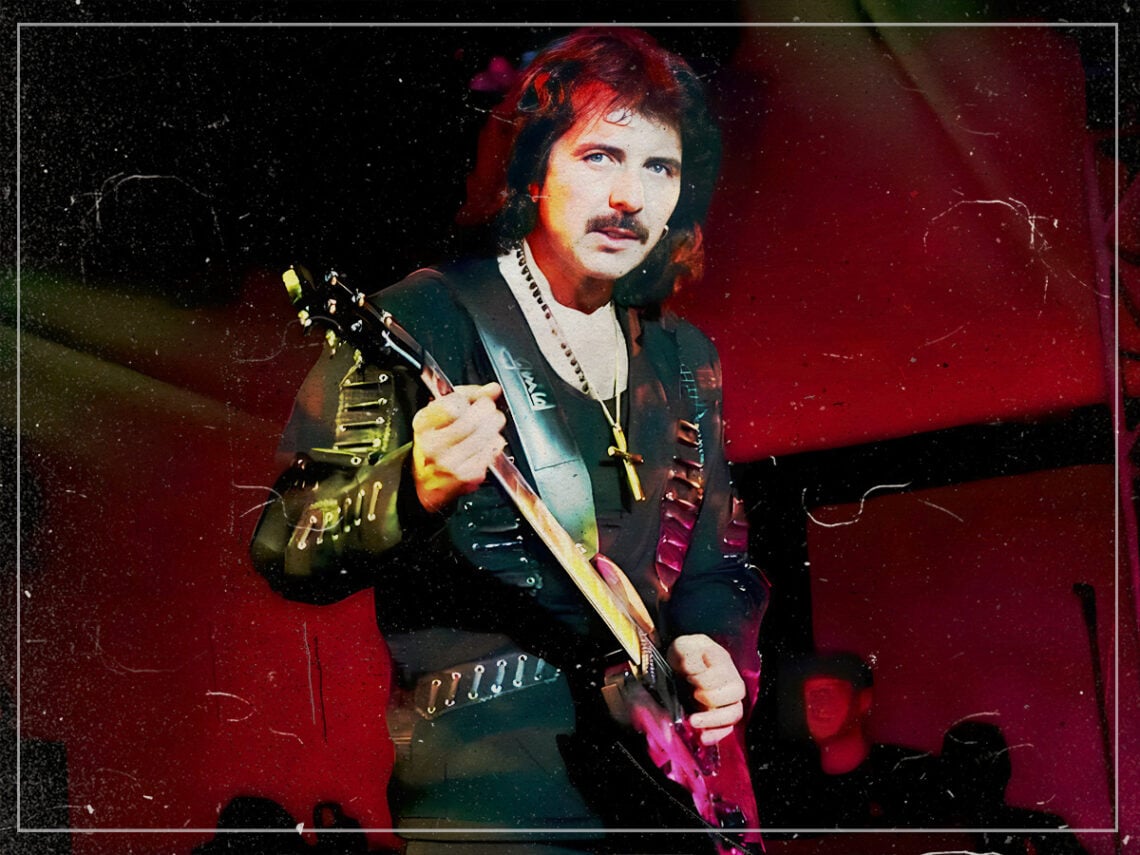
Perhaps his most famous riff is that heard on ‘Paranoid’; even with this, he wasn’t particularly satisfied. Although Iommi stood by his riff, he regrets the rushed studio session and the ring modulation effect applied to the track. “At first, I said, ’What the hell’s that?! It sounds horrible!’ But [the label] went ahead and picked it as the solo that ended up on the record all the same,” Iommi told Classic Rock. “And in the great British tradition of keeping calm and carrying on,” Iommi added, “I’ve got used to it now.”
Watch Tony Iommi perform ‘Paranoid’ with Brian May below.
