


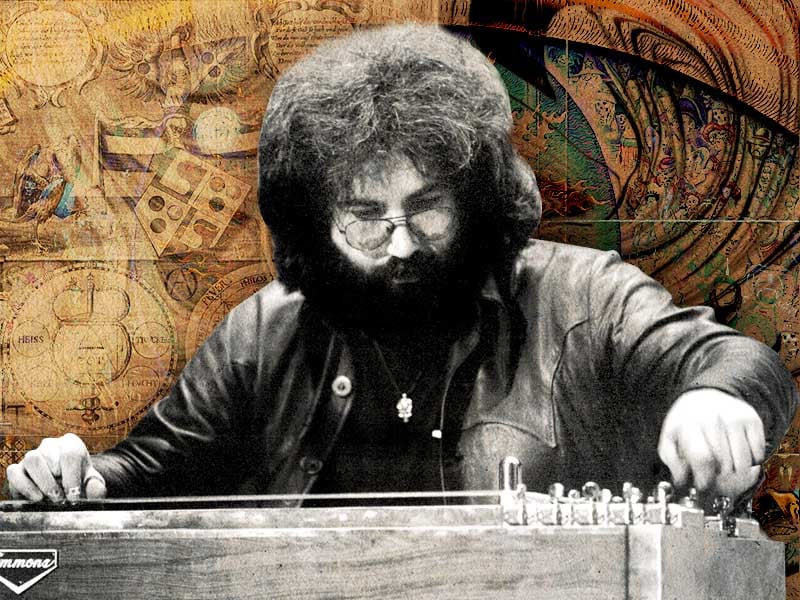
‘The Saragossa Manuscript’: the bizarre Polish film Jerry Garcia called a favourite

Offbeat Polish cinema and Jerry Garcia aren’t exactly the most obvious peas in a pod, but The Saragossa Manuscript made such a profound impact on the Grateful Dead songwriter, guitarist, frontman, and all-round leader that he went out of his way to rescue it from anonymity and irrelevancy.
In a tragic turn, Garcia never got to fulfil his wish before passing away in August 1995 at the age of 53, just days before his planned restoration came to fruition. However, in another unlikely twist in an entirely unexpected tale, another vocal supporter of Martin Scorsese stepped in to drag it across the finish line.
Although it was adapted from Jan Pitocki’s 19th century novel The Manuscript Found in Saragossa, filmmaker Wojciech Has decided to put his own stamp on the source material. The story remained largely the same – with two officers from opposing armies becoming entranced by the titular book they discover at the height of the Napoleonic Wars – but the film thrived on its director’s singular vision.
A psychedelic period piece evocative of its 1960s creation despite its period setting, The Saragossa Manuscript utilises a disorientating narrative structure that frames a story within a story, often spinning those out into even more subplots and substories that incorporate recurring motifs to underline the constant sense of mortal and existential dread that plagues the characters.
There’s phantasmagorical imagery aplenty, ominous caves housing primal rituals, seductions culminating in the imbibing of a beverage from a chalice carved from a human skull, and shades of body horror. It also has flashbacks, kidnappings, psychological decay, political insights, reflections on Poland’s post-war political landscape, blatant contradictions, a disregard for narrative connectivity and continuity, surrealism, absurdity, jet-black comedy, gallows humour, and an entirely open-ended resolution.
Based on that alone, The Saragossa Manuscript always had cult classic potential, but the 182-minute Polish version was shortened to 147 minutes in the United States and an even shorter 125 minutes in the United Kingdom. Adding to its mystery and must-see status, by the 1990s, it was rumoured that just a single print of the film remained, which is where Garcia comes in.
He’d first seen it during its initial Stateside run in 1966, but never forgot about the effect it had on him. As film archivist Edith Palmer explained to SF Gate, restoring The Saragossa Manuscript to its original pristine conditioned became Garcia’s mission.
He offered to put up the money for the restoration in 1993, but on the condition that “Jerry and friends could come and see the print whenever they wanted”. Palmer sent out enquiries that led her to a local distributor in Poland before Garcia passed away before he could witness the end results.
“Eventually, the print arrives,” she said. “Sadly, the day after the print arrives I receive the phone call that Mr. Garcia had died.” At the time, director Has had a print of The Saragossa Manuscript, and that was it, but Scorsese managed to restore the film in its entirety and add subtitles, with the cost being six times more than Garcia had pledged to commit at $36,000.
It was a long and arduous road, but the almost-forgotten classic was finally returned to its original form and made available to a mass audience.
