


“Let girls in”: The story of Birtha, one of rock music’s forgotten all-female bands

Doomscrolling on Instagram, as one does, I came across a video of a rock band that I regretfully had never heard of before: Birtha.
Appearing on the television series The Old Grey Whistle Test in 1972, the four-piece looked to be straight out of a 1970s dream, wearing an array of silk and glitter blouses, flared trousers and stunning near-waist-length hair.
Their drummer, Olivia ‘Liver’ Favela, sings with a gravelled, captivating voice through an overhead microphone, while the band shares vocal harmonies and comes together with an undeniable presence… Birtha, as it seems, were among the many all-female rock bands who tried and succeeded in rivalling anyone who dared to question their talent on the basis of their gender, even if mainstream culture did not recognise it, at the time.
Birtha – composed of Favela, guitarist Shele Pinizzotto, keyboardist Sherry Hagler and bassist Rosemary Butler, who all shared vocals and harmonies – came together in 1968. With the exception of Favela, the women were raised in Los Angeles and Orange County, California, and Pinizzotto and Butler were in another girl band before Birtha called The Ladybirds.
Together, they started The Daisy Chain, a garage rock-meets-psychedelic band that released one album, 1967’s Straight or Lame. When the band split up, the two women leaned towards a heavier sound and reformed as Birtha, with the band taking its full shape once they were joined by Hagler and Favela in 1968.
Birtha emerged from the hippie, folk and psychedelic sounds brewed on and within the Sunset Strip, with their own strain of hard rock infused with funk, blues and early notes of heavy metal. The four women dove straight into playing clubs along the West Coast, travelling from California up to Alaska, and for the next three years, they slowly eased into writing their one material: they composed the majority of their songs amongst each other, and some songwriting had contributions from Mark Wickman and Gabriel Mekler, with Mekler known for writing for the likes of Janis Joplin’s solo debut, 1969’s I Got Dem Ol’ Kozmic Blues Again Mama!, and Steppenwolf’s earliest albums.
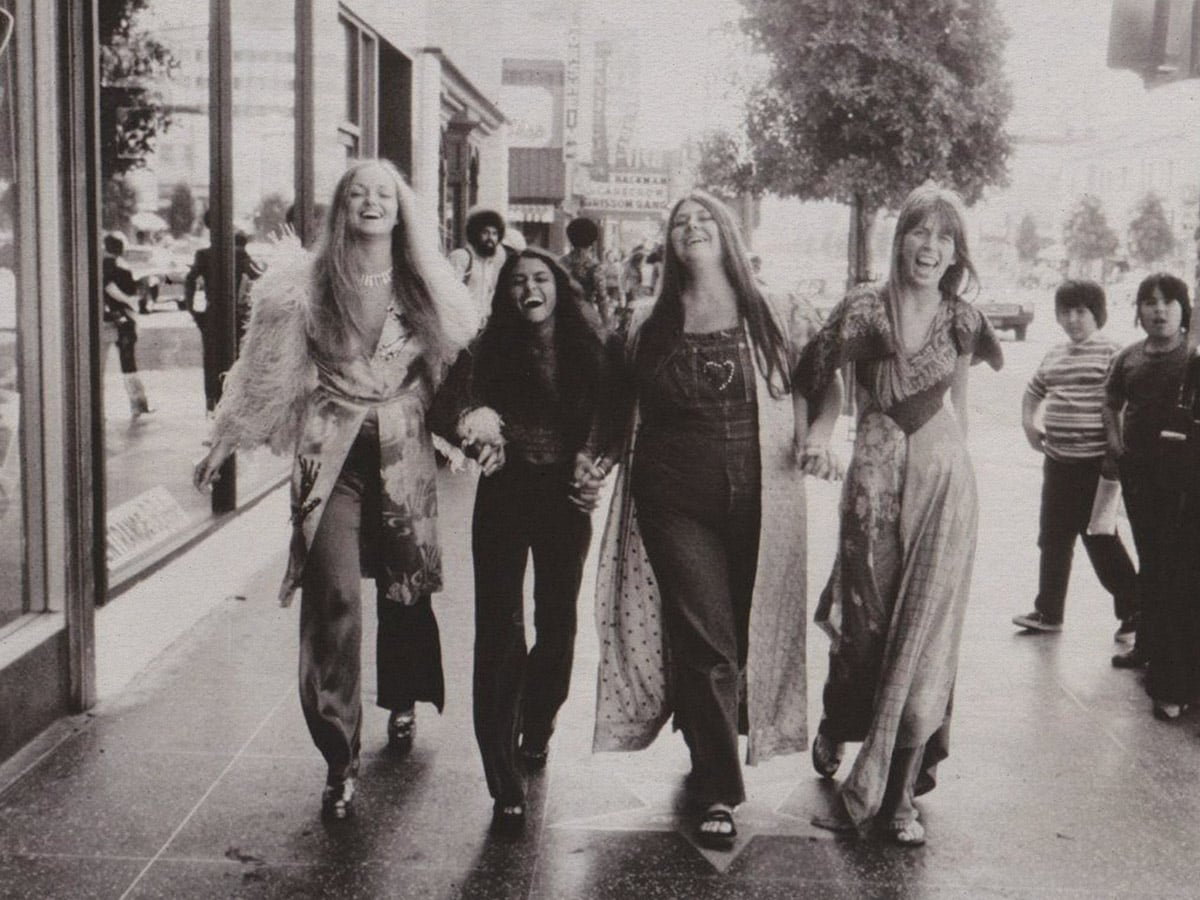
Eventually, in 1972, Birtha caught the ear of Dunhill Records, which released their self-titled debut album (produced by Mekler) that summer. Adorned with a rainbow-hued jukebox on its cover, Birtha is packed with gorgeous harmonies that transition between soulful ballads and rousing, melodic rock ‘n’ roll. ‘Fine Talking Man’ hears Butler take lead vocals, her voice seething into full-blown wails indebted to the blues by the song’s end. Another song, ‘Too Much Woman (For a Hen Pecked Man)’ is a scathing demand for respect – “I want to be loved, not teased,” they declare.
Birtha was an undeniable statement from the four women, but the album itself faded in the shadows of their contemporaries. The summer of 1972 saw the likes of The Stones’ Exile on Main St and David Bowie’s The Rise and Fall of Ziggy Stardust and the Spiders from Mars debut, and Birtha, unfortunately, was largely forgotten in their wake.
Still, Birtha toured in support of their debut, notably embarking on a UK run opening for The Kinks that saw flyers publicising their shows with the tagline, “Birtha has balls.” The line had been following them since their album’s release, thanks to their record company’s unfortunate promotion tactics. As Record World reported of Birtha’s release party at The Playboy Club in Chicago: “The club refused to print ‘Birtha Has Balls’ on the matchbook covers. We’re a blue-chip company, they said. But how did they become a blue-chip company? Not by inventing a better mousetrap…”
Speaking with Judy Sherman on Pacifica Radio in 1972, the band approached the subject of being seen as a “girl group” in the male-dominated rock world. “I notice that people come up to me and ask me, ‘Do you have any objection to being promoted as a girl group?’ And it blows my blind because we are a girl group,” Pinizzotto explained. “I think people are going, ‘Well, wow, how can they promote themselves as a girl group?’…”
“We don’t want to just do that, it’s true. It’s a drag to go, ‘Oh, they’re girls, so we’ll make exceptions,’ and all that stuff. Well, that’s a bunch of hooey.”
Shele Pinizzotto
She continued: “I’ve had a lot of people tell me that when they watch us, it’s not really like being aware of us as girls first and then a group; it’s more music and then girls – of course, ‘cause you can’t deny it. You can’t get away from it. But, I don’t want our group to be promoted as, ‘Here they are, the girls!’ I just want people to listen to our music and have a good time and share it with us.”
With the annoyance of deeply sexist promotionals aside, Birtha remained a force to be reckoned with as they continued through their tour of the UK and, when they went home to the States, they almost immediately returned to their familiar haunts in California, including the famed walls of the Whisky a Go Go and The Troubadour, and the Glendale club The Sopwith Camel.
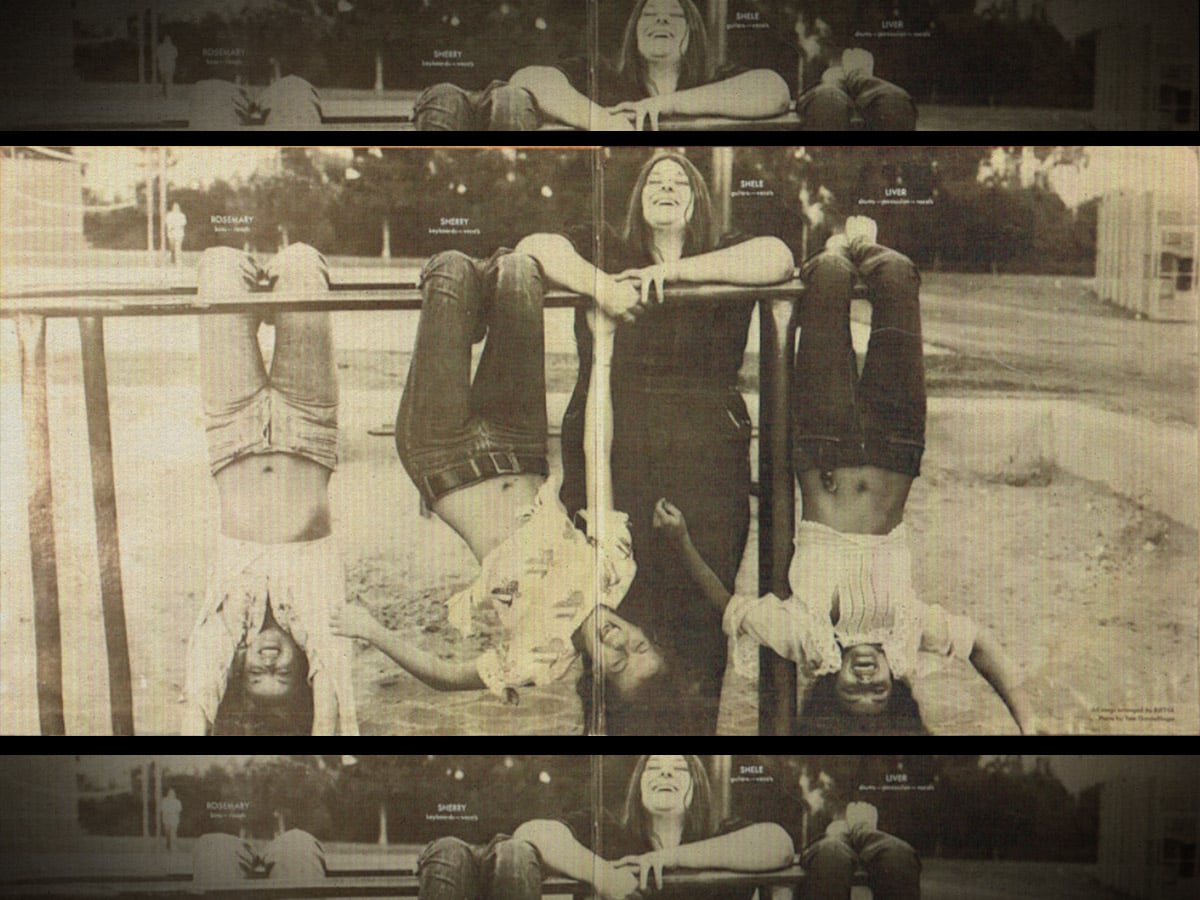
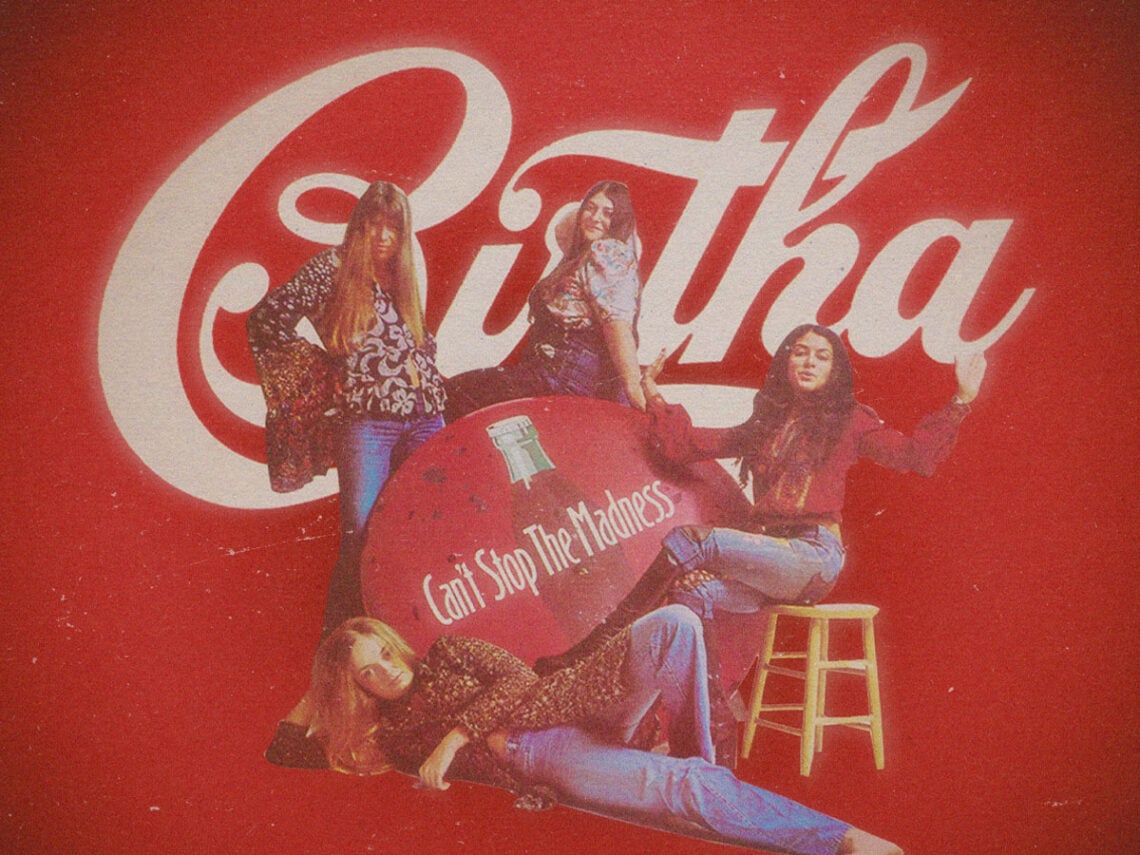
In 1973, undeterred by the quiet response to their debut album, Birtha entered Crystal Studios in Hollywood to record its successor with producer Christopher Huston. Can’t Stop The Madness heard Birtha return to form with an elevated precision in their craft, as their sound flows across pop-rock upbeat tempos, moody meditations and keyboard-driven rhythms heavily indebted to R&B and the blues. On ‘(When Will Ya) Understand,’ their collective harmonies haunt through chilling cries of discontent, harnessing just as much power in these slower moments as they do when wielding their instruments at maximum volume.
Can’t Stop The Madness’ cover, featuring the four women posed surrounding a Coca-Cola sign and their band’s name stylised to mimic the soda’s font, wields a sort of ‘70s kitsch that placed Birtha at the centre of popular culture. In support of their second album, Birtha toured for the majority of the next few years, sharing stages with everyone from Fleetwood Mac to Alice Cooper to BB King. But by 1975, they disbanded without an explanation.
In the aftermath of Birtha, information on the women remains scarce. Favela passed away in 2011, while Pinizzotto passed away in 2014. Hagler and Butler are still with us, and Butler went on to be a massively sought-after session musician, working with a wide range of artists as a backup singer. She has sung with Bonnie Raitt, Linda Ronstadt, James Taylor and Paul McCartney, and features on vocals on the tune ‘Stay (Just A Little Bit Longer’ from Bruce Springsteen, Tom Petty, and Jackson Browne, which she also performed live during Springsteen’s 1979 shows at Madison Square Garden. She’s also released two solo albums: 1983’s Rose and, 30 years later, 2013’s You Just Watch Me.
While Birtha did not achieve nearly as much recognition or success as they were due in the years that they performed together, they remained a key force in the lineage of women in rock. “I think there’s gonna be a lot of girl groups starting to happen,” Pinizzotto reflected to Judy Sherman, concluding, “If people can just open up their hearts and let girls in, it would be really groovy. Because sometimes, they’re just a little afraid, but just tell them, ‘Don’t be afraid, ‘cause it could be really outta sight.’”
