


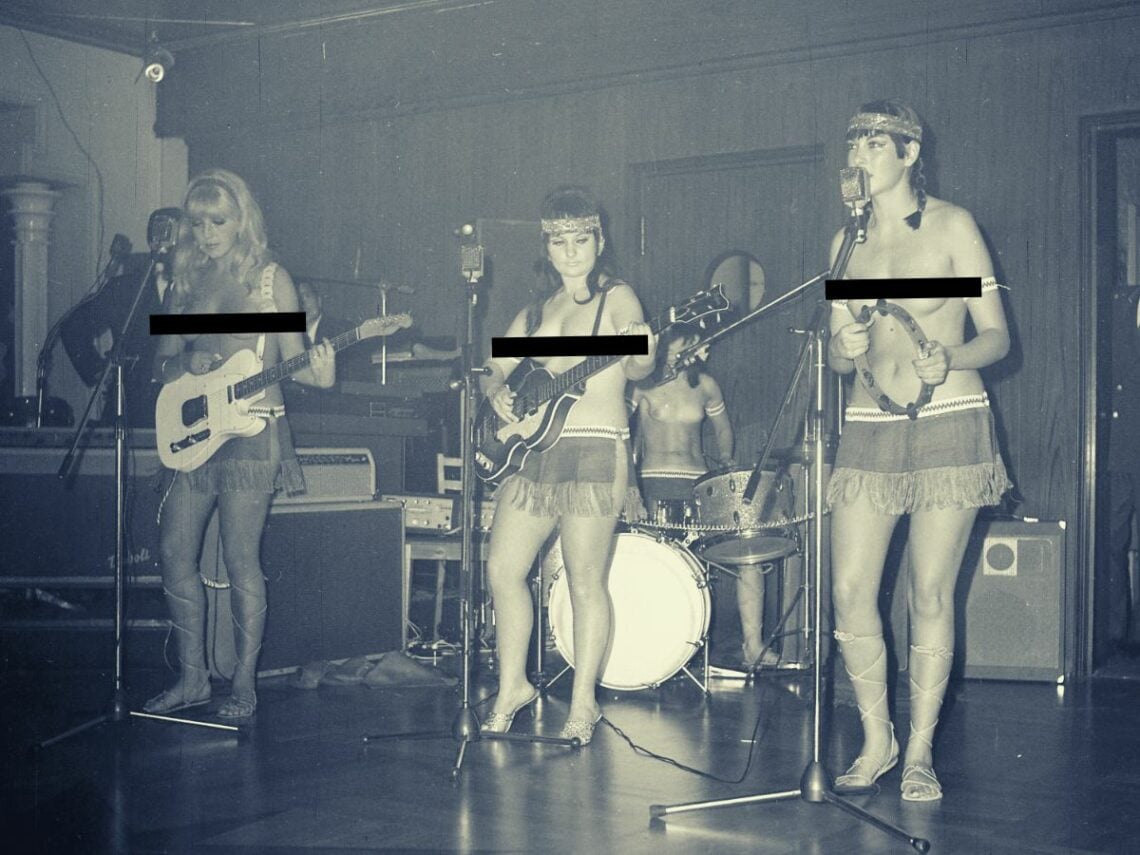
The Ladybirds: The trailblazing topless female rock band

Iggy Pop’s wardrobe is nothing but tight pants. The shirtless proto-punk hates collars more than a former vicar who’s turned against the cloth. This, however, has largely been accepted without so much as a shrug and that blasé approach to the blouse-less rocker was even in place back when The Stooges first performed in 1967. When it comes to topless females, however, things were far different. That made the rock ‘n’ roll band The Ladybirds stand out like an exposed nipple in the Arctic when the trailblazers got their tits out and started strumming.
The year was 1966, and eroticism was on the rise. Only a decade or so earlier that seemed like a distant future. In Los Angeles in the 1940s and ‘50s, actors were tied to Morality Agreements. This, however, didn’t mean that if you were good you got work. In 1949, when Marilyn Monroe finally agreed to pose nude for erotic images with Tom Kelley, she hadn’t worked in a while, was late on her rent and her car was about to be repossessed. She decided to take the money offered and agreed to the shoot under a false name.
Alas, the images blew up and people tied them to the actress. Her fledgling Hollywood career lay in ruin. Her next move changed the world. She stood by the pictures, embraced the backlash, and used it as not only a launch pad but also to level the important point that those condemning her were the same people seeking out the images and poring over them. This poured ice on the concept of a bogus Morality Agreement and sexual conservatism had been subtly subverted.
Culture was now leading the way towards sexual liberation. As the ‘50s wore on, sexual freedom roared forwards. In the literary world, Peyton Place by Grace Metalious became the uber-salacious and provocative best-seller that thrust free love into the living rooms of the masses. Then Elvis shook his hips so much that CBS made the decree that he had to be filmed from the waist up for the foreseeable.
Then a year before The Ladybirds arrived the most momentous leap forward occurred. The Planned Parenthood act of Connecticut in 1965 brought the pill into people’s lives. Suddenly, the stilted days of the 1950s were shaken up as though humans had invented fire for the second time. You could finish work, rush into town, hear an entirely new genre of music pumping from some sparkling thing called a jukebox, pick up a fellow, a gal or both, head home and listen to the brand-new Van Morrison record in crisp hi-fidelity sound, and get it on without any fear of parenthood putting a stop to all the fun.
The times weren’t a-changing, they had already changed. In some ways, The Ladybirds were a perfect paradigm of this. Three years earlier, a band called the Shangri-Las had opened the door for them. They traversed subject matters that no typical girl group would go near, tackling motorcycle beheadings, heart failure of the spiritual bent and all the darkest pages of a teen’s diary. However, it was darkness tempered with the light touch of pop sensibilities. In short, punk followed a similar principle of finding fun in darkness, being brattish and proud, and swimming against the current of expectations.
In essence, they made it clear that it was okay for women to exist in pop culture without being pre-packaged by men. The Ladybird stripped this down to the bare basic message. Their act was a smash hit in the California scene. They went with the tagline “the world’s first all-girl topless rock band” (even though there were others, even a Danish incarnation who were also called The Ladybirds). Eventually, their pinnacle arrived when they starred in the film The Wild, Wild World of Jayne Mansfield.
Now, Robin Sherwood (vocals and guitar), Rosita Quintana (drums), Bobbi Branch (guitar), Marcelle Mitchell (bass) and Debbie Dayan (keyboards), have faded into the obscurity of cultural history and information on the band is scarce, but the mark they made shouldn’t be forgotten. They showed the cultural scene at the time that commercialism in itself could also be part of the counterculture—fun could be part of the point.


