


Hear Me Out: Jonathan Glazer’s ‘Birth’ is a misunderstood masterpiece

Thanks to his 2013 artistic sci-fi triumph Under the Skin and, to a lesser extent, 2000s subversive crime drama Sexy Beast, British filmmaker Jonathan Glazer has become something of a lesser-spotted cinematic master. Producing delicate films that burst with style and emotional resonance, Glazer’s concentrated filmography of just three features and a multitude of creative shorts, hosts one critically-perceived ‘ugly duckling’ rarely discussed in the same breath as his finest achievements; 2004s Birth.
Existing in the same curious dreamlike realm as Stanley Kubrick’s Eyes Wide Shut, Glazer’s story is a deeply thoughtful exploration of everlasting love, which similarly features Nicole Kidman as a rich, troubled suburbanite. Trading the short stature of Tom Cruise for the Wall Street vibe of Danny Huston, Kidman’s Anna is a widow who is due to remarry ten years after the tragic and mysterious death of her husband Sean.
Still, the spectre of her past love cannot escape her, with Glazer telling something of a fantastical Shakespearean tragedy as Anna’s elegant life is disturbed by the arrival of a young boy, also named Sean (Cameron Bright), who claims to be the reincarnation of her deceased husband. Insisting that the wedding must not go ahead, Sean makes regular visits to Anna’s apartment until she begins to entertain the thought that he could indeed be her ex-lover.
As if Glazer had entwined the stylish mystery of Kubrick’s final movie and Yorgos Lanthimos’ eerie fairytale The Killing of a Sacred Deer, Birth plays out like a playful romantic fable, sprinkled with zestful cinematic glee. Such is complemented by Alexandre Desplat’s bouncing score at least, which sways with the ethereal beauty and light piano strokes, dancing in the breeze like a serendipitous feather.
But, this is only true of the film’s perky opening, with Desplat’s score changing appropriately to reflect the characters’ realisation that this boy is no mere prankster, for how does he know such family secrets? Spoiling the imminent engagement of Anna and her fiance Joseph (Huston), Sean’s arrival cuts the celebrations short, forcing Kidman’s character to search her inner doubt and mourn the loss of her historic relationship once more.
Whilst, at first, seeming like a contemporary ghost story, Birth spirals into a complicated psychological exploration that amalgamates fact and fantasy, with each of the drama’s pawns feeling like real-life victims rather than enchanted cliches. Far from being gullible and emotional, the protagonist and her close family and friends are blunt figures of self-importance, handling the situation as if it were a business quandary rather than an existential human dilemma.
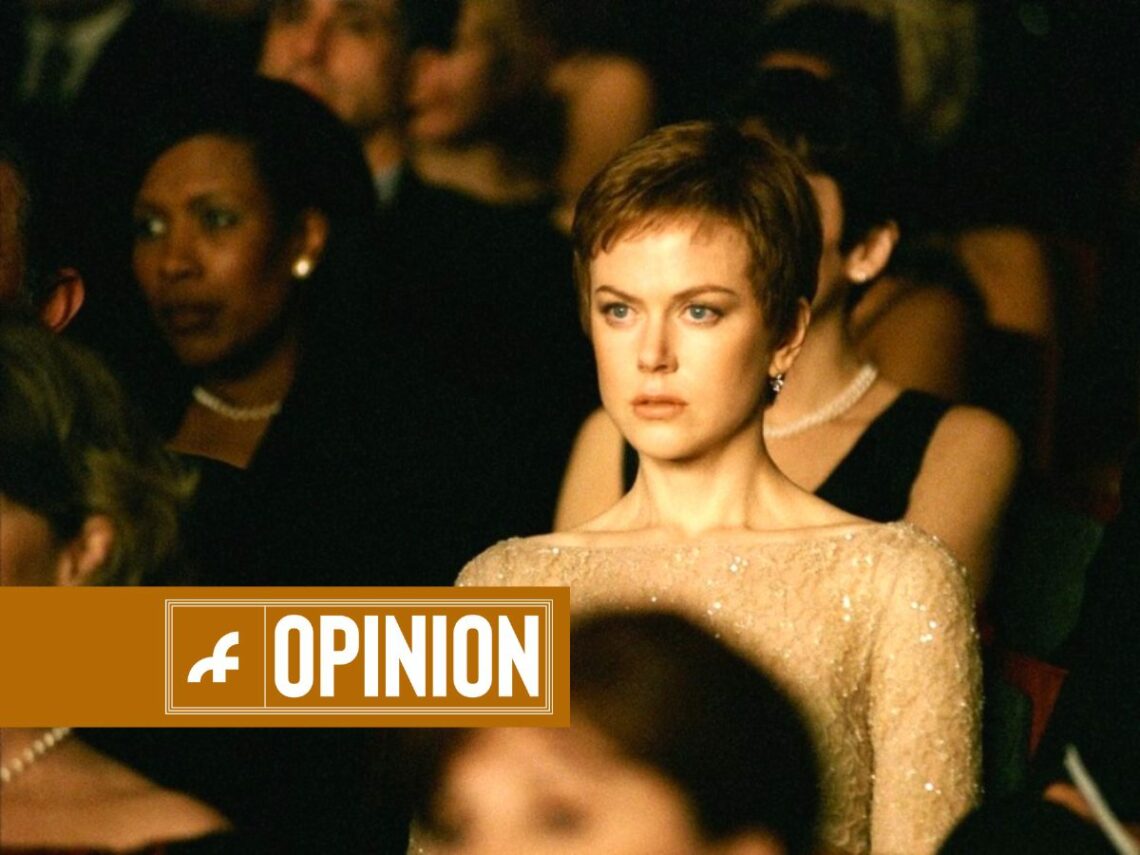
Such adds a great deal of emotional weight to proceedings, particularly once Kidman’s Anna begins to question the boy and his spiritual arrival on her doorstep. The sudden realisation hits her like a religious awakening, with the emotional gauge steadily heightening until it pours out in one prolonged close-up in which Anna attends the opera and spends her time experiencing waves of astonishment, despair and elation whilst listening to the enigmatic majesty of Wagner.
Answering little of his self-created emotional puzzle, Glazer leaves the audience on a painful question mark in which neither Anna nor the audience gets any conclusive answer. Sean was a curious enigma, a crack in existence that provided a glimpse at another reality, but also somebody who brought with him a resurgent wave of troubling doubt, sadness and mortal absurdity for an individual who believed she had long bottled such hopeless thoughts away.
