


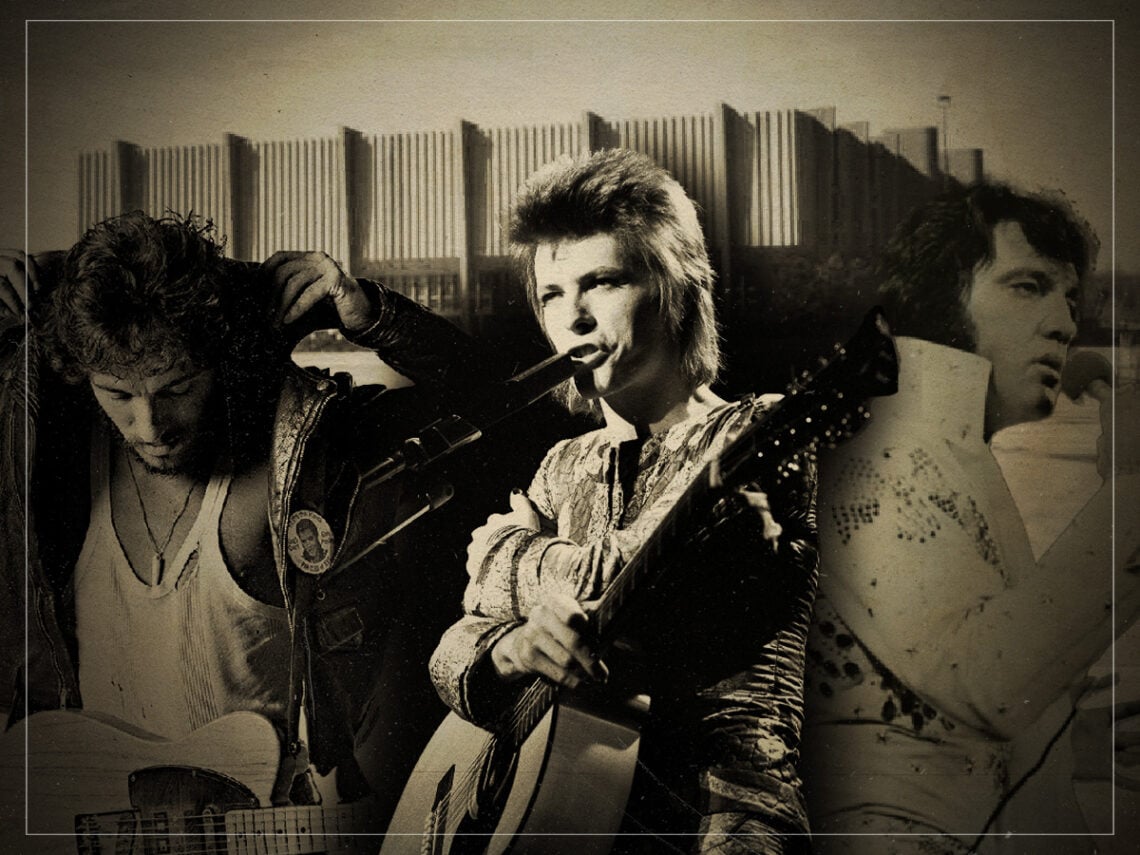
Richfield Coliseum: The nondescript birdwatching spot in Ohio where Elvis, David Bowie, and Bruce Springsteen once performed

If you want to stand on the very coordinates where Bruce Springsteen and the E Street Band concluded their Darkness on the Edge of Town tour on New Year’s Day, 1979, where Led Zeppelin’s legendary Destroyer bootleg concert was recorded in 1977, or where Mike Tyson sat front-row to watch Michael Jackson perform in 1988, you’d find yourself in a quaint, grown-over meadow in the Ohio countryside.
The story of the long-lost venue known as the Richfield Coliseum might sound more like ancient Native American folklore when it’s told centuries into the future. One day, 300 acres of quiet, sprawling farmland in Ohio’s Cuyahoga River Valley transformed into heat-absorbing concrete, with a mighty fortress rising from the centre of it. And though there was nothing else around for miles, the people from the surrounding towns and cities began to congregate here by the thousands, drawn by the promise that the world’s most famous warriors, wizards, and entertainers would be on the other side of the fortress wall.
For 20 years, millions came to see and hear their heroes in the flesh, and then, as quickly as it had come, the fortress disappeared, swallowed up by the earth from whence it came, untraceable across the horizon of an overgrown rural grassland.
Concert venues and sports stadiums are built, abandoned, and torn down fairly often in America, but historically, most venues big enough to serve both purposes were built in big cities, and when they’d outlive their use, they’d usually be replaced by some new sort of infrastructure: an apartment block, a parking garage, a shopping centre, and some such. The Richfield Coliseum, which opened its doors in 1974, had a very different fate after it hosted its final event in 1994.
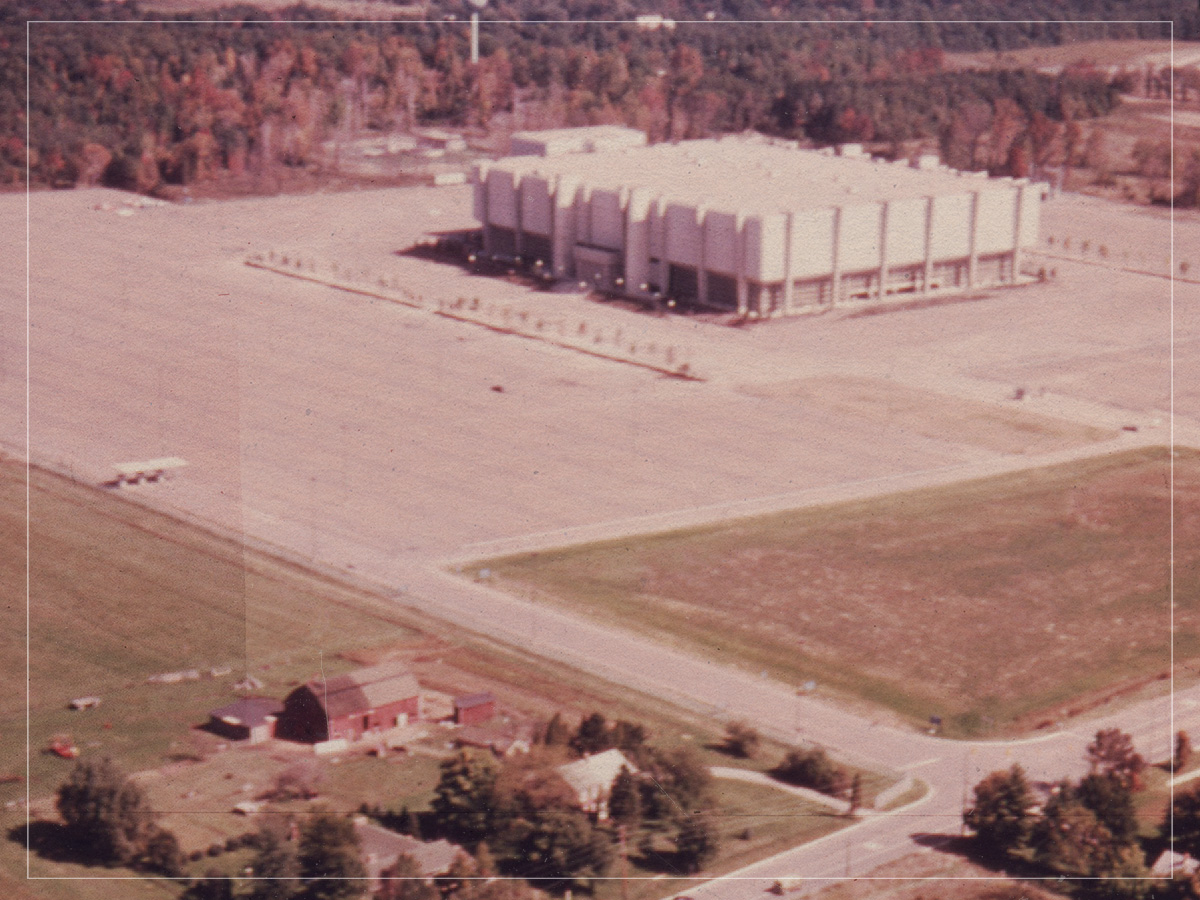
This colossal 20,000 seat venue was state-of-the-art by ‘70s standards, and it also reflected the concurrent shift of America’s white middle class population out of the major downtown urban centers of the pre-WWII era into the rapidly growing suburbs of the post-industrial era, as indicated by the arena’s bizarre location just off Interstate 77 in Richfield Township, Ohio, a hamlet with a population of 3,000.
The Coliseum was the brainchild of a young businessman named Nick Mileti, whose local investment groups had purchased several radio stations and professional sports teams in Cleveland, Ohio, in the early 1970s, including a new NBA basketball club known as the Cleveland Cavaliers, AKA the Cavs. After playing their first few seasons inside a rundown old arena in downtown Cleveland, the Cavs needed a new, bigger home, and Mileti envisioned a massive venue that could better serve the entirety of Northeast Ohio. Back in Cleveland’s industrial heyday in the 1920s, it was one of the top five largest cities in America, but by the ‘70s, it had become one of the hard-luck towns of the so-called American ‘Rust Belt’, as factories started to close and a population exodus began.
Mileti’s idea was to embrace this new normal. Rather than asking the suburban folks to drive into the city, he would build an arena roughly halfway between the cities of Cleveland and Akron, in a somewhat random location just off Interstate 77. This would allow the venue to more easily entice a broader swath of people not just to come and see basketball games, but every other form of big-ticket entertainment: circuses, pro wrestling, conventions, the Ice Capades, and most importantly, big-time A-list rock ‘n’ roll concerts.
“We plan between 300 and 350 events a year,” Mileti told the Cincinnati Enquirer shortly before the Coliseum opened in 1974, “There’s no magic to it, it’s just a matter of knowing what the people want and being in a location they can reach”.
The Coliseum will be a draw…it will be an attraction.”
Nick Mileti
Even the many people who doubted the wisdom of building a giant arena in a small village had to admit that seeing the Coliseum suddenly appear on the horizon was pretty exciting, and when Mileti announced that no less than ‘Ol’ Blue Eyes’ himself, Frank Sinatra, would be the headline performer at the arena’s opening event, it felt like a major happening.
Mileti wanted the Coliseum to be the Midwestern cousin of New York’s Madison Square Garden, a “Palace on the Prairie”, and while it certainly never achieved international fame in the same way, it inarguably reached its original vision, bringing in a who’s who of 20th-century icons from the mid 1970s into the early 1990s.
Muhammad Ali beat an underdog named Chuck Wepner in a heavyweight title fight there in 1975, inspiring a young Sylvester Stallone to write the script for Rocky. Michael Jordan beat the Cavs in a playoff game there in 1989 with one of the most famous shots of his basketball career; so famous in fact that it’s known to NBA fans simply as ‘the Shot’. There were numerous WWE pay-per-view events, Ringling Brothers and Barnum & Bailey Circus residencies, and novel gatherings of subcultures, including one of the first major-scale Star Trek conventions, when the show’s creator Gene Roddenberry hosted 14,000 trekkies at his World of Star Trek event in 1978.
The Coliseum was best suited, however, for the new age of arena-sized rock ‘n’ roll, as the artists who’d built their fortunes in the ‘60s now began to flaunt it in the ‘70s with increasingly expensive stage shows, complete with pyrotechnics, massive video screens, and elaborate set pieces. If you had a concert tour involving a caravan of tractor-trailers, the Coliseum was now a mandatory stop on your journey between New York and Chicago.
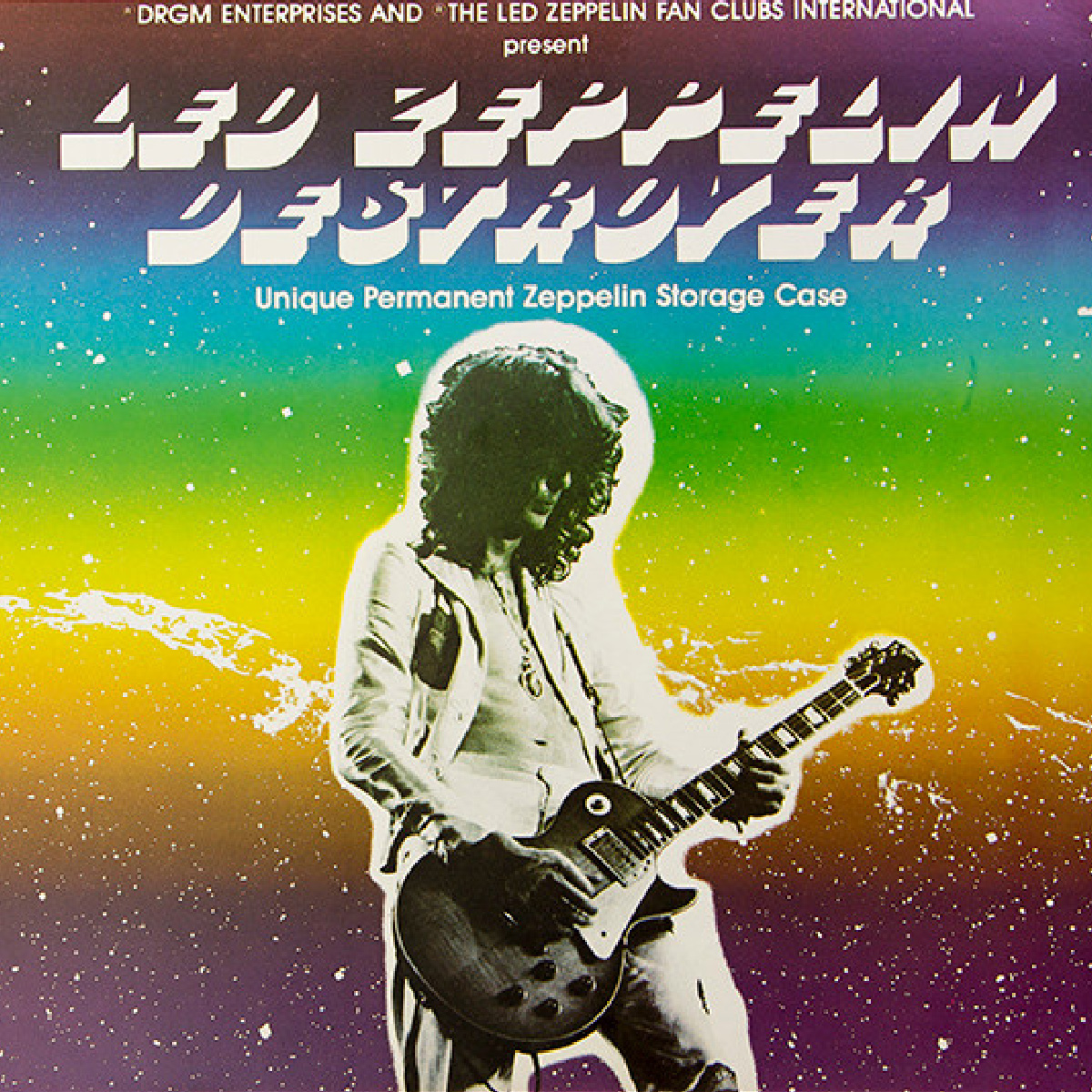
Stevie Wonder was the first rock act to book a show, soon followed by Elton John, George Harrison, Zeppelin, Lynyrd Skynyrd, Eagles, The Who, and Elvis freakin’ Presley in that first year alone. Black Sabbath stopped by with Boston supporting; Eric Clapton with Santana; Queen with Thin Lizzy; The Rolling Stones with Etta James. Zeppelin’s return in 1977 was recorded and traded as the aforementioned Destroyer bootleg, one of the holy grails among the band’s super-fans of the time. A year later, Kiss famously had to spend the night inside the Coliseum after their set, as a major blizzard outside prevented them from returning to their hotel.
The Grateful Dead sold out the place over a dozen times, and during the height of his powers, it was Bruce Springsteen’s home away from home, as his Cleveland fanbase had always been among his strongest, dating back to the days when the local rock radio station, WMMS, had championed his first album.
The only thing Nick Mileti hadn’t entirely factored into his grand vision was the mild inconvenience the arena’s location presented to the rock stars who played there, as Richfield Township wasn’t exactly the sort of place that was optimised for a fancy after-party. Most performers still booked their hotels in downtown Cleveland and had to travel a half hour or more back up north after the gig. By the 1990s, another unexpected new variable emerged; urban city centres in the Midwest were becoming ‘cool’ again, as former factories and warehouses were either getting knocked down or repurposed, transforming into clubs, restaurants, galleries, and upscale flats.
By this point, the Cleveland Cavaliers and the Coliseum were under new ownership, and the decision was made to invest in a new arena in downtown Cleveland, as part of a major urban revival effort that also included the construction of the Rock and Roll Hall of Fame. The Coliseum still enjoyed several more years of top-tier rock shows, including David Bowie’s Sound + Vision tour in 1990, a two-night Metallica event in 1991, and U2’s Zoo TV tour in 1992. After Roger Daltrey showed up with a 60-piece orchestra for a Daltrey Plays Townshend tour stop in September of 1994, however, the Coliseum officially closed its doors for good.
It remained abandoned for several years before the land was finally given over to the National Parks Service, which absorbed it as part of the Cuyahoga Valley National Park. The arena was demolished, and over the course of two decades, the land on which it stood has been fully re-wilded into a natural grassland, becoming a popular hot spot for local birdwatchers to spot a variety of rare species that thrive in this sort of habitat.
If you weren’t the wiser, you could drive by the location without a second glance, never imagining that the likes of Elvis, Sinatra, and Springsteen would ever have trodden around these parts. Their songs have been replaced by those of the eastern meadowlark and the savannah sparrow, as if the whole thing had been a strange dream, or a story your parents tell to make your little town seem more interesting than it truly is.

Never Miss A Beat
The Far Out Led Zeppelin Newsletter
All the latest stories about Led Zeppelin from the independent voice of culture.
Straight to your inbox.