


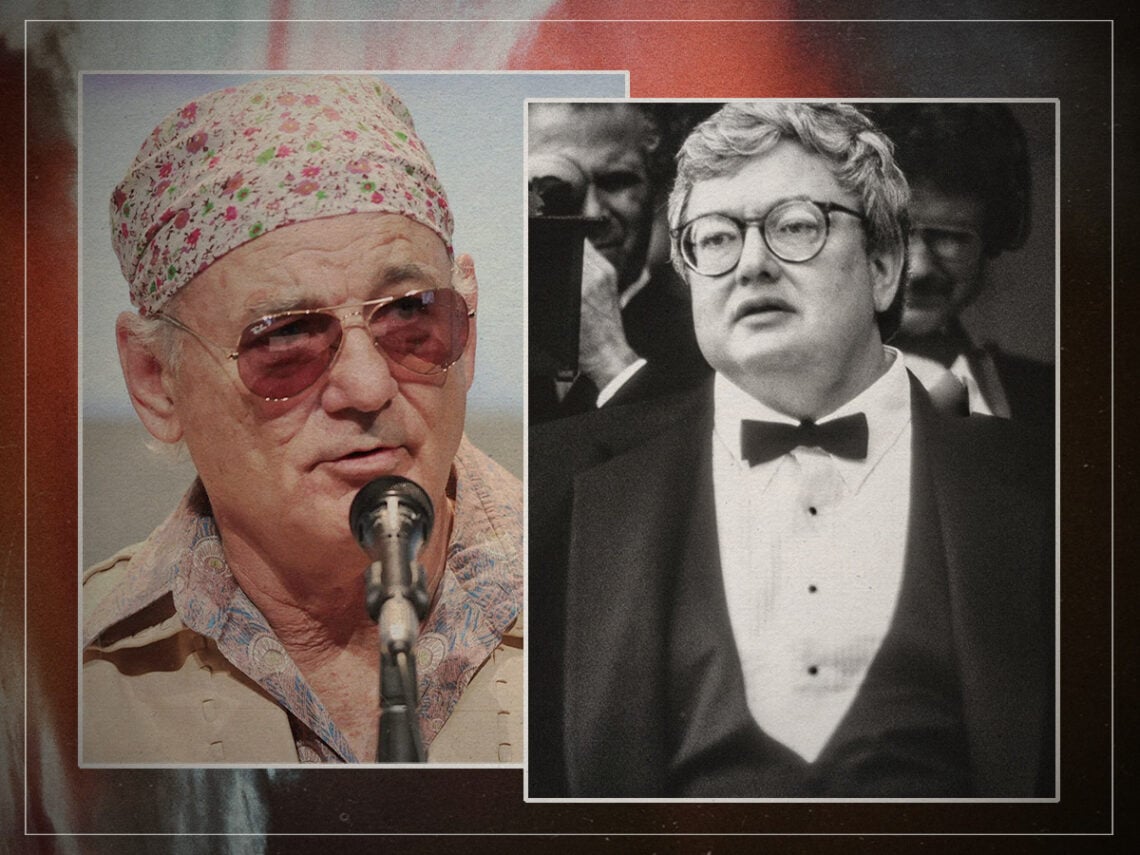
When Bill Murray furiously confronted Roger Ebert over a bad review: “I can do that”

Most actors are sensible enough not to pay attention to reviews, and that should count double for someone like Bill Murray, who couldn’t be less interested in anything other than turning up and doing his job, and that’s only if a filmmaker can find him and convince him to do it in the first place.
An industry veteran who doesn’t have a phone, an agent, or an email address doesn’t jump out as a person who pores through the trades, newspapers, and internet to see what the critics are saying about their work, although he did have a bone to pick with one of the most famous of them all.
In his defence, this was back in the early 1980s when Murray was still best known for his Saturday Night Live stint and hadn’t yet cracked the cultural consciousness to become a sardonic, deadpan, and wisecracking comedy favourite who also developed a reputation for being difficult to handle.
That would come soon enough, though, with Murray’s greatest success swiftly followed by his most devastating failure. Ivan Reitman’s Ghostbusters arrived in cinemas in June 1984 to spend seven weeks at the top of the box office, wind up as the second highest-grossing release of the year, and spawn a merchandising empire that sent the actor towards the A-list.
Four months later, The Razor’s Edge didn’t have quite the same impact. A passion project that he’d co-written, the historical drama was supposed to show the world that there were more strings to Murray’s bow, which didn’t happen when it flopped and was greeted largely with a shrug of indifference.
“A lot of work went into that, and nobody saw it,” he lamented to NJ. “But, if you haven’t had an experience like that, you haven’t had a career. I don’t know, what are you going to do? Razor’s Edge came out, Roger Ebert said there should be a law that Bill Murray can only do comedies.”
What Ebert actually said in a 2.5-star review was that “Murray, who is usually such a superb actor, has taken the wrong path in this performance, giving us moments when everybody in the film and in the audience is moved, except Murray.” He wasn’t demanding that it be written into law that he never do drama; he was merely suggesting that The Razor’s Edge was the wrong way of going about it.
Still, it was enough to catch the star’s attention. “I saw him a while ago,” he explained. “I said, ‘Oh yeah, Roger? Oh yeah?’ But we know each other; he’s a Chicago guy, too, so I can do that.” Murray wasn’t the only actor or filmmaker to call Ebert out for panning their movie, and this wasn’t even the first time he’d done it, but he seems convinced that he gets a pass because they’re both Illinois natives.
The thing is, Ebert wasn’t wrong. The Razor’s Edge wasn’t a great film, and Murray isn’t in particularly noteworthy form. It even got a passing grade by his four-star metric, so it’s not as if he actively despised it either. And yet, it was enough to put him on the receiving end of a tongue-lashing.
