


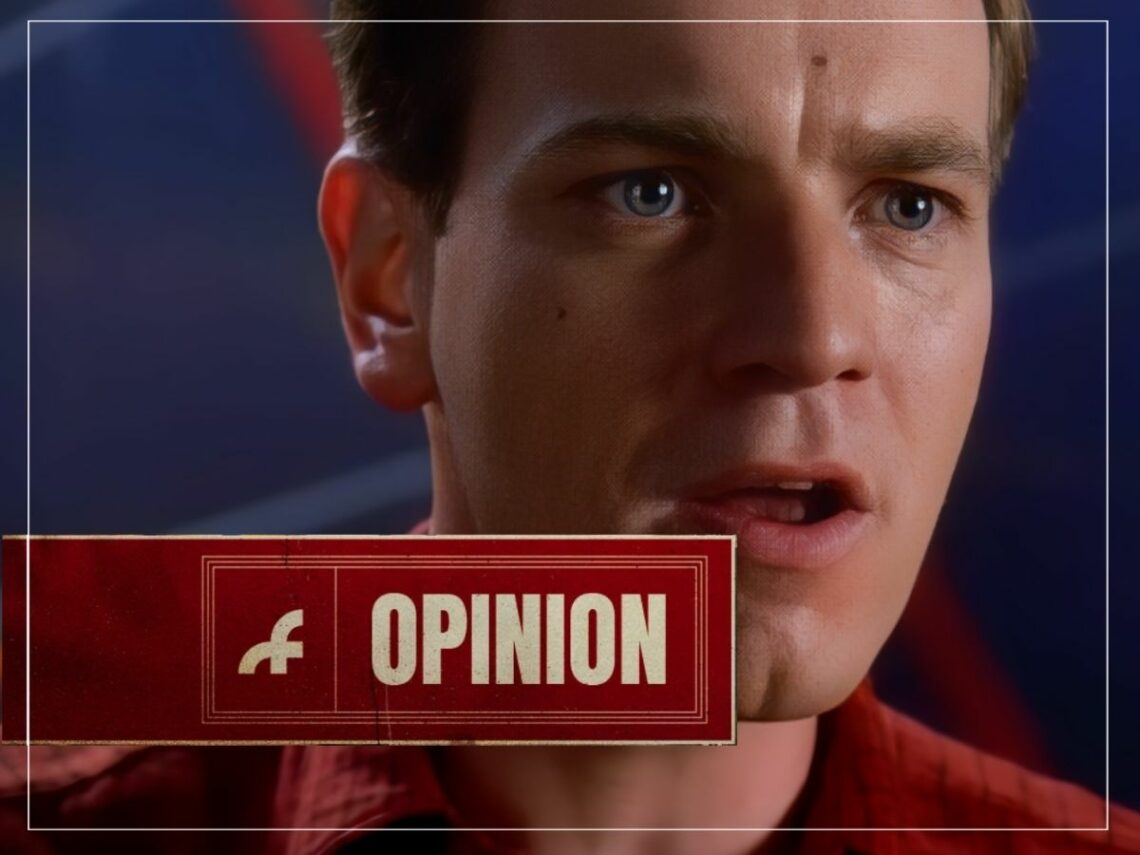
Hear Me Out: ‘Big Fish’ is the greatest movie about the truth

When thinking of Tim Burton movies, the 2003 effort Big Fish isn’t the first to come to mind. While it has some dark elements and features Burton regulars like Danny DeVito and Helena Bonham Carter, it doesn’t immediately scream “Tim Burton”. In fact, if you didn’t know it was directed by him, you might not recognise it as part of his oeuvre. That being said, it remains one of his finest films.
Big Fish stars Albert Finney as Edward Bloom, a terminally ill man estranged from his son, Will (Billy Crudup). Edward is known for telling extravagant, larger-than-life stories about his past—tales that couldn’t possibly be true, like meeting a giant or getting his car stuck in a tree during a violent storm. These moments are brought to life through flashbacks, with a younger Edward portrayed by Ewan McGregor. Will grows increasingly frustrated with his father’s tall tales, finding it difficult to connect with him on a genuine level. At its core, the film explores a profound theme: the nature of truth.
Will’s relentless quest to know the ‘real’ version of his father drives a considerable wedge between them, even though everybody else in Edward’s life loves him. Even Will’s wife Joséphine, played in a brilliantly understated way by Marion Cotillard, falls under his spell, much to her husband’s chagrin. His efforts to divide fact from fiction are heightened by the fact that his father is on his deathbed; if he doesn’t discover the truth quickly, he’ll never get the chance again.
The Blooms’ opposing views ask two different but equally relevant questions. Edward asks the audience why people lie. To cover something up? To make themselves the centre of attention? To mask the pain of a humdrum existence? Whereas his son’s investigations make you wonder why certain people are so obsessed with discerning the true version of events. Will goes out of his way to track down a woman he believes his father had an affair with, even though this knowledge would tear his family apart and bring dishonour to a man about to die. Edward’s name is cleared, but Will didn’t know that when he started digging.
All of Big Fish’s questions about the truth are tied together perfectly by its two-pronged ending. After his father suffers a stroke, Will sits by his bedside. Edward asks his son to tell him a story, which, after some initial hesitation, he does. It is a truly fantastical yarn about the pair escaping from the hospital and driving recklessly through town to get to the nearby river. There, his father transforms into the titular ‘big fish’, swimming away, passing from one life to the next.
In Edward’s final moments, Will offers him comfort with the very thing he had spent his life rejecting: his father’s stories. It is here that Will realises the true power of storytelling—that it can bring hope to those who need it most. At Edward’s funeral, the truth behind his tales begins to unfold. Figures from his past arrive, revealing their real identities: the ‘giant’ is simply a very tall man, the conjoined twins from Vietnam are actually identical twins, and the supposed bank robber is a Wall Street trader. What Will had dismissed as fanciful lies were, in fact, Edward’s truth—his version of it.
As light-hearted and funny as it is deeply sad, Big Fish explores so much of what it means to be human. The conflict between father and son highlights that the truth can mean many different things to many different people, and, in reality, as long as it brings people together, it doesn’t really matter.
