


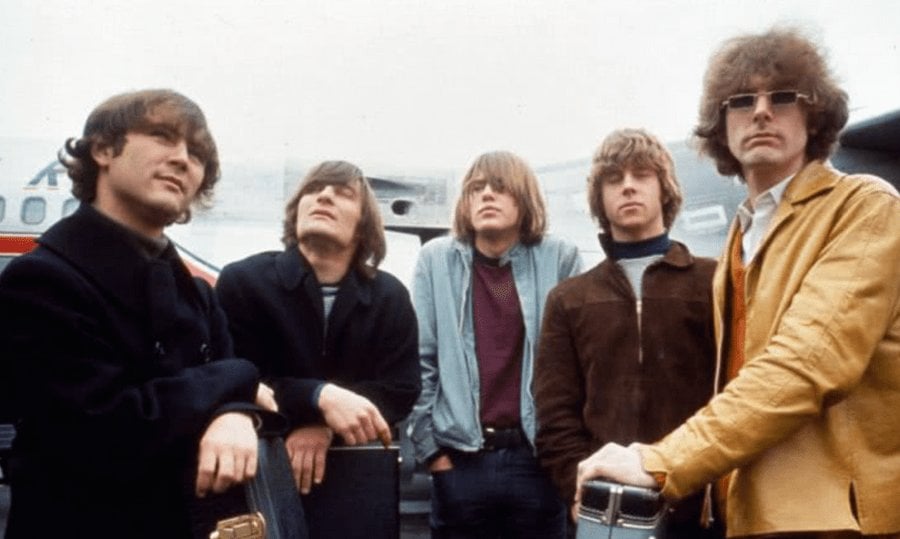
The biblical inspiration behind one of The Byrd’s greatest songs

Say what you like about the bowl haircuts, The Byrds sure knew how to write a pop song. With their crystalline guitar lines, baroque harmonies and neat structures, they pioneered a uniquely American brand of folk rock which still leaves even the most cynical of music fans gooey with nostalgia. Of all their classic recordings, one the most revered is ‘Turn! Turn! Turn!, which, as it transpires, was directly influenced by biblical scripture.
Originally written by folk singer and activist Pete Seeger, the first demo of ‘Turn! Turn! Turn!’ was recorded in 1961, while a live version was later featured on his 1962 album The Bitter And The Sweet. The Byrds decided to drag the track out of folk revivalist circles and give it a dose of electricity. following the success of their 1965 hit ‘Hey Mr Tambourine Man’. It landed them their second number one, cementing the band as one of America’s most celebrated acts.
The lyrics to ‘Turn! Turn! Turn!’ are lifted from a fragment in the book of Ecclesiastes (3:1-8), which reads: “A time to rend, and a time to sew; a time to keep silence, and a time to speak; A time to love, and a time to hate; A time of war, and a time of peace.”
Speaking to Paul Zollo in 1988, Seeger said: “I don’t read the Bible that often. I leaf through it occasionally and I’m amazed by the foolishness at times and the wisdom at other times. I call it the greatest book of folklore ever given. Not that there isn’t a lot of wisdom in it. You can trace the history of people poetically.”
Explaining how the song came about, Seeger continued: “I got a letter from my publisher, and he says, ‘Pete, I can’t sell these protest songs you write.’ And I was angry. I sat down with a tape recorder and said, ‘I can’t write the kind of songs you want. You gotta go to somebody else. This is the only kind of song I know how to write.’ I pulled out this slip of paper in my pocket and improvised a melody to it in fifteen minutes. And I sent it to him. And I got a letter from him the next week that said, ‘Wonderful! Just what I’m looking for.’ Within two months he’d sold it to the Limelighters and then to the Byrds. I liked the Byrds’ record very much, incidentally. All those clanging, steel guitars – they sound like bells.”
